• Skip to primary navigation
  • Skip to main content

SCP Survival

Best Survival Gear and Supplies

  • Download Survival Guides
  • Survival Food List
  • Download 906 Survival Guides to Your Device
Home / Survival Food / Page 3

Survival Food

Outhouse Chicken Coop [Easy DIY]

March 25, 2024 by Seasoned Citizen Prepper

How I Made an Outhouse Chicken Coop

Keeping chickens is so much a part of a self-reliant lifestyle, that most cities now have ordinances to allow chickens in small quantities as a nod to sustainability. And a few hens are not hard to accommodate.

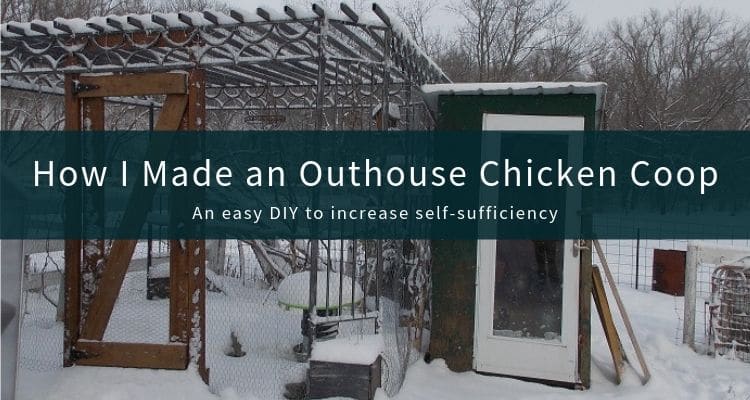
This old outhouse has been with me now for almost 30 years. But I no longer had a use for it as originally intended. Re-purposing was in order! With just a few modifications it has become an adequate chicken house.

  1. I covered the open hole seat area with a new sheet of plywood
  2. Cut a hole in the side about 10”x10” for the chickens to go in and out
  3. Tacked the fence wire around the hole with 2×4 to frame the opening
  4. Since the door had long ago fallen off, I replaced it with a full view used storm door from a used center for $8
  5. I installed two dowel rods for roosting areas
  6. I attached an old wooden crate for a nest box onto the wall

The chicken pen is away from the barn, so I ran an electric drop cord to it for supplemental lighting and to power the water font heater. That is working just fine and I am using a timer that I got for my Christmas lights to control the lighting.

Their chicken pen is a metal pergola I got on clearance at the end of the season a couple of years ago and covered with chicken wire, including the bottom—predator control! I used cable ties to secure the wire. In the summer they have outside roosts. Added bonus, last summer the squash crawled up and over it providing shade for the chickens and a vertical trellis for the squash!

This was a last minute, just before winter hit, project. Adjustments I hope to make this spring include:

  • Add tin under the roosts in order to funnel the manure into plastic gutters run along the bottom of the tin for ease of cleaning and to catch the manure for the compost pile
  • Construct roll away nest boxes with outside access so that I don’t have to enter the 4’x4′ building—and the little devils don’t eat their eggs
  • Add a secure clip to the light hanger
  • Tin the outside of the building
  • Hinge the seat area and line the rectangular box under it with tin to keep their feed in
  • I might do some stencils on the glass door

Except for the obvious form of the building the function has been completely altered! 

Related: Chicken Doctoring
Filed Under: Survival Food

Experimenting with Potato Planting Methods

March 25, 2024 by Seasoned Citizen Prepper

Up here in the North Country, Good Friday is the traditional date that we plant potatoes. Although I can’t see it happening this year with 18 inches of snow on the ground, frozen ground (Not the same, sometimes snow keeps the frost from entering the soil.), and just an occasional 40 degree day.

But potatoes are a mainstay in my garden.

We aren’t Irish, but it seems that potatoes enter a meal almost daily at our house—mashed potatoes, fried potatoes, baked potatoes, boiled potatoes, au gratin potatoes, potato soup, potatoes and creamed peas, you get the picture. POTATOES!

Potatoes are comparatively easy to grow and keep well. The only thing I don’t like about potatoes is digging them!

Experimenting with the Cage Method

Last year I tried the cage method with potatoes. Create a wire ring (I used 2×4 wire I had laying around.) about 2 feet across, plant your potatoes in a ring around the outside with the eye facing out and fill with light soil and compost, even straw or hay will work.

Layer upon layer, I got about 3 feet high. Wow, did I have potato foliage, but not too many potatoes. However, in all honesty, I think I let them get too dry at times. This method leaves a lot of area for moisture to evaporate from the soil. So was the lack of success me or the method?

What would I do differently? I think this year (As I have the cage already.) I might invest in a length of 6 inch PVC pipe and a cap. Drill holes up and down it, insert into the center of the ring and keep it filled with water.

Experimenting with the Bin Method

I also experimented with the “bin” method. Use an indeterminate potato (Russet flower all season long hence indeterminate.) and keep covering the plant as it grows leaving 6-8 inches of the top out of the soil. Worked okay in a bucket, not so good in a wire cage. Again, I think it was moisture given the drought year.

Growing Potatoes in Buckets

However, cutting the bottom out of a five gallon bucket and planting the potato in there and covering it seems to work! I only did a couple last year, but this year I plan to do more. What worked for me last year was 2-6 gallon buckets. I cut the bottom off with a circular saw, then cut the bucket in half—loved the two with the handles! Set on turned ground, put seed potato in eye up and cover with 8 to 10 inches of light soil. Tip over in the fall and gather your golden nuggets!

I have a new area of the garden that I am turning this year. I’m thinkin’ that what I am goin’ do is trench the potato row, put the buckets in side by side and use the trenched dirt to fill them. That should conserve on water if it is another dry year and save my back from both turning and bringing in coverage soil. But we’ll see!

Filed Under: Gardening

Pallet Gardening

March 25, 2024 by Seasoned Citizen Prepper

Spring is here. ‘Tis the season to be…….gardening!!

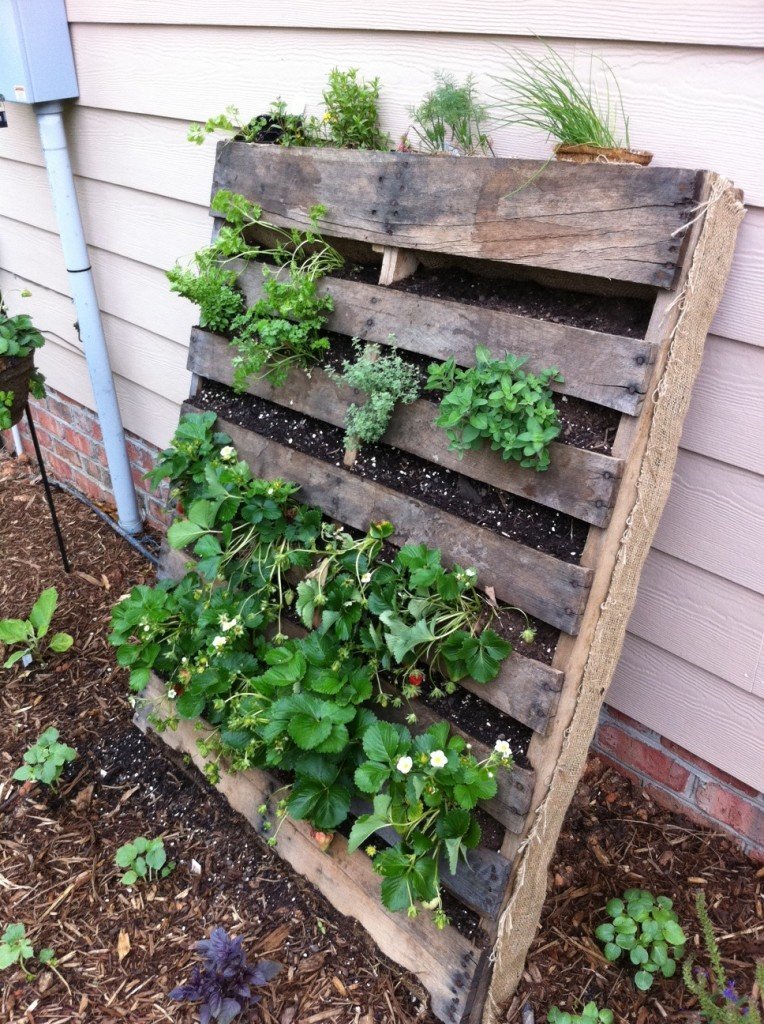
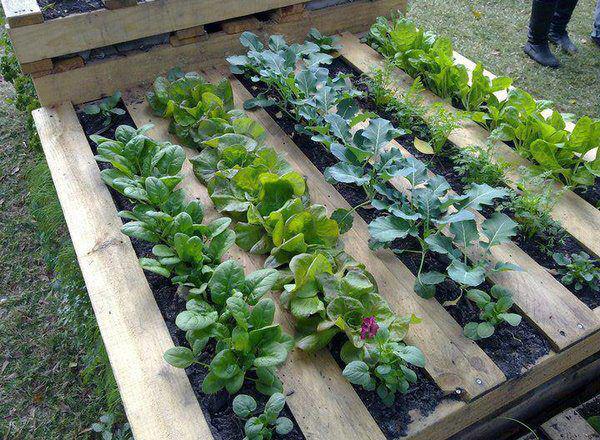
A neighbor friend told me about a method of gardening using pallets. The premise is placing a pallet on the ground, filling it with soil, and then planting vegetables and herbs between the planks of the pallet.

Pallet Gardening

This is not something that I have tried myself – but looks interesting. Anything that gets more people growing their own food is good by me. Many of the examples that I have seen people doing have some material laid under the pallet to minimize grass and weed growth through the pellet. Potting soil is often used – which is generally weed free.

Gardening in Pallets

Other than laying the pallet flat – a vertical garden is established by leaning the pallet up against a structure – building, wall, tree…..whatever. Soil is kept within the pallet by placing landscaping fabric along the back.

Pallet gardening looks to be a great idea – especially for those with minimal space.

Filed Under: Gardening

The 4 Types of Emergency Food You Need

March 25, 2024 by Seasoned Citizen Prepper

I watched “Doomsday Preppers” once, they showed 3 or 4 different people who were preparing for 3 or 4 different “Doomsday Scenarios”. I understand that every week presents new scenarios with new people showing their solutions. Now, I have the privilege of talking to a dozen different “preppers” everyday and each of them has a different idea of what “Doomsday” will look like, consequently everyone has a different preparation priority list. While I can’t fit each person into some category of sorts, I can give some broad examples of expectations and offer advice on food solutions for each situation.

First, Weather Disasters: earthquakes, tsunamis, hurricanes, tornadoes, forest fires, floods, snow/ice storms, normally fairly short term. Some folks have been or know someone who has been affected by weather disasters OR live in an area where natural disasters are a distinct possibility.

In such circumstances, life is in absolute turmoil as public services are down, water is contaminated and rescue personnel are working overtime. I have to ask, “If your house has just been washed away, are you going to be sitting in a rubber raft with 200 pounds of rice and dry beans?” “If you are stranded in your car, buried under 6 feet of snow will you be boiling water to fix dinner?” “If you are on your way to the family retreat when your car breaks down, do you want to carry 40 quarts of home canned beets for the next 20 miles (possibly two days)?”

In these predicaments, Survival Food is optimal. Survival food is lightweight, compact, high in calories, vitamins and minerals, can be stored in just about any conditions and requires NOTHING to prepare.

In weather disasters or temporary situations of civil unrest where you are confined to the home, office or storm shelter, emergency Food is also applicable. These would be prepackaged entrées that require water and heat to prepare. It should be noted that while these prepackaged entrées are extremely quick and easy to prepare, they generally provide less than 200 calories per serving and are intended to be served with other food, ie. Salad, bread, drink and a dessert. A food storage of easy to prepare items from the grocery store, that are used regularly makes eating at home no different than any other day providing you have the means to cook them.

Second, Personal Financial Setback instigated by job loss, unfavorable changes in the stock market, illness, or death in the family. As companies regularly conduct lay-offs or choose to close the doors of American facilities only to then open production facilities overseas, oft times people are witness to their formerly “professional” neighbor suddenly delivering pizza and they thus begin to brace themselves for a similar situation.

One customer told me about his car engine seizing and his personal circumstances snowballed downhill from there. An older couple lost a significant amount of money in stocks, reducing their monthly retirement income. Whatever the details, it’s a personal disaster.

These situations call for food storage which can be full cupboards of grocery store goods that are used normally, home canned or dehydrated food, emergency food, long term storable food or a combination thereof (if looking for a good starting place, check out this really thorough survival food list).

Third, Food Shortages caused by drought, floods, world demand or oil prices, economic depression without total collapse causing hyperinflation and/or an increase in crime causing food outlet closures. The possibility of food or other resource shortage is reported on fairly regularly even in the main stream media.

There has been a return to gardening and home canning over the past 10 years because this is the prediction made by most “preppers” I talk to. GMOs, pesticides, additives and preservatives have played their part in influencing these people as well, but the greatest influence has been the rising cost of food in conjunction with the fear of food shortages on a macro scale.

The potential for wide spread food shortages is also the best reason for having a long term food storage. The classical definition of Long Term Food Storage is: individual ingredients packaged in bulk in airtight containers to be stored for decades. I harbor intense concern for those who have never cooked “from scratch”, and anticipate using these products for the first time under duress. My most emphatic advice is to learn to use flour before you start grinding wheat.

Fourth, Paradigm Shifting Events such as wide spread economic collapse, an EMP type event, biological warfare or/and prolonged civil unrest even to the point of civil war. This is absolutely “Doomsday”, SHTF or TEOTWAWKI.

Every type of food would have its place in one of these scenarios. Ideally, the long term food supply would be used in conjunction with the garden and other ingredients from the cupboard providing the widest variety and greatest nutrition. When planning a Long Term Food Supply, one must consider the number of people to be fed and for what length of time, the ability to grow adequate fruits, vegetables and livestock, what additional ingredients are required to produce an end product, and how many calories are provided by each item being stored.

Emergency Food would be used in much the same way DiGiorno, Stouffers and Sara Lee are now, for variety, when things are hectic, time is short or the cook is exhausted. Survival Food would be a necessity for those on guard duty or a mission away from home.

In a nutshell, these are the definitions one must apply for their food supply planning:

  1. For a short term disastrous event: Pantry Food – requiring no preparation.
  2. For a relatively short term emergency: Emergency Food – requiring minimal resources and preparation.
  3. For all other scenarios including an extended personal crisis: Long Term Storable Food, a necessity as a stand alone supply or to balance other sources – requiring water, a method for cooking and time to prepare.
  4. For the longest term and ultimate sustainability, we have to rely on God and the garden. Home Canning has sustained many generations. With economic trends on a down turn, there is no time like the present to start gardening and learning to preserve food at home.

To be truly prepared you need a complete food storage system that will keep you nourished under any circumstances.

Filed Under: Survival Food

How to Kill and Process Chickens 100 Chickens in a Day

March 24, 2024 by Seasoned Citizen Prepper

How To Kill and Process Chickens

Back in the 1980s when we lived on the land, we had very little money. We used to purchase “end of lay” hens for $1 each and would slaughter and dress them so we could afford to eat chicken twice weekly. These old chooks were tough, so they needed long cooking as a stew or cooking in a pressure cooker. Still, they were a valuable source of protein for our hard-up family of six, and the price was about a third of what they would have cost already dressed.

In the first season, killing and dressing the chickens was a long, drawn-out affair over weeks. In the second and subsequent years, we set up an assembly/disassembly line.

How to Kill and Process Chickens in 5 Steps

  1. First we had the chickens in boxes ready to kill. These were alongside a scaffold which had 10 cones in two rows of five. When my husband wrung their necks, he put them upside down in the cones with the heads through the bottom until they stopped moving.
  2. From there I picked them out and dunked them into boiling water in the old copper that our forebears used to heat water and wash clothes in. I held on to their feet as I dipped them in the water.
  3. Then onto the plucking table, where I started on their wings, down their legs onto the chests, and worked around to the back. The hot water loosened the feathers. Sometimes they needed an extra dunk in the boiling water, but I was careful not to start it cooking. That would tear the skin as I pulled the feathers out. We swept the feathers into a bucket and buried it deep in the compost.
  4. After de-feathering, the animal went to the gutting table, where my husband cut off the head and feet and took out the guts and any half-developed eggs.
  5. A quick wash and the chook went into a plastic bag and into the fridge.

We set things up so we could deal with 25 chickens before breakfast, 25 before morning tea, 25 before lunch and 25 before afternoon tea. Then we cleaned up before dinner. 100 killed, plucked, gutted and into the freezer before nightfall, with all the tidying up done.

Ideally, we would have hung the chickens for a couple of days to tenderize them. We didn’t have the facilities for that, though, and with the heavy fly population around, it was better to refrigerate them first and freeze them as fast as possible. By the time we’d done the first 25, the amount of time they’d spent in the refrigerator was minimal. Both fridge and freezer worked overtime that day and night.

We ate egg yolks for the next three days and chicken twice a week for the next year. Backyard farming is a big part of self-sufficiency, and just a plain smart idea.

Related: Chicken Doctoring

Filed Under: Survival Food

How To Keep Your Food Safe In The Summer

March 24, 2024 by Seasoned Citizen Prepper

Keep Food Storage Safe in The Summer

The summer is finally here, and with it, warm weather, longer days, beaming sunshine, and trees and plants that are full of life.

But the warm weather also poses a few problems, particularly when it comes to food. We all know the importance of storing food (many of us working feverishly to check everything off our survival food list), but when it is hard to keep food fresh for just a couple of days in the summer, how are we supposed to keep it fresh for years at a time?

Here are some useful tips to keeping your food storage safe in the summer.

How To Keep Your Food Safe From Pests

Because there are so many more pests in the summertime, it can be difficult to keep them out of your food storage. Especially when it is out of sight, and you don’t check it regularly.

Luckily, there are steps that you can take to make sure that those creepy crawlies don’t make it into your food storage. One of the easiest is to make sure that everything is sealed in an airtight container. Even if the items already have secure packaging, it is still a good idea to put it in another container to minimize the risk.

Location is also very important. Choose a cool, dark place to store your food, where pests are less likely to get in. If you have a severe pest problem, it might be worth spraying.

How To Keep Your Food Safe From the Heat

You are probably already aware that for any long term food storage, you must only stock non-perishable items. What many people don’t realize, is that some items that may be otherwise nonperishable do not last long in the heat.

If you have any items that may melt or otherwise be affected by high temperatures, you may want to consider different ways to store them. If you do not have space for your food storage in an insulated room, try putting items in coolers. Alternatively, there are solar-powered fridges that, although expensive, can really help you out in a grind.

How To Keep Your Food Safe From Spoiling

Bacteria grows much faster in warm temperatures, and as a result, some food doesn’t last as long in the summer.

There are ways to preserve food however, and they can be useful techniques for saving money as well as preserving food storage. Canning is one such technique. You can start canning using a canner, but there are also ways to keep and preserve food without expensive equipment. One such way is to take vegetables and pickle them in vinegar.

How To Keep Your Food Safe From Harm

It is important to remember that your food storage needs to include a separate supply of medication that you can use if and when disaster strikes. This includes basic things like painkillers, but also a first aid kit and especially any prescriptions that you may need (remember you can stock alternatives like fish antibiotics without a prescription).

If you take these valuable steps, you can rest easy in the knowledge that all of your bases are covered in case of an emergency.

Filed Under: Survival Food

  • « Go to Previous Page
  • Page 1
  • Page 2
  • Page 3
  • Page 4
  • Page 5
  • Interim pages omitted …
  • Page 14
  • Go to Next Page »

Copyright © 2026 · Genesis Sample on Genesis Framework · WordPress · Log in

  • Privacy Policy