• Skip to primary navigation
  • Skip to main content

SCP Survival

Best Survival Gear and Supplies

  • Download Survival Guides
  • Survival Food List
  • Download 906 Survival Guides to Your Device
Home / Survival Food / Page 14

Survival Food

6 Best Survival Garden Layouts [With Crop Lists & Square Footage]

March 3, 2024 by Seasoned Citizen Prepper

Anyone interested increasing their self reliance, going off-grid, or simply providing for their family when times get tough should be heavily focused on creating a productive and sustainable food source. The foundational building block for this is a survival garden.

Providing enough food to sustain your family can seem like a daunting proposition that would require several acres of land. But with a little planning and consideration, you can create a productive garden that will serve you and your family well all year long. 

A survival garden provides the nutrients and calories you need to survive.

What is a Survival Garden?

The simplest explanation would be that it is a garden capable of growing the food you and your family need to survive (or at least a large portion of it) until the next growing season.

This may seem straightforward, but when you break it down and see how many calories, vitamins, and minerals you need to replace daily to stay healthy, you realize there has to be some serious planning and consideration put into it.

Survival gardening has a critical urgency about it, and doesn’t have to be pretty.

The Martian Survival Gardening
Mark Watney, farming potatoes inside a plastic dome in the movie “The Martian.”

If you’ve seen the movie “The Martian”, you can use the example of Mark Watney, who formulates a plan to survive the harsh climate of Mars by potato farming in his own feces. Is it going to make the cover of Better Homes and Gardens? No. Did it keep him alive? Yes.

When you consider how important food security is to your family, there is no reason not to do everything in your power to make the most effective survival garden possible.

In addition to keeping you alive, there are a few other reasons why having your own garden is beneficial:

  • Health Benefits: Starting a garden for the resulting health benefits alone is worth it. Do you know what most people do when they have access to fresh, free produce? They eat tons more of it! Even if you are relatively careful with what you eat, increasing your produce consumption will always benefit you. 
  • The Money: Eating your own produce can save you some significant coin. And to top it off, you could also take it to the very same markets where you used to spend your money and make some money. You probably will not get rich, but you’ll certainly be able to offset some costs.
  • Help Feed People in Need: In times where you’re not depending on every calorie from your survival garden to feed your family, another option is to donate the surplus to a local food bank or family in need. The extra potatoes and carrots you are tired of seeing in the cellar could be the reason someone’s kid has a little more to eat.

Survival Garden Layout Examples

If you are trying to provide a chunk of your family’s calories from the homestead, then you need to be really smart about your survival garden layout.

So what do survival gardens look like? Well, that question has a lot of answers. There are many different types of gardens, each with their own corresponding perks and benefits.

It is perfectly acceptable to use a pre-established clearly defined archetype, or you could take your inspiration from several styles and create something unique to your situation and property. 

Here are some terrific and time-tested survival garden layouts to help get your wheels spinning:
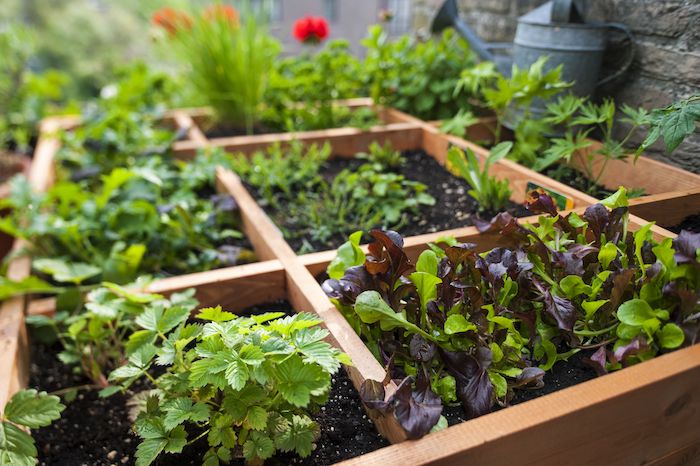
Square Foot Gardening provides an efficient, space saving way to maximize yield for area.

1. Square Foot Gardening

Square foot gardening was originally devised as a way to teach growing capabilities and capacities to people in underserved areas. They can be made in nearly any size or configuration.

There are some solid reasons you might choose to follow a square foot gardening format. The planting guidelines prevent crowding while helping to maximize the space available and eliminate the wasted space of row planting. Similar plants are grown in non-linear configurations as they would in the wild so that they are not crowded out and can reach optimal size.

This same aim of efficient use of space also applies to how the garden is physically built. It is a raised bed that is visually divided by materials like wooden dowels, string, or twine tacked into a square-foot grid. This allows the cultivation of personal amounts of produce, in small areas, with little need to travel.

As they are raised beds, less bending is needed, so they are less work to maintain.
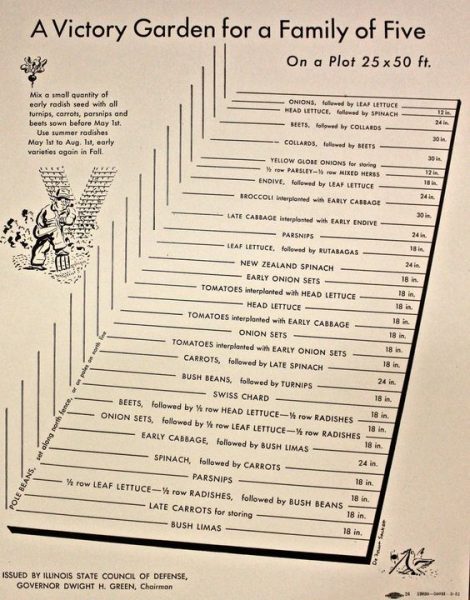
During WWII civilians were encouraged to grow ‘victory gardens’ to offset some of the need for staple foods required by troops overseas.

2. Victory Gardens

The victory garden is seeing a comeback in these uncertain and turbulent times. While it started as a way to reduce reliance on staples in order to free up rations during the second world war, it is once again enjoying a resurgence in popularity.

Victory gardens are designed to provide most of what a family of two to four people will need for much, if not all, of the year. With a high reliance on beans, drying and preservation will be crucial for maximizing the usefulness of the garden.
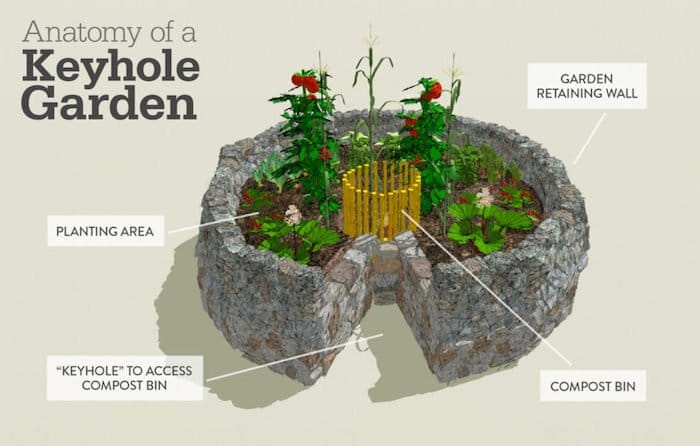
A keyhole garden gives the gardener the advantage of being able to stand in one place and tend the total surface area.

3. Keyhole Gardens

Keyhole gardens are perfect for hot and particularly dry climates. They consist of a wide round garden that is several feet deep and has a small radial arc of material removed.

With this material removed, the gardener can stand in the center of the garden, with the produce at approximately waist height. All areas of the garden can be reached easily by the gardener with very little strain on the back.

Since they are so deep, a key benefit of constructing keyhole gardens is their resistance to drought. Cardboard layered into the soil also helps to prevent water loss through evaporation. The center is preferred to be a compost bin with a base of rock at least the size of gravel, to facilitate drainage. As the material in the bin composts and is watered into the surrounding soil, it helps feed the crops in the garden. 

Keyhole gardens do not make especially efficient use of space, since they are often quite a bit deeper than simple raised beds, but they do offer an extremely rich substrate to grow in.

Since they are fed by the compost, as well as being primarily watered from there, keyhole gardens are perfect for root vegetables like carrots, radishes, and beets, and leafy vegetables like spinach, lettuce, chard, and herbs.
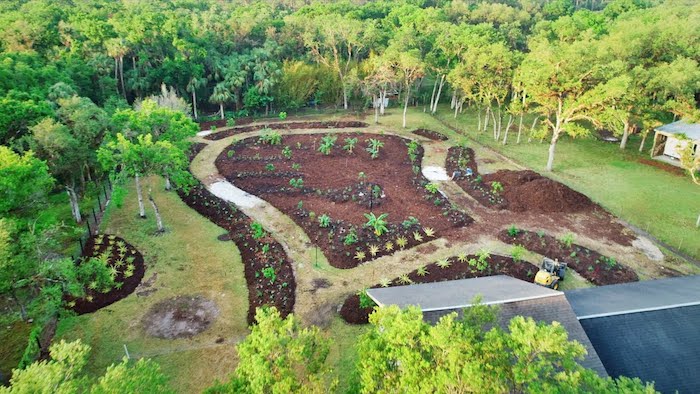
A ‘food forest’ emphasizes plant guilds and dispersed plantings to maximize production.

4. The Permaculture Food Forest

One of the hallmarks of a permaculture style “food forest” is that it’s typically not in 1 specific “garden.” Rather, the plants and trees making up a food forest are strategically scattered throughout an area, to take advantage of microclimates, optimal growing conditions, and companion plantings as much as possible. 

If you have a larger area and are looking to build an extremely diverse and naturally productive garden, creating a food forest modeled on permaculture principles might be the perfect option.

The benefits of permaculture systems are myriad. They not only focus on boosting biodiversity across the board, they also promote function stacking.

For example, a portion of the food forest may utilize clover as part of the ground cover. Clover could “stack functions” by not only preventing weeds, but also acting as a nitrogen-fixer, increasing the available nitrogen for neighboring plants. A 3rd function of a clover ground cover could be that it’s a source of pollen for important pollinators like bees and butterflies. This mentality will extend to many aspects of gardening and is the foundation for the entire permaculture model.
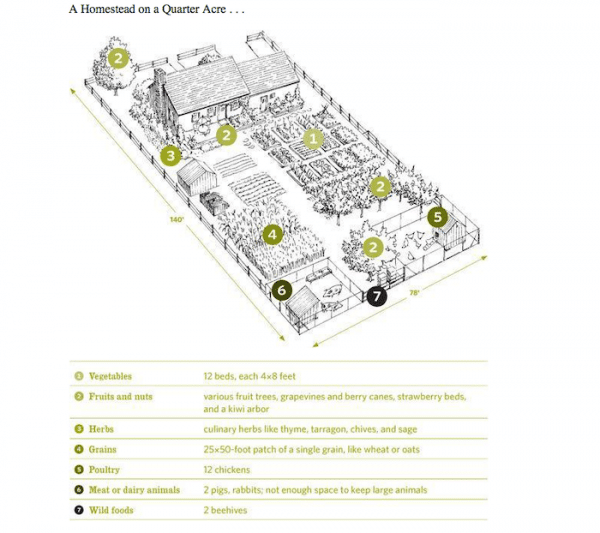
“The Backyard Homestead” book offers a variety of garden layouts for different sized areas, from 1/8 of an acre to 2+ acres.

5. The Backyard Homestead Layout

The concept of a “homestead” is one that feels bigger than just a vegetable garden. Instead, a homestead typically incorporates fruit trees, perennial plants like berries, animals like chickens and goats, honey bees, or any number of other things. Still, at its core, the goal of a homestead is in line with survival gardening–support and sustain the lives of the people living there. 

The Backyard Homestead Book is a popular and info-packed resource for planning maximum food production, even on postage-stamp-sized lots in the city and suburbs. It has a comprehensive walk-through of all the pertinent info you need to begin your journey towards self-sufficiency and self-reliance.

It covers the basics like garden design and crops to plant, but then it takes things a step further, by covering material on food preservation, highlighting methods like pickling, canning, even drying, and dehydration. This gem will help you through the entire food production process, from seed to snack.
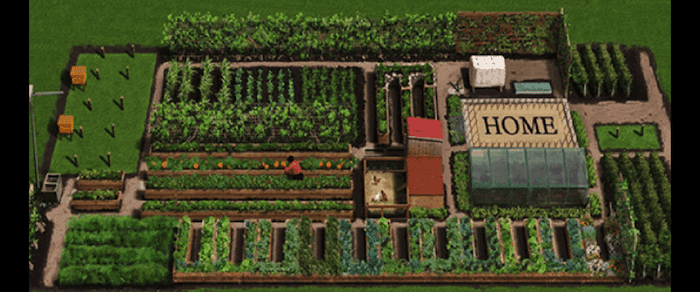
In “The Self Sufficient Backyard”, Ron and Johanna Melchiore share the garden layout they have used at their off grid homesteads.

6. Self Sufficient Backyard Layout

This is one of those resources that you can keep on your bookshelf, and every time you read it you seem to find something new and useful in it.

It is written by a couple that would be considered modern-day pioneers, living a lifestyle that includes growing their own food all year, collecting water, producing natural remedies from foraged plants, and using renewable energy.

It is a great book for anyone looking to begin the transition to a more self-sufficient lifestyle, or anyone wanting to learn how to effectively use just a quarter acre to produce food and energy for their own family.

What should I grow in my survival garden?

That is a very open-ended question, but we can start to narrow it down by your growing zone and garden location. It is important to have a large variety of nutrient-dense vegetables, and ideally ones that can also be stored in some long term fashion, whether it is by canning, drying and dehydrating, pickling, or cellar storage.
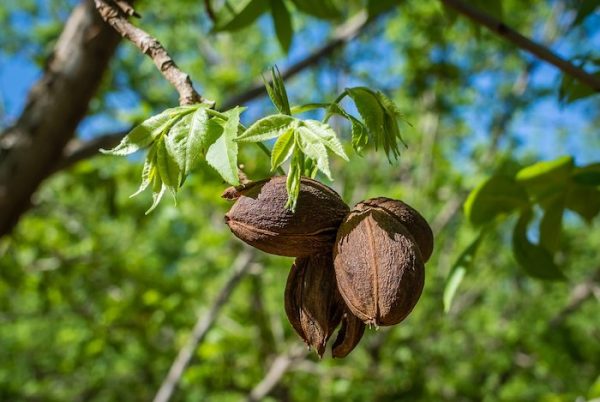
Nut Trees for The Survival Garden
Nut trees supply valuable protein and calories for survival.

Proteins & Fats

You will need plenty of protein and fats in your diet. Protein is needed to build and maintain muscle mass and fats are needed as a source of energy. 

  • Nut trees: Hazelnuts, hickory nuts, walnuts, pecans, chestnuts, and so many others. The options for nut trees that will grow in the US is impressive. Nuts can provide a source for healthy unsaturated fats, as well as omega-3 and omega-6 fatty acids, and are full of vitamins and minerals.
  • Chickens: While not a vegetable, you certainly can raise chickens in your garden area. You will need to take some infrastructure precautions to ensure they do not eat your plants, but letting them free range in the area will keep your gardens largely bug free, and cut down or eliminate the need for separate feeding.
  • Beans: An important source of vegetarian protein, beans and other legumes also provide ample fiber and a robust dose of antioxidants. Even if you are growing chickens or other livestock for meat, beans will be a vital source of supplemental off-season protein.
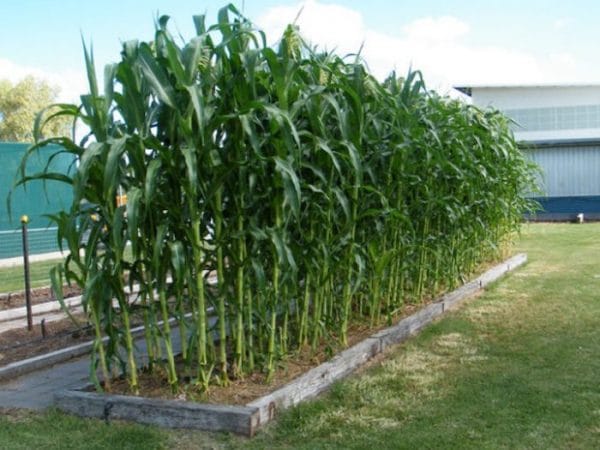
Backyard Corn for the Survival Garden
Backyard corn is easy to grow, nutritious, tasty, and can be dried and stored.

Carbs

Carbohydrates are forms of sugars that occur in starchy or fibrous foods. They are an energy source and are broken down and metabolized into either long-term or short-term energy.

  • Potatoes: Potatoes are a fantastic and long-storing carbohydrate. It is an easily grown root vegetable that stores well and can be used in countless ways. A smart planting of potato slips can contribute hundreds of pounds of potatoes for your stores.
  • Corn: A relatively fast-growing cereal grain, corn is very versatile and can be used and stored in many ways. With minimal processing, it can also be converted to feed, flour, alcohol and fuel.
  • Beans: You thought we ran through all the benefits of beans? Nope! Beans will also fill a slot for complex cards, giving you a source for the long term, all-day energy you are going to need to keep your homestead running.
  • Squash: A plant that is incredibly nutritious and versatile, squash is another vegetable that can store easily, in its native state, for long periods. The meat is generally eaten roasted or steamed.
  • Peas: Peas are a good source of starches, like potatoes, they are great thickeners. They are high in fiber, protein, and vitamins A, B6, C, and K.
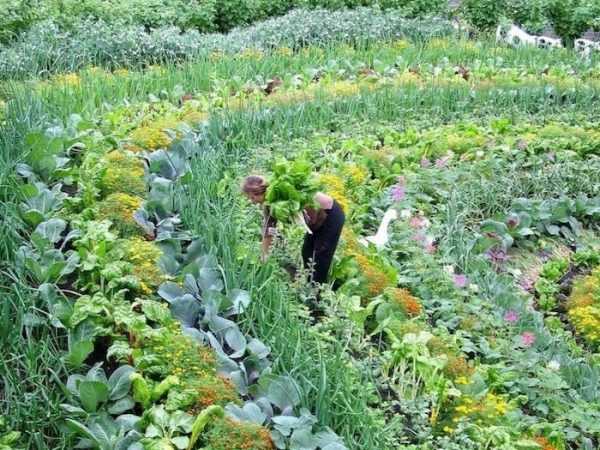
Greens and Micronutrients for Survival
In addition to critical calories, a well-rounded survival garden needs to include vitamin-rich greens and vegetables.

Vitamins and Micronutrients

Vitamins, minerals, and other nutrients help your body to function by providing essential components to support bodily processes.

  • Chard: A leafy green that is great in salads, and adds a splash of color. A common ingredient in healthy diets, both the leaves and the stalks can be eaten.
  • Spinach: A super healthy leafy green. Loaded with antioxidants and nutrients, and a great source of iron.
  • Garlic: Closely related to onions, garlic is in the same family as leeks, shallots, and chives. Garlic is a long-standing favorite and is used to season cuisines the world over.
  • Broccoli: The tiny trees that are the bane of every child’s dinner plate. One of the most versatile plants, can be eaten raw or cooked, and the leaves, stalk, and flowering head can all be eaten. Growing broccoli provides a great return on investment.
  • Cauliflower: Another relative of the mustard plant, cauliflower often resembles cheese curd but has a texture that couldn’t be more different.
  • Kale: A close relative of cabbage, kale is packed with nutrients and vitamins. Care should be exercised not to eat kale to an excess, however, as it contains a compound that can interfere with thyroid hormone synthesis.
  • Cabbage: Is a leafy green that gives a tremendous amount of leaves on each densely packed head. They can grow very large and can be stored for long periods and used as needed, like potatoes and other staples. A great source of vitamins K and C, along with significant dietary fiber. 

Medicinal Herb Garden for Survival
Medicinals herbs, such as lavender, lemon balm, and calendula are a fantastic way to add value to a survival garden.

Medicinals

You may want to consider adding a section in your garden to contain your medicinal plants. These are plants that can be used to treat common ailments like headaches, inflammation, and pain. Often made into teas, salves, or pastes. Common medicinal plants you may want to consider include:

  • Calendula: known to be an antifungal, antiseptic, healer of wounds.
  • Cilantro: Helps digestion, possibly linked to heavy metal removal from the body.
  • Lemon Balm: Relaxing effects with possible antiviral properties.
  • Peppermint: Helps with digestion if brewed in tea, and soothes aches when applied topically.
  • Rosemary: Increases oxygen to the brain, a great alternative to caffeine.
  • Mullein: Can help heal respiratory infections.
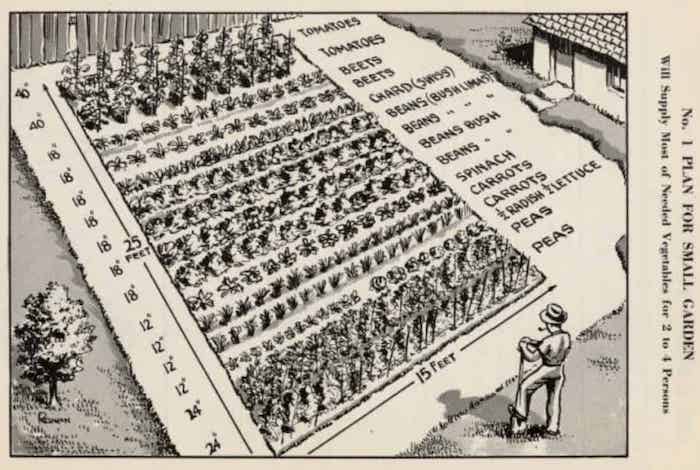
‘Victory gardens’ were simple row gardens emphasizing beans and other staple vegetables widely adopted by civilians during WWII.

How much space do I need to grow it all in?

That is probably the best part about a survival garden–there is no one single way to do it that will be best. Do what is right for you and your circumstances. This means it is extremely easy to adapt this information to your needs. From tiny urban gardens to acres of country land, there is something for everyone.

Urban gardens are growing in popularity and are becoming more widely permitted. There is a push in many urban centers for green rooftops to reduce HVAC load and provide additional food for building residents.

Agriscaping is transforming common landscapes into productive agricultural spaces. This can look like neighborhood food forests or fruit and nut trees alongside the street in place of ornamentals. Many neighborhoods have begun creating spaces that function as both food forests and community gardening space. 

All that said however, one of the early contributors to SCP Survival shared the following recommendation from her grandma who was a serious gardener at the turn of the century:

Grandma Carrie’s Rule of Thumb (how big does my garden need to be?)

Grandma Carrie grew and preserved everything that her family ate in the late 1880’s and early 1900’s short of wheat, sugar, salt and spices.  Her garden was well over a quarter acre. And she had a rule of thumb – One quart per person, per day.

Since she was feeding ten people she would need to can 3,650 quarts of fruits and vegetables.  Add to that the crops that went into the root cellar, some crops were dried and stored in burlap bags, milk and eggs were gathered year ‘round, animals were butchered as needed and the meat was stored in crocks.

To supply each member of the family with their “quart a day” you should plan approximately 1,000 to 2,500 square feet of garden space for each person.  This amount depends on soil fertility, the crops you choose to grow, methods of cultivation, and the length of your growing season. Other food sources like fruit trees and livestock also play a huge part in the amount of vegetables you need.

A 2,000 square foot garden would be a 40 foot by 50 foot section of your property. This can be a pretty significant undertaking especially if you have no experience gardening. Crops such as squash and cucumbers require significantly more space than spinach, Swiss chard, carrots, onions and beets.  Peas, tomatoes and some beans do best with a fence, cage or pole to grow UP on which decreases the square feet necessary.

Here are some rough estimates on space to yield for feeding four people for one year:

CropGarden SpacePoundsCanned or Frozen
Beans (green)300 square feet17590 quarts
Beets100 square feet7524 quarts
Broccoli100 square feet7548 quarts
Cabbage100 square feet15040 quarts
Carrots100 square feet12030 quarts
Cauliflower120 square feet6020 quarts
Corn200 square feet15040 quarts
Cucumbers24 square feet (3 X 8)5535 quarts
Onions50 square feet1305 quarts dehydrated
Peas200 square11020 quarts
Peppers50 square feet7530 quarts
Potatoes300 square feet400 – 500Store in cool, dry place
Squash24 square feet (3 X8)10020 quarts
Swiss Chard or spinach200 square feet9035 quarts
Tomatoes150 square feet500200 quarts *

*Estimate based on ½ whole and ½ sauce

This chart would be 2,018 square feet of growing space without any paths in between them. I have given the yield in quarts but to have a better idea if this would suit your family, you will probably want to consider pints (or twice as many jars half the size). For example, one pint of beets would probably be adequate for a meal for four people, a 100 foot row will yield around 48 pints which would provide enough beets for one meal a week for a year.

This chart provides 657 quarts plus potatoes, about half of Grandma Carrie’s rule of thumb. 
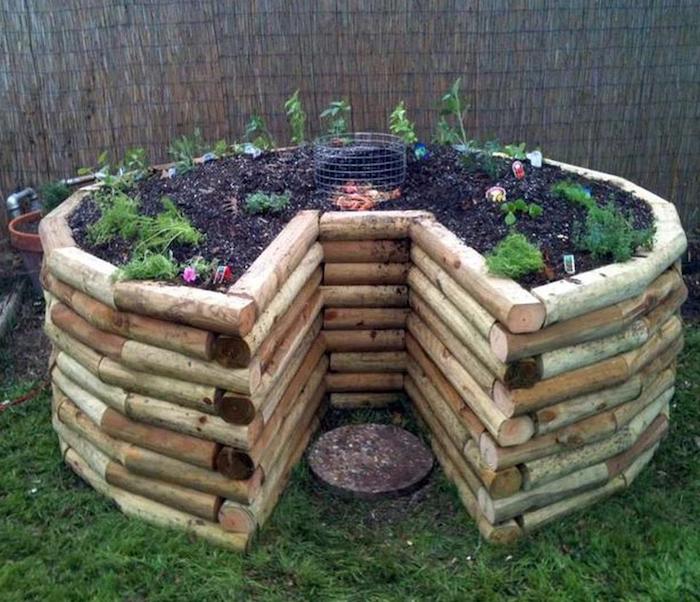
‘Keyhole gardens’ circular configuration benefits from central watering and composting.

What is the best location for my survival garden?

You will want to make sure you evaluate all possibilities before deciding where to put your garden. Make sure you consider the exposure to the sun, water, soil, and how easy it will be for you to access it as often as you will need to.

Most people think about the first few, but not everyone considers access. The last thing you want to do is put a big garden plot in what you think is a perfect place, only to have to lug all your gardening equipment or any tools you need, to a garden that is now quite inconvenient to get to.

When considering your garden’s placement, you will naturally have to consider the sun and water placement. If you live in the northern hemisphere, you will want to make sure your garden is south of your house, or far enough north of your house that it will not lie in its shadow. Use this same logic when plating. When possible plant so that the taller crops, like corn, on the north end of the garden bed, so that they do not cast a shadow over the other plants.

One of the principles of permaculture is the zones of use. The mindset being that you do not want to expend excess energy to get to things you use all the time, and things that are largely self-managing should be the farthest away. It also simplifies care and harvesting. The zones of use are:

  1. Zone 1 is the most visited area or areas. This zone will have things that either need daily attention or that you use daily. Examples of things to grow in zone 1 are seedlings, salad components, cooking herbs, or anything that needs daily water, like a lemon tree. Believe it or not, animals are ideally sited in Zone 1.
  2. Zone 2 are things that still need attention, but not specifically daily. If your particular setup allows for it, zone 2 is irrigated. Zone 2 is also mulched. Examples of zone 2 plants would be smaller fruiting trees and trellised fruit vines, bramble berries like blackberries, raspberries, and blueberries. This is also the zone that contains windbreaks, ponds, and barrier hedges. Plants that are only harvested once or twice per season belong here like potatoes and corn.
  3. Zone 3 is semi-managed. An example of zone 3 plants would be large and mature fruit and nut trees. It is not mulched, nor visited on any regular basis.
  4. Zone 4 is a minimally managed area for foraging wild foods and growing timber.
  5. Zone 5 is completely and entirely unmanaged. All pure native plants and wildlife. 

Keep in mind what you will eventually be planting, and be sure to plant companions together when possible. The main idea of companion planting is that you plant different crops together, they help sustain each other and ensure you have a strong and fruitful harvest.

Companions can be used for pest deterrents, balancing out nutrients, and attracting pollinators. For instance:

  • Tomatoes work very well with beans, chives, and oregano, but not with corn, dill, and potatoes.
  • If you want a successful cucumber and squash harvest, plant corn, beans, or radishes with them.
  • If you have pine trees on your property, be careful not to place your garden where the shed needles fall, since they make the soil very acidic.

For more on companion planting, check out this comprehensive guide.
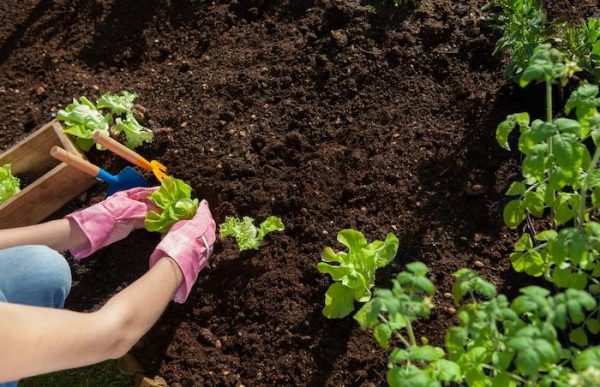
Soil For Gardening
Liberal composting and adding organic matter contributes to loose, loamy soil (the ideal structure for growing vegetables).

Knowing Your Soil is Crucial

The quality of your soil is the imperative. Much more needs to be done to prepare a garden space than simply digging up the lawn. “Friability”, or easy to crumble is normally the first obstacle to overcome. Grasses can grow in clay – or cracks in asphalt for that matter but vegetables need lose, crumbly, loamy soil. Amendments need to be made in the way of compost, perhaps sand and possibly nutrients to alter the pH level.

How do you intend to water your garden? Tomatoes for example, need to be soaked 6-8 inches deep every 5-10 days depending on the heat and amount of rain you have. If the grid is down, is your water down? If you are collecting water in a rain barrel, do you intend to drip irrigate or hand water? Is one barrel enough? Do you have all the materials on hand now?

Want Some Extra Credit? Here Are Some Gardening “Force Multipliers”

The following are tools or techniques used to be more effective at reaching your objective of producing enough food to survive. They help you get the most out of your garden by helping to create ideal conditions, one way or another, for your crops.
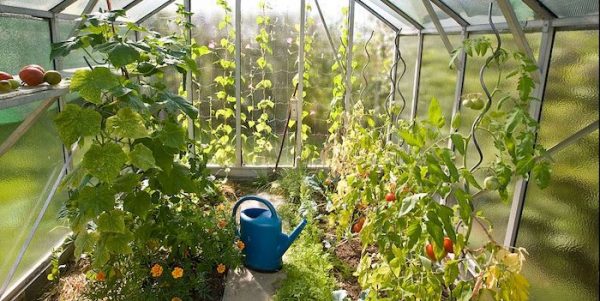
Greenhouse for Survival Garden
A greenhouse gives you an extension of the growing season at both ends, allowing you to start sooner, and grow later.

Greenhouse

A greenhouse is one of the common things that people think of when picturing a large garden set up. A greenhouse is a large open building that is largely transparent or translucent, allowing in sunlight, but also sealed against the outside elements.

Utilizing a large amount of solar gain, greenhouses are able to trap solar energy in the form of heat, and can often be used to extend the growing season.

Greenhouses can be used to grow later into the year, in order to gain an extra harvest or two, and also to begin earlier each year, by providing a warm place to germinate seeds and give plants a head start before transplanting to the soil once the threat of frost has passed.
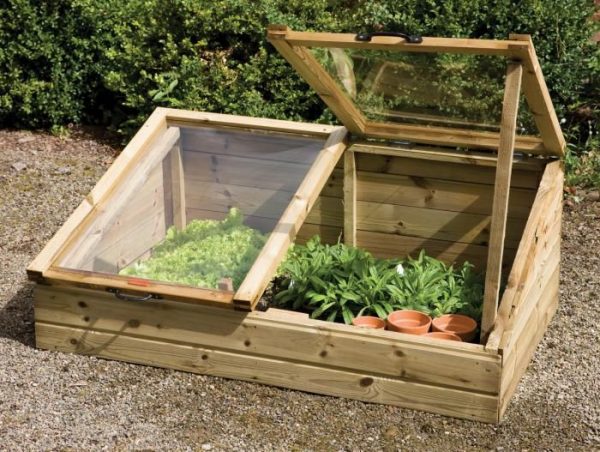
Cold Frame Gardening
Operating on principles similar to a greenhouse, cold frames amplify the suns rays to maximize cold weather plant growth.

Cold Frames

Cold frames use the same principles of trapping solar energy as greenhouses but on a much smaller scale. Cold frames are made from a wooden box similar to a raised bed, frequently angled toward the south. They will usually have a windowed lid, often made from an upcycled home window that is attached to the top with a hinge so that it can tilt open for easy access to the contents.

Cold frames are frequently used in the same manner as full-size greenhouses, to either continue growing past the fall frost dates or to gain an early start by germinating seeds and plant starts before they would normally be able to be put in the ground.
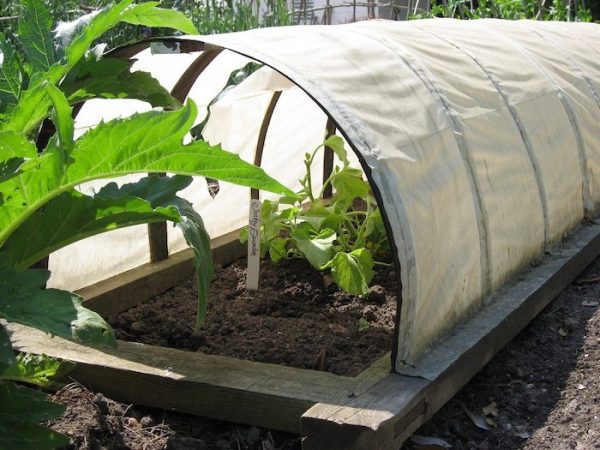
Row Covers for Gardening
Row covers are another way to extend the growing season and protect plants from cold weather.

Row Covers

Row covers are also known as low tunnels. A crucial force multiplier for those who utilize planting rows for their crops, row covers can protect from freezing temperatures, wind, and pests.

They are essentially tiny hoop houses that run the length of the planting rows. They are very low to the ground and often only allow around 1-2 feet of clearance for the plants they cover, and as such are only suitable for very young plants or those that grow close to the ground like root vegetables and greens. They help keep the soil in the row warm for early season starts, and for late-season harvests.
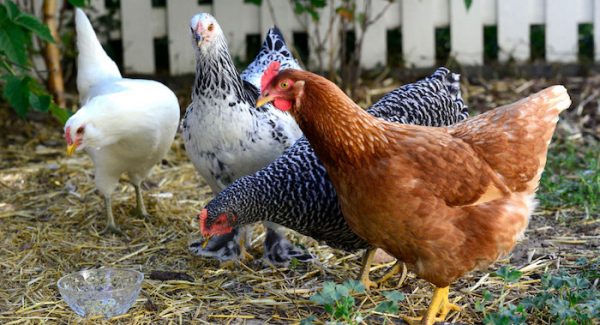
Backyard Chickens for Survival
Backyard chickens offer eggs, meat, pest control, and fertilization.

Chickens or livestock

Introducing chickens or other small livestock to your survival garden can have several benefits. Not only will they create manure that will be essential to your composting and fertilizing capabilities, but they also can help reduce pests and insects.

People do not give chickens enough credit, they are amazing little omnivores. They eat just about any organic matter you allow them to, but they will also meet you halfway on the cleanup, tilling most of their waste directly into the soil. You do need to keep an eye on them, and make sure that they aren’t sick. If so, there are a handful of DIY chicken doctoring things you can do own your own.

Guinea fowl are another valuable addition, frequently eating so many nuisance insects like ticks, that they will not need any supplemental feeding. Using livestock in conjunction with a rotating pasture system will allow you to always have perfectly fertilized and productive soil ready for planting, while your livestock always has fresh ground to work.

Compost for Garden
Composting accelerates the breakdown of organic matter to fertilize and add vital nutrients to your garden.

Composting

Generating your own compost is an incredibly valuable process for anyone seeking to grow large amounts of high-quality produce.

Composting is the breaking down of common solid organic matter by aerobic bacteria. It is used to recycle organic material into nutrient-rich material called compost that is similar to humus. It is one of the best soil amendments and can be a valuable fertilizer for self-sustaining gardeners. 
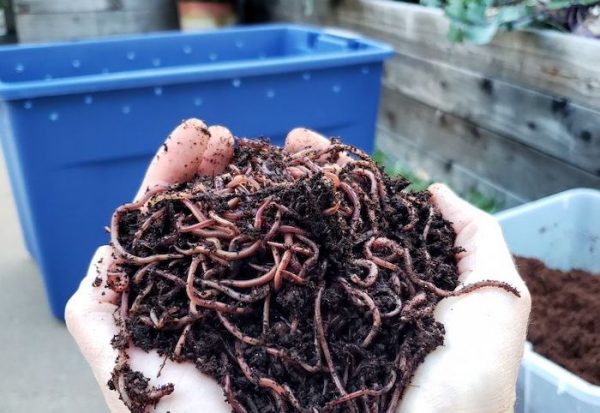
Vermicomposting for Gardening
Vermicomposting is another means of accelerating nutrient breakdown, in order to create a nutrient-rich additive to add to the garden.

Vermicomposting

Similar to composting, the goal of vermicomposting is to create a nutrient dense growing medium from discarded organic materials. The basic process is the same, the organic matter that would normally be discarded is added to the compost pile, decomposed aerobically, and turned into a usable highly fertile soil material.

The difference is that in normal composting the main agent breaking down the matter is aerobic bacteria and other organisms, and with vermicomposting that process is accelerated through the use of earthworms to break down the material faster and more thoroughly than without. 
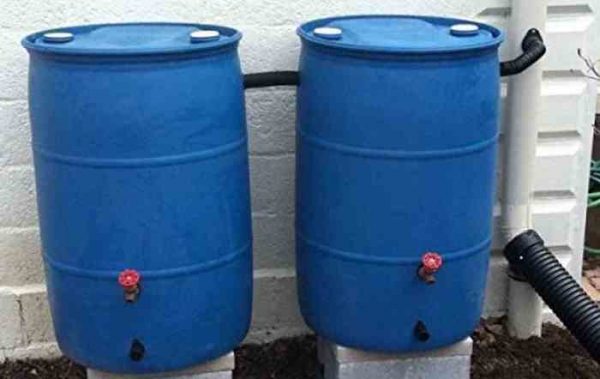
Rainwater Harvesting
Rainwater harvesting is a low cost way to contribute to the water that your garden needs.

Rainwater harvesting

One of the most valuable resources for gardeners, water, literally falls from the sky. With a little preparation and sweat equity, a rain catchment system can quickly and easily be implemented, allowing the storage of large quantities of water for later use.

Rainwater harvesting is often done with a minimum of special equipment, generally requiring little more than a roof, a gutter with a downspout, and a rain barrel or water tank. Provided measures are taken to discard the water contained in the “first flush” which will contain debris and contaminants that should be allowed to wash away before collection begins, rainwater can easily be made potable.

Earthworks and Landforms

A very effective method of large scale gardening and permaculture resource management is to create earthworks to help control water flow and erosion. These methods can include:
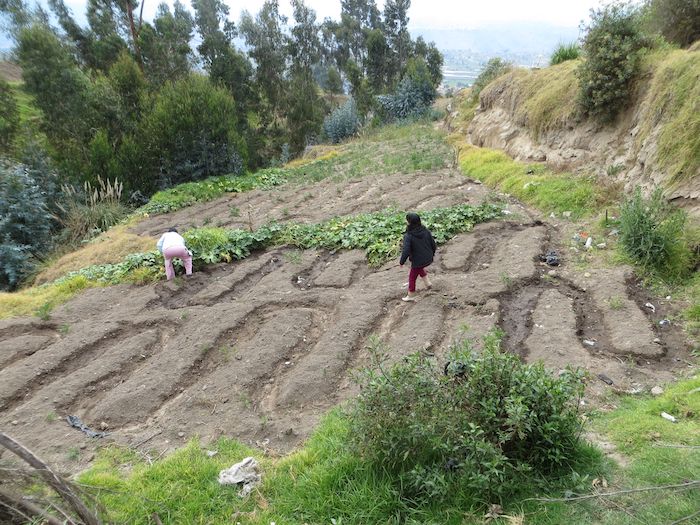
Ditches spread and convey water from high to low ground, and can be designed to weave throughout your garden, maximizing surface area and contact with multiple plants.

Ditches

Ditches are essentially a trenched drainage device. Ditches are going to be fairly deep and narrow, allowing an easy way to direct high volumes of water that will also be fast-moving.

A ditch will often be used to prevent a surge of water volume from eroding other portions of the gardening or crop areas. For example, ditches may be utilized to funnel water runoff from a large rainstorm away from delicate beds of greens or herbs, and directed to a swale where it can be spread out over a larger area, slowed down, and allowing the water to settle and soak in.
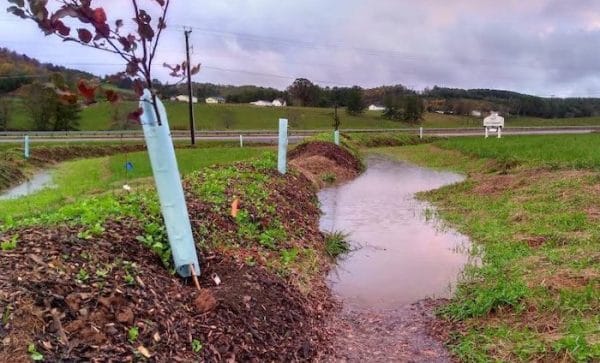
Swales for Permaculture Gardening
Swales help to slow and spread water throughout the landscape to where it is needed most.

Swales

Swales are large, open, gentle depressions that follow the contour of the land, allowing stormwater runoff a place to slow down and spread out over a larger area, eventually facilitating settling and absorption.

They are broad and shallow and are only slightly depressed when compared to the surrounding area. Swales are perfect for filtering runoff, immobilizing contaminants, pollutants, and particulates by allowing them to settle and be filtered by the surrounding soil. 
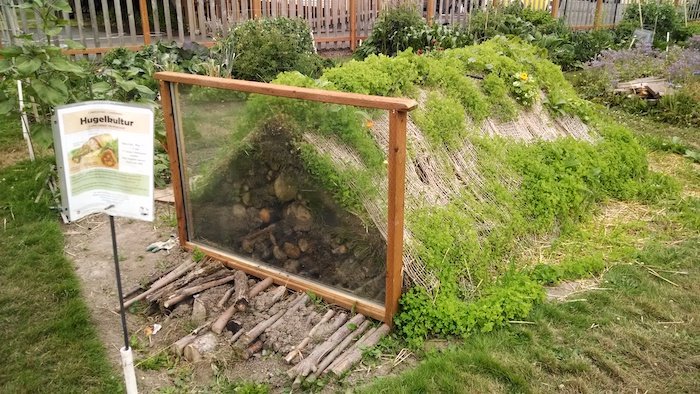
Hugelkultur mounds act like a nitrogen sponge, with carbon-heavy, woody material at its core.

Hugelkultur

Often thought of as the perfect companion to swales, the hugelkultur or more simply “hugel”, is a hill or a mound for growing, that is built on a foundation of a pile of felled trees or rotten wood. It is ultra-low maintenance and drought-resistant garden and earthworks feature that will produce a fertile mound of growing medium that only gets more productive over the years as the wood continues to rot and release nutrients into the soil around it. 

While it takes a good bit of effort to physically construct the hugel, it will compound the benefits it offers over the years. For the first several years after its creation, the aerobic decomposition will have an exothermic effect on the soil, giving you a longer growing season.

In the years following that, the wood will begin to shrink and will create voids that allow a self tilling effect to take place. The rotting wood will also hold water like a sponge, retaining large amounts of water that are automatically released into the surrounding soil, combating dry conditions, and reducing or eliminating the need for separate irrigation. 

The main thing to remember with hugels is to use wood in the core that will rot and decay. Do not use any rot-resistant or allelopathic woods like cedar, black walnut, l7 or black locust. They will not rot, and will actually inhibit microbial growth, significantly reducing the desirable effects produced by the decomposition.

Preservation and Long Term Storage

While the short term goal with your garden is to feed yourself and your family, the long-term goal is to have a decent stockpile of survival foods. There are many methods that you can utilize that will allow you to save your harvest and to feed your family over a tough winter or in an emergency.
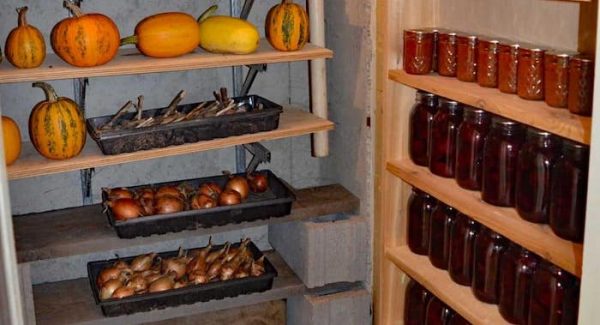
Root Cellar for Food Preservation
Root cellars are a time-honored method of extending the harvest over the winter.

Root Cellars

One of the oldest long-term storage methods, root cellars work to preserve and store food by using the cool dampness of being underground to their advantage. Root cellars are nice and cool, but still above 32°. They are also humid which allows vegetables to retain their moisture and preventing them from turning rubbery. In addition to root vegetables, cellars are great for storing nuts, seeds, and even some fruits and vegetables.
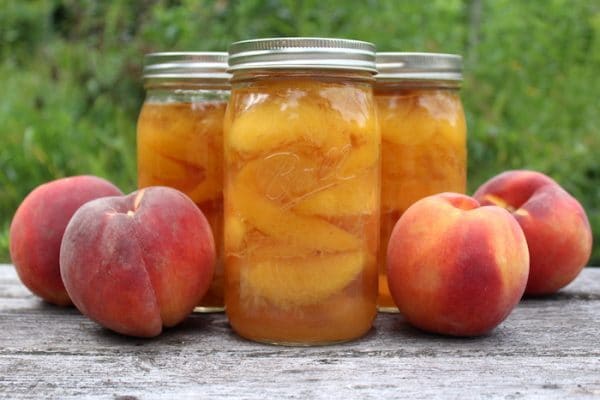
Canning Fruit and Vegetables
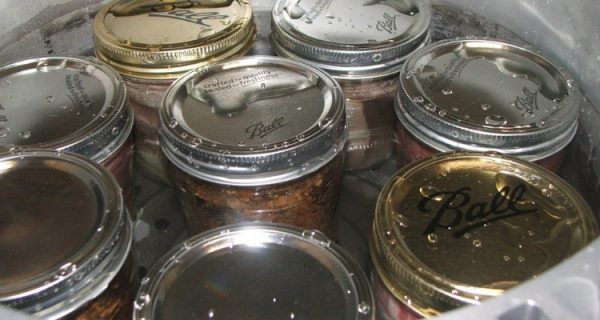
Fruit canning or “bottling” can be done with just a hot water bath, and extend the life of your harvest for several years.

Canning

Canning is a great way to save meats, stews, veggies, and jams for later use. With canning, you use mason jars to store and preserve your foods and either pressure or hot water method to seal them. The lids of the jar have a wax ring that seals to the rim of the jar. If left in a cool, dark place, home-canned items can be stored for a year or more.
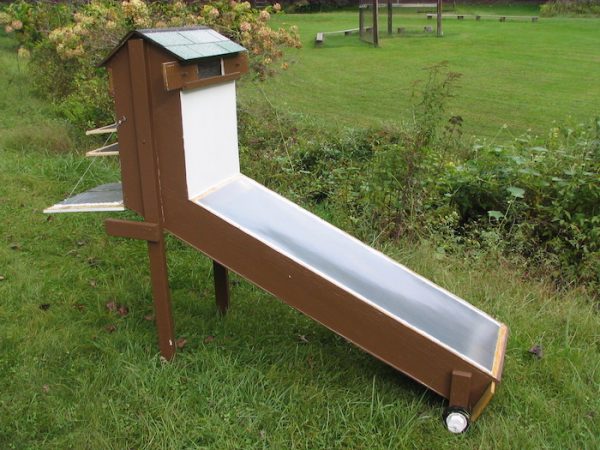
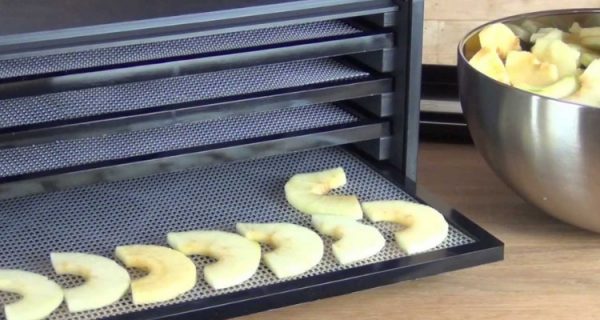
Solar Food Dehydrator
Though not as long-lasting as food that is canned, dehydration is a low-tech, cost and energy efficient way to preserve your garden’s yield.

Dehydration

Dehydration is a fantastic way to preserve your favorite fruits, vegetables, and even herbs and meats! Some items you will want to eat in the dried form such as apple chips, others you may want to rehydrate by soaking in hot water or adding to soups and stews.
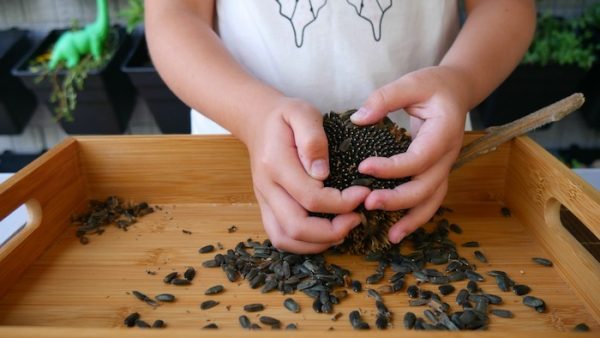
Saving Seeds for Survival Gardens
In order to complete the food production loop, seed saving gives you what you need to start again next season.

Seed Saving

While most seeds you won’t be eating, saving your seeds is an easy way to get a jump on your garden for next year. Saving the seeds from fruits and vegetables that you grew this year allows you to cut down on your gardening costs in the future. Heirloom seed preservation is also important for genetic diversity and can be traded and sold.

Getting Started

There are many articles out there inferring that preppers should buy seeds packaged for long term storage so that when the shit hits the fan they can dig up part of the lawn and grow their own food. This is a woefullly misguided notion. Remember, the time to start learning is not when you are hungry.

Once you have taken all the factors into consideration and chosen a location, it is time to plan out your garden. Make a sketch on some graph paper of your garden, and get that seed catalog handy. If you need help planning it, the Farmers Almanac has a very easy to use garden planner.

Once your garden is prepared, your layout is decided, and your seeds have arrived, you probably want to get planting, but you might be wondering when is the best time to start. The good news is, every season has things that can be planted, whether you are in spring, summer, or fall, there are plants that should be going in the ground to get ready for the upcoming growing season. 

You might think that because you weren’t ready until late August, you may have missed the summer season. And you would be right! But that’s alright, late-season brassicas do well, and fall is the perfect time to get some garlic and onions in the ground. The same goes for spring and summer, there is always something that needs to get in the ground soon in order to be ready for the upcoming season.

Winter is the perfect time of year to solidify next year’s garden plan. It is time to inventory the pantry to evaluate the most popular crops and adjust the garden space allotments accordingly. Heirloom seeds are inventoried, new seeds are ordered and indoor starts are planted. 
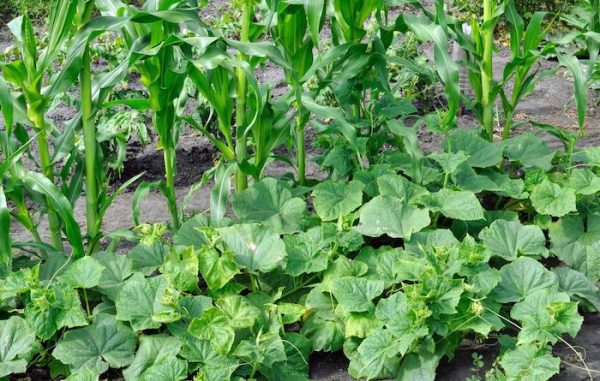
3 Sisters Garden Corn Beans Squash
The ‘3 Sisters’ garden is an American classic, combining corn, beans, and squash in symbiotic fashion.

Need An Easy Way To Start? Try the 3 Sisters

If you are eager to get started with an easy garden, you may want to try out a small plot with a “3 sisters garden”. This is a method that has been used for thousands of years to grow multiple crops in one place simultaneously, and is a perfect example of function stacking and utilizing natural architecture. This layout can also be adapted to nearly any type of garden.

You will plant beans (generally a pole bean), sweet corn, and squash. The rationale behind the companion plants here is that the corn provides a sturdy stalk for the beans to climb, while the squash leaves shade the soil, minimizes water loss, and prevents weeds, and the beans fix nitrogen in the soil for the corn and the squash to excel.

Filed Under: Gardening

Lawns Are a Liability, Here’s Why

March 1, 2024 by Seasoned Citizen Prepper

GIMME GREEN is a documentary examining American homeowner’s obsession with a beautiful residential lawn.

Here are some of the facts from their website:

  • Lawns are America’s most irrigated crop.
  • Lawns cover 41 million acres.  Every day, more than 5,000 acres of land are converted to lawns in America.
  • Americans spend more than 40 Billion dollars a year on their yards.
  • Americans apply more than 30,000 tons of pesticides to their yards every year.
  • The National Cancer Institute finds that children in households using lawn pesticides have a 6.5 times greater risk of developing leukemia.
  • In an effort to save water, Las Vegas lawn owners are paid a dollar per sq. ft. to remove their grass.
  • On average, Americans use 40 to 60 percent of their water on their landscapes.
  • In order to maintain all the lawns in America, it would take approximately 200 gallons per person per day.

For me, I decided to reduce my lawn and incorporate more edible plants after reading books like Beautiful No Mow Yards, and Edible Landscaping.

Then came dreams of a backyard homestead and a front yard garden inspired by YouTube videos, by Growing Your Greens and Garden Girl TV.

At first I was doing my part to preserve Mother Earth.  Then I was growing food to save money and to become more self sufficient.  These days I’m thinking about the lawn as part of my OpSec (Operational Security).  What I mean is, if the day should come when I can’t mow the lawn, whether it be the result of an EMP, peak oil, or the danger of wandering zombies – an overgrown lawn could be a big liability.

First, tall grass invites critters of the creepy crawly kind that you don’t want to be up close and personal with. Also, passing zombies, looking at a path worn in the tall grass can easily see how you routinely travel through your yard.

So, this spring, part of the plan is to reduce my lawn by 25%. I’m planning more vegetable beds while widening existing beds and sneaking a few edibles among front yard shrubs and flowers. I want to have plenty of good soil on hand now.  As part of my layout now, I’m also planning a nice, wide paver-path to yard destinations like the tool shed and the chicken coop.  Last, I’m looking to replace a small portion of the lawn with pavers for safe secure outdoor cooking area and a vegetation ground cover (strawberries?) to make it all pretty.

So whether you’re going green, growing food or considering life after the SHTF, start planning ways to make your lawn serve you instead of the other way around.

Filed Under: Gardening

The Ultimate Survival Food List: A 1-Year Supply for a Family of 4

March 1, 2024 by Seasoned Citizen Prepper

Survival food list for a one year supply, including grains, legumes, canned goods, and oils

A family of four needs roughly 2.9 million calories to eat for a year — about 8,000 a day. Almost every “survival food list” online skips that number, which is exactly how people end up with three buckets of rice and a dangerously false sense of security.

We’ve built and eaten from food storage in our own home, and the list below reflects what actually holds up. Stocking a real year’s supply is a two-front job: putting away food your family will actually eat, and knowing how to cook it. The second part trips up more people than the first.

We’ve watched folks proudly point to 200 pounds of dried beans they’ve never once soaked, ground, or simmered. The night the power’s out and the kids are hungry is the worst possible time to learn. So before you stack a single bucket, collect a handful of recipes you’ve actually made — start with our rice and bean survival soup (or its scrappier cousin, garbage soup) — so a bucket of beans isn’t some mystery you crack open in a crisis.

Survival Recipe Vault download

How Much Food a Family of 4 Actually Needs for a Year

Anchor your plan to real numbers before you buy a single can. Utah State University Extension — one of the most trusted names in home food storage — recommends about 300 pounds of grains per person for a one-year supply, of which 25 to 60 pounds should be rice (USU Extension, Storing White Rice). For a family of four, that’s 1,000 to 1,200 pounds of grain as your calorie base — plus legumes, fats, and the extras below.

The piece nearly every “rice and beans” plan forgets is fat. A pound of cooking oil carries about 4,000 calories; a pound of rice, about 1,650. Oil is the cheapest dense calories you can store, and without enough of it your stored food falls short and your meals feel thin. Plan on 80 to 100 pounds of oil, shortening, or lard for a family of four for the year.

Here’s a realistic one-year target for four people:

CategoryAnnual amount (family of 4)Rough bulk cost
Grains (rice, wheat, oats, pasta)1,000–1,200 lbs$500–$700
Legumes (beans, lentils, split peas)200–250 lbs$250–$375
Fats / oils80–100 lbs$250–$400
Sugar / honey60–80 lbs$60–$120
Powdered milk40–60 lbs$200–$300
Salt, leavening, bouillon, spicesas needed$50–$100

That lands a family of four near the ~2.9 million calories a real year requires, with protein and fat behind the carbs instead of just starch. Done frugally with bulk buys and case-lot sales, a true one-year supply runs roughly $900 to $1,500 — not the $300 you’ll see promised in the famous rice-and-bean bucket plan. That plan is a fine starting layer (it covers about five weeks of full calories for four), but we’d rather you know the honest number up front than discover the gap when it matters.

You don’t buy it all at once. Build in layers, cheapest-calories-first, a paycheck at a time. The full list below is your menu of options for each layer.

The Complete Survival Food Storage List for 1 Year

This is the full long-term food storage list to build your one-year supply, organized so you can work down it by category. Notes on shelf life, quantities, and how we actually use each group follow below the list.

  1. Waffle/Pancake Mixes
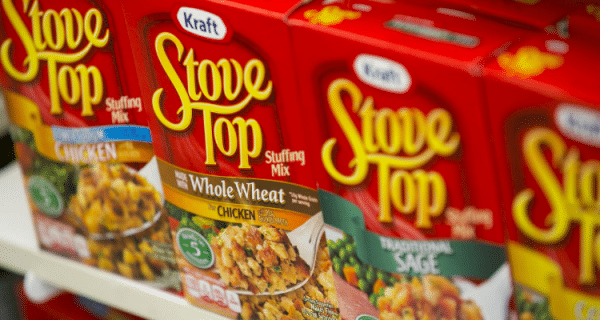
  2. Stovetop Meals and Stuffing
  3. Macaroni and Cheese
  4. Potatoes Au Gratin
  5. Canned Spaghetti, Ravioli and similar products (think Chef Boyardee)
  6. Bulk Pastas and Noodles — spaghetti, macaroni, fettuccine, linguini
  7. Couscous
  8. Bulk Instant Potatoes
  9. Cereals: in particular, think shredded wheat (some decent nutritional value)
  10. Oatmeal
  11. Instant Rice Mixes
  12. Canned Beans — much cheaper in dry bulk, but dry beans need a long cook. Keep at least a small supply of canned, ready to open and eat: Black Beans, Refried Beans, Pinto Beans, Garbanzo Beans (chickpeas), Baked Beans, White Beans, Kidney Beans, Butter Beans
  13. Peanut Butter and other nut butters: Almond Butter, Cashew Butter, Sunbutter (sunflower seed), Dehydrated Peanut Butter (longer shelf life)
  14. Protein Bars
  15. Protein Powder and Shake Mixes
  16. Canned Beef
  17. Canned Turkey
  18. Canned Chicken
  19. Tuna
  20. Salmon
  21. Spam
  22. Vienna Sausages
  23. Hot Dogs and Cured Sausages
  24. Dehydrated Eggs
  25. Boxed Tofu
  26. Canned Soups
  27. Dried Soup Mixes
  28. Make your own Rice and Bean Survival Soups (or “Garbage Soup“)
  29. Ramen Noodles
  30. Canned Chili
  31. Stews
  32. Chowders
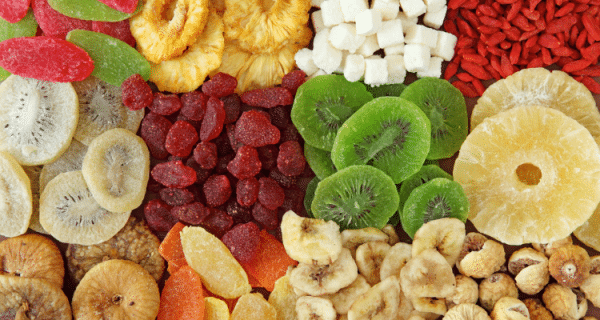
  33. Dried Fruits and Fruit Leathers: Apricots, Raisins, Cranberries, Banana Chips, Mixed Fruit
  34. Canned Fruits: Peaches, Pears, Applesauce, Pineapple, Mixed Fruit
  35. Jams, Jellies, and Preserves: Strawberry, Blackberry, Raspberry, Blueberry, Orange Marmalade, Apricot, Peach, Cherry
  36. V8 and similar vegetable juices
  37. Canned Tomatoes
  38. Canned Pumpkin
  39. Carrots
  40. Green Beans
  41. Corn
  42. Beets
  43. Peas
  44. Asparagus
  45. Mixed Vegetables
  46. Potatoes
  47. Salad Dressings
  48. BBQ Sauce
  49. Ketchup
  50. Mustard
  51. Mayonnaise
  52. Relish
  53. Soy Sauce
  54. Tabasco
  55. Olive Oil
  56. Coconut Oil
  57. Lard
  58. Organic Shortening
  59. Syrup
  60. Evaporated Milk or Sweetened Condensed Milk (condensed is usually sweetened)
  61. Powdered Milk
  62. Powdered Whey
  63. Shelf Stable Butter
  64. Ghee
  65. Shelf Stable Cheeses: Freeze Dried Cheese, Canned Cheese, Parmesan
  66. Granola Bars
  67. Popcorn
  68. Beef Jerky
  69. Pemmican
  70. Crackers
  71. Cookies
  72. Trail Mix
  73. Hard Cheeses Encased in Wax (can keep up to 25 years)
  74. Pickles (canned varieties carry less risk of glass breakage)
  75. Hard Candy
  76. Nuts (the fat content limits shelf life): Almonds, Walnuts, Peanuts, Pecans, Hazelnuts, Mixed Nuts, Sunflower Seeds
  77. Chocolate or Chocolate Chips — once your bases are covered, stash a little for morale (about a year of shelf life)
  78. Salsa
  79. Sports Drinks and Powdered Drink Mixes
  80. Coffee
  81. Teas
  82. Hot Chocolate
  83. Ovaltine
  84. Dry Beans: Black Beans, Black Eyed Peas, Garbanzo Beans, Kidney Beans, Lima Beans, Pinto Beans
  85. Hard Grains (hard shell, storable up to 25 years): Buckwheat, Dry Corn, Kamut, Hard Red Wheat, Millet, Spelt, Flax
  86. Soft Grains (softer shell, 8+ years stored properly): Quinoa, Rolled Oats, Soft White Wheat, Rye Berries, Oat Groats, Barley
  87. Legumes: Split Peas, Red Lentils
  88. Rice — note that brown rice is more nutritious but its oils go rancid fast; white, Basmati, or Jasmine store far longer
  89. Freeze Dried Fruit (fiber and antioxidants): Apples, Strawberries, Raspberries, Bananas, Blueberries, Blackberries, Mangos, Pineapples
  90. Freeze Dried Vegetables
  91. Freeze Dried Meat
  92. Flour (preferably whole wheat). Storing whole wheat berries is smart if you have a grinder — see bulk staples. More on this in our guide to storing flour long-term
  93. Cornmeal
  94. Grits
  95. Sugar
  96. Molasses
  97. Iodized Salt
  98. Spices and Seasonings: Pepper, Garlic, Chili Powders, Rosemary, Oregano, Mustard, Ginger, Cumin, Dill, Saffron, Vanilla Extract
  99. Apple Cider Vinegar
  100. Leavening (what brings dry storage to life for baking): Baking Powder, Baking Soda, Yeast (live culture, harder to store)
  101. Bread Mixes
  102. Coconut Milk or Coconut Milk Powder
  103. Bouillon Cubes
  104. Vegetable, Beef, or Chicken Stock
  105. Bread Crumbs
  106. Cornstarch or Potato Flour — thickening agent, also good for breading
  107. Honey (local if you can get it; great sugar substitute with antibacterial properties)
  108. Cocoa Powder
Survival food list - quick and easy boxed and canned meals
A supply of easy-to-prepare boxed and canned entrees puts food on the table fast, without much energy or effort.
Download 906 survival guides bundle

Quick and Easy Meals (see items 1-5 above)

Start your storage with a supply of easy, good-tasting box and can entrees. Soups belong here too. These aren’t health food by any stretch — but they’re quick, foolproof, and they buy you breathing room. When things are falling apart, you don’t want to be soaking black beans for three hours or baking bread from scratch. The job of these meals is simple: fill the family’s stomachs fast so you can regroup and figure out your next move.

Survival food list - shelf stable pasta for long term storage
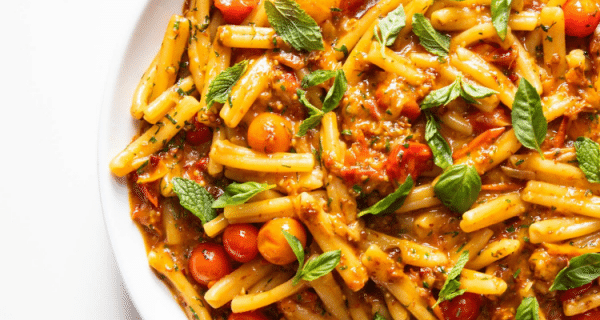
Pasta-based meals are an inexpensive, shelf-stable backbone for your food storage.

Grains and Starches (see items 6-11 above)

Grains and starches are long-lasting and easier to cook than most bulk staples. They’re cheap — bulk white rice runs roughly $0.50 to $0.70 a pound — and they should be the backbone of your storage. They’re carb-heavy and quick energy, but they shine when you pair them with proteins, sauces, and vegetables to round out nutrition and flavor.

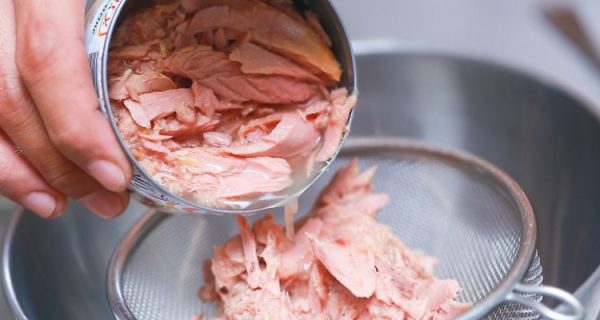
Canned food for emergency storage including tuna and canned fish
Tuna and other canned fish are an inexpensive, long-lasting source of protein.

Proteins (see items 12-25 above)

Protein rebuilds and repairs. You can get it from beans, nuts, and grains, but the densest sources are animal-based. Canned meats are the workhorse here — cheap, shelf-stable for years, and ready to eat. Jerky is tasty but pricier and shorter-lived, so we treat it as a snack, not a staple. Protein shakes and bars round things out for a quick hit on the go.

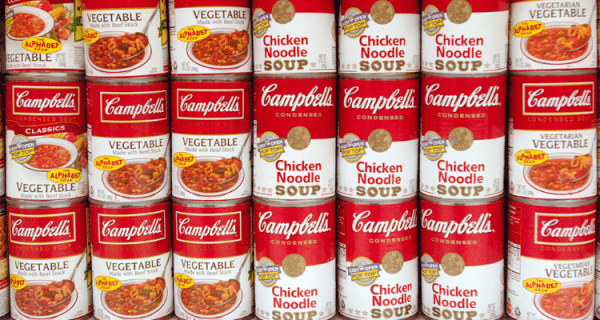
Survival food list - shelf stable survival soups
Quick, cheap, and ultra shelf-stable, soups are a workhorse of any survival food store.

Soups (see items 26-32 above)

Soup stretches. Need to feed two more people who showed up at the door? Add water and another handful of rice. It’s been the food of lean times and wartime rations for centuries because it’s easy to make, easy to extend, and usually very shelf-stable. Keep a mix of canned and dry soup mixes, and know how to build one from your own staples.

Survival food list - dried and canned fruit for vitamins
Dried and canned fruit add vitamins and flavor to a storage diet that’s otherwise heavy on salt and starch.

Fruits (see items 33-35 above)

Fruit makes everything taste better — stir it into oatmeal, snack on it, pair it with protein. It also pulls real weight: vitamin C, potassium, iron, fiber, vitamin A, and antioxidants, though some is lost in preservation. The best setup is your own fruit trees, emergency or not. Short of that, stock canned and dried. Dried fruit doesn’t keep nearly as long as canned, and if you grow your own, drying and canning are two easy ways to put it up — see the preservation supplies below.

Survival food list - canned vegetables for fiber and nutrients
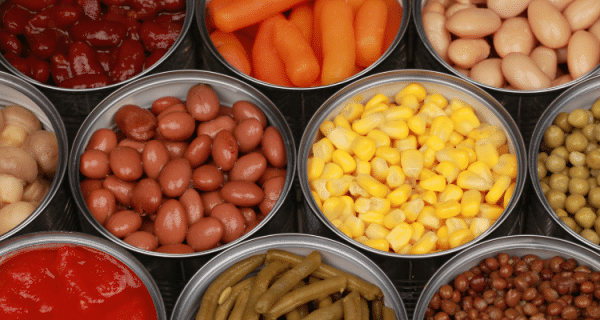
Beans, carrots, sweet potatoes and other vegetables bring fiber, protein, and a range of nutrients to long-term storage.

Vegetables (see items 36-46 above)

Vegetables bring fiber and micronutrients, and a few bring real calories. Lean on pumpkin, sweet potatoes, and other root crops for the highest energy per can. They’re less familiar to a lot of us at dinner, but with the right seasoning they’re filling and genuinely good. A long-term garden is the upgrade path here — see gardening for survival and the classic Three Sisters planting.

Survival food list - sauces, shelf stable oils, and condiments
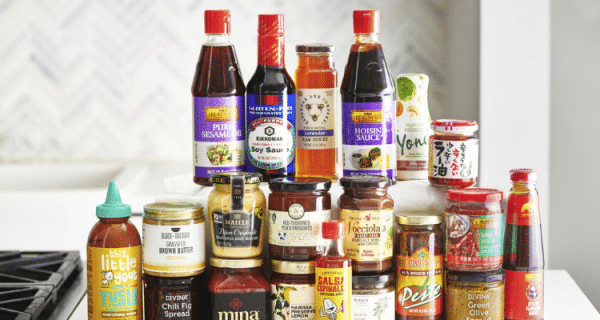
Condiments and sauces don’t last the longest, but they bring flavor and pair well with dry bulk staples.

Sauces, Oils, and Condiments (see items 47-59 above)

This group does two jobs: flavor and calories. Don’t skim on the oils — they’re the cheapest dense energy in your whole pantry and essential for baking and cooking. The catch is shelf life. Most cooking oils run about 1 to 2 years before they turn; coconut oil is one of the longer keepers. Label every bottle with its purchase date and rotate. We keep oil at the front of the rotation specifically because it’s the one calorie source you can’t afford to let go rancid.

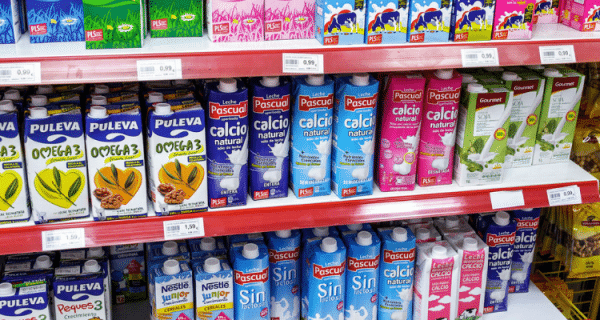
Survival food list - shelf stable milk, cheese, and dairy storage
Among shelf-stable dairy, unopened UHT milk often lasts 6 to 9 months.
Download 906 survival guides bundle

Shelf Stable Dairy (see items 60-65 above)

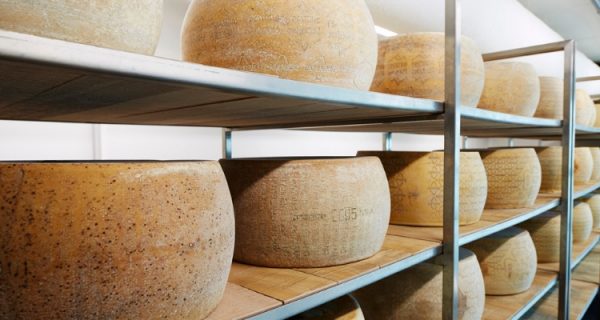
If you keep a goat or a cow, you’re set. The rest of us lean on a few staples. Powdered milk drinks fine and bakes even better, and it’s one of the few storage foods that delivers vitamin B12 — the nutrient an all-grain diet leaves out. Evaporated milk, powdered eggs, and whey fill in too. Shelf-stable cheeses sit further out on the luxury end, but powdered Parmesan and wax-encased hard cheeses add real punch, and depending on the cheese and the seal they can keep 10 to 25 years.

Storing hard aged cheese encased in wax for long term
Hard cheeses encased in wax are a tasty, long-lasting luxury.

Snacks and Luxuries (see items 66-78 above)

Snacks aren’t the nutrition workhorses, but they’re morale, and morale matters when life is grim. Once your real bases are covered, a few comfort items earn their shelf space. One honest warning: skip the “make your own pemmican” course making the rounds. It’s an expensive, complicated DIY product dressed up as essential prepping. Reliable storage is about food that meets your needs, stays affordable, and keeps things simple. Don’t let a marketing funnel pull you off course.

Survival food list - juices, sports drinks, and other beverages
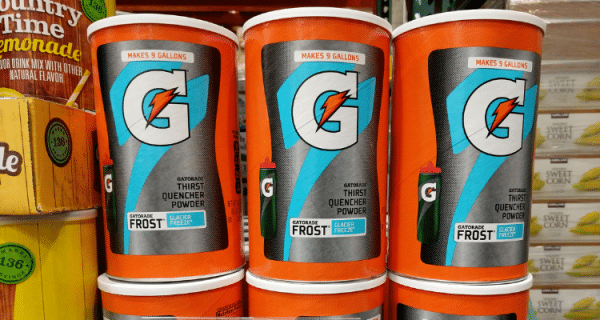
If you have the space and budget, sports drink powders and shelf-stable beverages add energy and some vitamins.

Juices and Other Beverages (see items 79-83 above)

Drinks add variety, a little nutrition, and a lot of comfort. A hot cup of cocoa on a cold, dark night does more for a family’s spirits than its calorie count suggests, and coffee or tea keeps a daily routine intact when everything else is upended. Treat this as a layer you add once the essentials are handled — welcome, but not life-or-death.

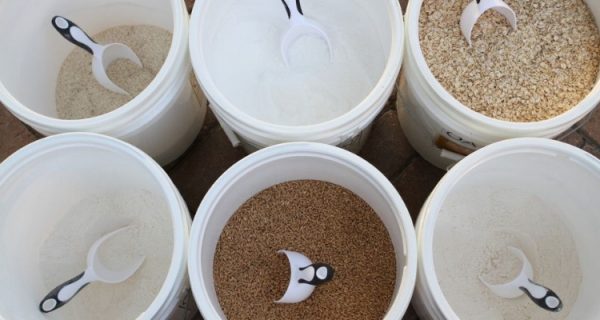
Bulk staples like rice, beans, and wheat in food storage buckets
Stored properly, bulk staples like rice, beans, and wheat often last 25+ years.

Bulk Staples (see items 84-88 above)

Here are the textbook survival foods: rice, beans, hard wheat berries, and grains you’ve never tried to pronounce. They’re the cheapest, longest-lasting calories you can buy. Beans are the standout — high calorie, endlessly versatile, and you can even sprout a handful for fresh greens or the garden.

The tradeoff is cooking. Most dry beans need a soak of several hours and then an hour or more on the stove, and that eats fuel and water you may be rationing. One honest note from experience: beans that have sat a decade get stubbornly hard and resist softening no matter how long you simmer. If yours are pushing that age, grind them into bean flour and use them as a thickener or gravy base.

Here’s roughly how long the core staples keep when sealed in Mylar with oxygen absorbers and stored cool and dark:

FoodShelf life (sealed, cool, dark)
White rice25–30 years
White flour, wheat berries20–30 years
Dried beans (safe; harder to cook over time)20–25 years
Rolled oats8–12 years
Brown rice (oils go rancid)1–2 years — store white instead
Cooking oil1–2 years — rotate

Every 10°F you cut from your storage temperature roughly doubles the life of what’s on the shelf, which is why a cool basement beats a hot garage by years (USU Extension, Packaging Foods).

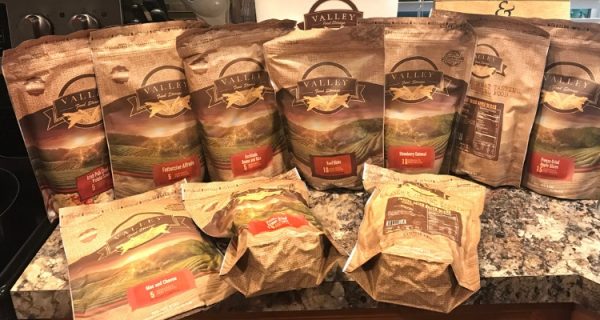
Freeze dried food pouches for long term emergency storage
Freeze-dried pouch entrees are lightweight, long-lasting, and easy to prepare.

Freeze Dried Emergency Foods (see items 89-91 above)

Freeze-dried foods are lighter, more compact, and better-tasting than their canned counterparts, and they hold their nutrition for years — sometimes decades. The downsides are cost and prep: you pay a premium, and most need water and a few minutes to reconstitute versus just opening a can. Freeze-dried fruit is the exception worth grabbing — no rehydrating required, just snack it straight from the pouch.

Bulk food storage and baking ingredients
A modest stock of baking ingredients lets you make bread and other fresh food from your dry storage.

Baking Ingredients (see items 92-108 above)

Baking ingredients sit lower on the priority list, but they unlock your bulk grain. Stored flour, leavening, salt, and a little fat turn 25-year wheat berries into fresh bread — better tasting and far longer-lasting in raw form than anything you’d buy pre-baked. Don’t overlook yeast: it’s the one baking item that’s genuinely tricky to store, so keep it sealed in the freezer.

Survival food list - multivitamins and supplements
Supplements fill the nutritional gaps a diet of stored staples tends to leave.

Vitamins and Supplements

A diet of rice, beans, and canned goods runs short on a few key nutrients, and a cheap bottle of multivitamins is honest insurance against the gaps. Vitamin D and calcium support your immune system; magnesium helps blunt the wear that constant stress puts on your body. None of this replaces real food, but when fresh and living foods are scarce, supplements keep the deficiencies from stacking up. Keep a few months’ worth alongside your stored medications.

Survival food list - pet food storage for dogs and cats
Your animals need food storage too — plan for them ahead of time.

Animal and Pet Food Storage

Don’t forget the four-legged members of the household. Costs swing wildly between a house cat, a large dog, and livestock, so budget accordingly. One catch worth planning around: because of their protein and fat content, most cat and dog foods aren’t shelf-stable beyond a few months, so build a rotation rather than a single buy-and-forget stash.

Criteria for choosing long term food storage
Canned, bottled, and well-preserved foods earn their place through long shelf life and storability.
Survival Recipe Vault download

Criteria for Choosing Your Emergency Food Supplies

Easy to Prepare

Weigh how much cooking, fuel, and water each food demands. Can you prepare it without a modern kitchen — on a wood cookstove, a solar oven, or a campfire? This is exactly why canned foods are such stars: open and eat, no fuel, no water, no wait.

Long Shelf Life

Food that spoils before you need it is wasted money. You’ll still rotate your storage, but for it to count as true survival food it should give you years on the shelf — decades, where possible. Use the shelf-life table above as your guide.

Affordable

Food storage isn’t gourmet and it shouldn’t be expensive — its job is to keep your family fed through lean times. Build it cheaply enough that you can accumulate real quantity over months without straining the budget. Some items on the list above matter far more than others; the bulk staples and oils carry your survival, the snacks and beverages are extras. Spend accordingly.

Nutritionally Dense

Think of nutrition as the function and taste as the form. There’s middle ground, but in a real emergency the priority is food that actually fuels your body and keeps you going. Calories first, then protein and fat, then the vitamins and variety that keep you healthy over the long haul.

Storable

Size, weight, and shape matter more than people expect. Avoid glass where you can (canning your own is the obvious exception). Glass breaks, the shards are dangerous to people and pets, and in a flood or hurricane a jar is far easier to contaminate than a can.

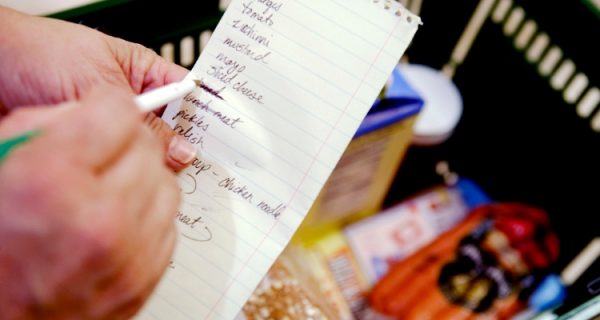
Emergency food list sourced from the local grocery store
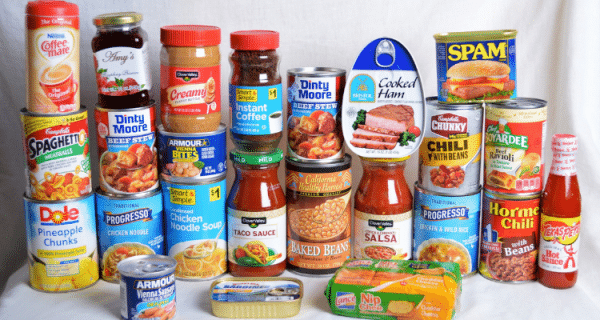
Most “survival foods” come straight from your local grocery store.

Survival Food Storage and Preservation Supplies

A handful of supplies make the difference between food that lasts a few months and food that lasts decades. Here’s what earns its place, and how we use it.

Food Storage Buckets

Buckets must be food-grade so nothing leaches into your food — that part isn’t optional. Beyond that, the more airtight and waterproof you keep them, the longer your storage lasts. Bigger isn’t always better: a brimming 6-gallon bucket gets heavy and awkward fast, so we mostly stick with 5-gallon, and smaller ones where we need to move them. You can often get food-grade buckets free from grocery-store bakeries and restaurants (ask for the frosting and pickle buckets), or buy them new for about $5 to $8 at any hardware store.

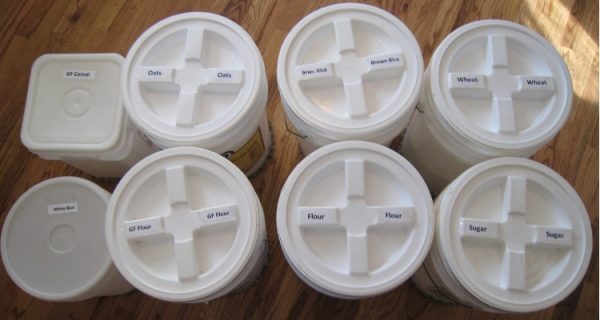
Food storage buckets with gamma seal lids
Gamma seal lids create an airtight, watertight barrier that adds real shelf life.

Gamma Seal Lids

Gamma seal lids are the best lids for food-grade buckets. They thread on for a waterproof, airtight seal and spin off easily when you need access — far better than prying a standard lid on and off. Expect to pay roughly $8 to $10 each at Lowe’s, Walmart, Home Depot, Costco, or online. We put them on the buckets we open regularly and stick with standard lids on the long-term, seal-and-forget stock.

Mylar bags for long term food storage
Mylar bags are durable and create the airtight seal that buckets alone can’t.

Mylar Food Storage Bags

This is the piece that actually does the preserving. A plain bucket lets oxygen and light seep in over time; a Mylar bag is essentially impermeable to both. Line your bucket with a Mylar bag (about $1 to $2 each for one-gallon size), fill it, drop in an oxygen absorber, and heat-seal the top — a household iron or even a hair straightener at 375–400°F does the job. Use roughly a 300cc oxygen absorber per gallon of dry goods, and 500cc for beans and pasta, which trap more air. One field-tested tip: freeze your rice or beans for three days before sealing to kill any insect eggs already in the grain (Be Ready Utah, Food).

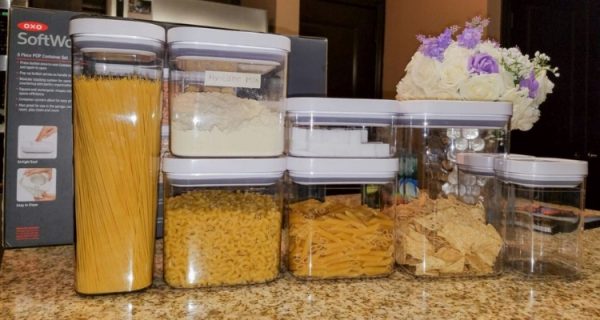
Clear dry food storage containers
Clear containers let you see what’s inside at a glance.

Dried Long Term Food Storage Containers

Five-gallon buckets are the most common choice for their sturdiness and capacity, with Mylar bags and #10 cans close behind. Past that, you can use almost any container as long as it hits three marks: food-grade, waterproof, and airtight. The closer a container gets to all three, the longer your food keeps — that’s the whole game.

Pressure canner for preserving meat, soup, and vegetables
Pressure canning lets you safely shelf low-acid foods like meat, soup, and vegetables.

Pressure Canners

If you’re serious about preserving your own food, a pressure canner is a must. Water-bath canning handles high-acid foods like fruit and tomatoes, but only a pressure canner safely puts up low-acid foods like meat, soup, and vegetables. The process takes more care and runs at higher temperatures, but it dramatically widens the range of quality food you can shelf yourself.

Food dehydrator for emergency food storage
Dehydration is a great low-tech option for preserving fruits, vegetables, and meats.

Food Dehydrators

A dehydrator pulls the moisture out of food so it keeps for months or years, and it makes a lot of food more portable in the bargain. You’re not throwing a steak in a backpack, but homemade jerky travels fine. Dehydrators shine for jerky and dried fruit; vacuum-seal the results and they last even longer. Later you eat them dry or rehydrate with water for cooking. The Excalibur is the gold standard — not cheap, but seriously well-built and backed by a strong warranty.

Vacuum sealer machine for food storage
A vacuum sealer packages food of all sizes for the freezer or pantry.

Vacuum Sealers

A vacuum sealer pulls the air out and locks food in an airtight package. It’s great for meats and vegetables headed to the freezer, and for dry ingredients that need a tougher seal than their store packaging. The machines look and work a lot like a laminator, and a mid-range model handles everything most households will throw at it.

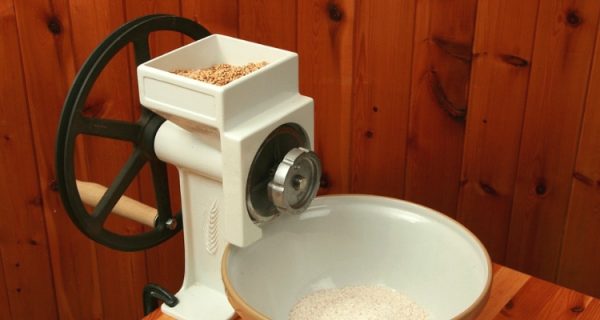
Wheat grinder and grain mill for milling stored grain into flour
A grain mill lets you store bulk hard grains and mill flour, meal, and hot cereal on demand. Whole grains store longer and keep more nutrition than their ground forms.

Wheat Grinders and Grain Mills

If you store whole wheat and other grains, a mill turns them into flour for cooking. There are plenty on the market, but the best we’ve used is the Country Living Grain Mill. We’ve had ours since 2012, and it’s earned its keep. It runs by hand crank or a small motor, and there’s even a belt attachment to drive it from a bicycle — exactly the flexibility you want when the power’s out.

The build is heavy-duty: American-made aircraft aluminum, industrial bearings, high-carbon steel cutters that hold their edge, and FDA-approved food-safe coatings. You can clamp it to a counter temporarily or bolt it down for good. It runs several hundred dollars, which isn’t nothing — but it’s a buy-it-once tool that outlasts generations.

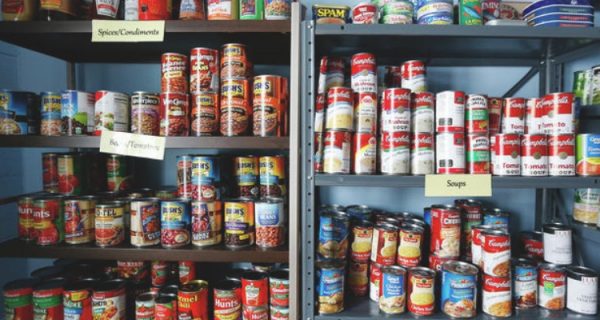
Well stocked food storage pantry combining store cans and home preserved goods
A well-stocked pantry is usually a mix of store cans, home-preserved goods, and commercial food storage.

Frequently Asked Questions

How much food does a family of 4 need for a year?

Plan for roughly 2.9 million calories — about 8,000 a day for four people. In practical terms that’s 1,000 to 1,200 pounds of grains, 200 to 250 pounds of legumes, 80 to 100 pounds of fats or oils, plus powdered milk, sugar, salt, and leavening. Bought frugally in bulk, a true one-year supply runs about $900 to $1,500. The popular “$300 for a year” rice-and-bean plan actually covers closer to five weeks of full calories for a family of four, so treat it as a starting layer, not the finish line.

What plans should I make for water on my survival food list?

Water is liquid life — it keeps you alive longer than food, and going without kills you faster than starvation. It’s also the catch that sinks rice-and-bean plans: dry staples need a lot of water just to cook. Ready.gov’s baseline is one gallon per person per day (Ready.gov, Water). Cover three bases: stored water in mixed container sizes, a way to resupply (rain catchment, well, stream, pond), and reliable purification — a LifeStraw or Aquamira Frontier Pro for your bug-out bag and a gravity filter like a Berkey for home. A bathtub bladder like the WaterBob adds about 100 gallons if you get a few minutes’ warning.

How much rice should I have on my food storage list?

Rice is one of the best foods to store — cheap, and good for 25 to 30 years sealed in Mylar with oxygen absorbers. Utah State University Extension recommends storing at least 300 pounds of grains per person for a year, of which 25 to 60 pounds should be rice. That gives you a solid staple base to build the rest of your supply around. Store white, Basmati, or Jasmine; skip brown rice for the long term, since its oils go rancid within a year or two.

How do you store survival food for a disaster?

Long-term food storage should be shelf-stable for years — up to 25 in some cases — and kept in airtight, watertight containers in a cool, dark place. The most reliable setup for bulk staples like rice and grains is Mylar bags with oxygen absorbers, placed inside sealed #10 cans or 5-gallon buckets. Heat and light are the enemies: the warmer and brighter the storage spot, the faster everything breaks down. A cool basement can double the shelf life you’d get in a hot garage.

How do I stock up on food storage without breaking the bank?

Build it a little at a time. Three approaches work together:

  • Piece it together gradually, adding cans and bulk staples whenever there’s a case-lot sale or markdown.
  • Preserve your own through canning and dehydrating if you’re ambitious.
  • Add some commercial freeze-dried meals — convenient and tasty, but the priciest per calorie.

Almost nobody can drop a thousand dollars on storage at once, so the real-world play is buying a little extra each grocery trip and catching sales. We recommend a layered mix: mostly “little by little” grocery-store food, some of your own preservation, and a small set of freeze-dried pouch meals (which double as bug-out-bag food). Printable starter checklists are on our preparedness downloads page.

What are the best canned foods to store for survival?

Canned meats and vegetables top the list, because they’re the hardest nutrition to get any other cheap way. Carbs like rice and pasta store easily in bulk, but meat and vegetables get expensive fast in freeze-dried or dehydrated form, so canned is the value play. Round it out with canned soups and convenience foods — and don’t forget a manual can opener, since none of it helps if you can’t get the lid off.

How to begin building your survival food storage
The best way to start is small: make a few mistakes, adjust, and keep going.

Ready to Get Going?

Feeding a family is a real responsibility, and the threats to a steady food supply aren’t exotic. Floods, fires, earthquakes, and economic crises disrupt grocery distribution. But the quieter “personal disasters” hit just as hard — a job loss, an injury, an illness, a death in the family. In any of those, even one or two weeks of food on hand eases the pressure. Several months or a year’s worth changes the whole picture.

Aim for a balance across three tiers:

  • True emergency food — food bars, MREs, Mountain House meals, and freeze-dried pouches you can eat in under five minutes.
  • Short-term regular food — cans, box dinners, and grocery-store items you’d normally eat.
  • Long-term bulk storage — rice, beans, and hard wheat berries that hold shelf-stable calories for decades.

There’s no perfect formula for your family but yours, so don’t let the planning paralyze you into doing nothing. Do a little of everything and adjust as you learn. This weekend, buy 40 pounds of white rice, a dozen one-gallon Mylar bags, and a strip of oxygen absorbers — about $35 all in. Seal them, mark each bag with today’s date, and slide them under a bed. That’s layer one on the shelf, and you cook from it next week to make sure you know how.

Filed Under: Survival Food

  • « Go to Previous Page
  • Page 1
  • Interim pages omitted …
  • Page 12
  • Page 13
  • Page 14

Copyright © 2026 · Genesis Sample on Genesis Framework · WordPress · Log in

  • Privacy Policy