• Skip to primary navigation
  • Skip to main content

SCP Survival

Best Survival Gear and Supplies

  • Download Survival Guides
  • Survival Food List
  • Download 906 Survival Guides to Your Device

Prepper Acronyms and Terminology

March 22, 2024 by Seasoned Citizen Prepper

B.O.B. – Bug Out Bag, sometimes referred to as a “Get Home Bag” (GHB) – more accepted by those resistant to the idea of a need for prepping!

B.O.L. – Bug Out Location

CME – Coronal Mass Ejection – Solar Flare, emits radiation, hits earth’s atmosphere

EDC – Every Day Carry (of a firearm)

ELE – Extinction Level Event

EMP – Electro Magnetic Pulse

GRID DOWN:  all electric power is out in a widespread area; the “grid” is not working (the means of transferring electrical power from station-to-station/site-to-site)

HEMP – High Altitude EMP – nuclear detonation in earth’s atmosphere 50 to 200     miles above Earth’s surface

IMHO – In My Humble Opinion

MRE – Meal, Ready To Eat

MSM – Main Stream Media

NINJA – No Income, No Job or Assets

OpSec: Operational Security; why you must be able to keep your mouth shut and choose words carefully based on audience (when you do speak), if you are going to be a prepper!

RELATIVES: (never use names when posting/discussing in “online or stranger groups”

DD – Dear Daughter; if you have more than one, it’s DD1, DD2, etc., according to birth order (oldest is DD1)

DF – Dear Father, or just “DAD”

DH – Dear Husband; if you have more than one, don’t tell us.

DM – Dear Mother, or just “MOM”

DS –  Dear Son (DS1, etc., if you have more than one)

DW – Dear Wife; if you have more than one, you’re probably a dead man.

DIL – Daughter-in-Law

MIL – Mother-in-Law

FIL – Father-in-Law

SIL – Son-in-Law

SD – Stepdaughter; SD1, etc. (if more than one)

SS – Stepson (SS1, etc., if more than one)

SF – Solar Flare

SHEEPLE – Those who blindly think nothing will happen to them and the government will provide; those who follow the world and think preppers are nuts.

SHTF – Sh*t Hits The Fan (I prefer “Stuff”)

SIP – Shelter in Place

SOP – Standard Operating Procedure

TDL – “The D@&! Liar” – one of the references to our current leadership

TEOTWAWKI – The End of the World As We Know It

TFH – Tin Foil Hat; someone who is a “conspiracy theorist”; taken from the cartoonish notion of a person wearing a homemade aluminum foil “hat” to ward off harmful “rays”.

WROL – Without Rule Of Law

YOYO – You’re On Your Own

ZOMBIE – The clueless masses of sheeplike humanity who are blindly following their “leader”, when SHTF and the Zombies get hungry, thirsty, etc., they’re coming for what you have! This is why OpSec (Operational Security) must be Priority # 1 – ALWAYS, NO EXCEPTIONS!

Filed Under: Getting Started

How To Measure The Week’s Progress

March 22, 2024 by Seasoned Citizen Prepper

Health includes not just our physical body but also our psychological selves, our social set up, and our spiritual selves. All three of these directly impact on our body’s functioning, our hormonal systems and our immune system.

This is an exercise to help you become aware of what you do well from a psycho-social-spiritual health perspective. – This is just as important as knowing what you need to change, in order for you to get better or to improve your overall stress levels. You must be aware of something before you can act on it – so scientifically gather the data for your self care experiment.  Use the form below the instructions as your template for gathering your data.

For each aspect that you have done well give yourselves a tick.  Every now and then you will recognize something that you would prefer to have handled differently.  That is great, give yourselves a plus sign (+) to indicate this.

Physical

Are you getting sufficient sleep, rest (including blob out time – see the note below for the definition of blob out time), relaxing time.

Is your diet balanced and appropriate?  Sufficient fruit, vegetables, protein and water, and reduced processed food.

Are you getting daily appropriate exercise? Is it sufficient?

Are you seeing your GP/health professional as needed and getting the advice you need?

Are you taking required medications?

Are you managing your temperature requirements appropriately? Not too cold, too hot?

Any other physical requirements – dust, mould, allergens etc?

Are you doing too much?

Self acceptance

Are you accepting yourself: who you are, where you are, how you are, why you are the way you are?

Give a tick for each occasion you value yourself.

Are you staying away from self judgment? (Evaluation is judgment if you feel bad about it.)

Values and principles, time management, priority and boundary setting

What is important to you?

Did you make decisions about your time management in relation to your values?

Did you set priorities in relation to your values?

Did you set appropriate boundaries so that others are not able to invade yours constantly?

Relationships

Give yourself a tick for each affirming relationship you have had today.

What are your relationships like with your partner, family, work colleagues, social contacts?

Unfinished business

Give yourself a tick for any personal work you do on anything that hangs over you, drains your energy or causes a strong emotional response, eg: relationship issues, poor self esteem, abuse issues, over-commitment, anger, etc

Fun, enjoyment, humor

Give yourself a tick for anything that you enjoyed, encouraged relaxation or made you laugh.

Creativity

Give yourself a tick for any activity which is expressive of you.  This includes craft, art (in the widest sense), music, home redecorations, gardening, cooking and many hobbies.

Future and dreams

Give yourself a tick for time spent with hope, desires and plans for anything that makes you feel more complete, more whole, more enjoyment, anything you look forward to.

Note: Blob out time is time when you just stop.  You give yourself permission to do nothing.  You are not watching TV, reading, thinking, reflecting, planning, or even listening to the radio.  This is stop time, non functioning time.  You might choose to have a cup of tea or coffee and a small snack.  You might choose to have some relaxing music in the background but it’s not the time to be listening or doing. Any TV watching is general relaxation time and this is in addition to blob out time.

Warning

STOP, STOP.  Now before you go and read on, “thinking, yeah, yeah, that’s a bit basic, I know all that stuff”.  Stop, and think, “Am I really acknowledging to myself all those things that I’m doing right?”

Mostly we spend time bemoaning the things we can’t do, thinking about what we would like to do and blaming ourselves for not being able to do more, or other people for not understanding that we can’t do more.

So… stop… and go through the exercise.  Give yourself a pat on the back for EVERYTHING you are doing right – well at least a tick. The experience as we did this exercise weekly was that it took about ten to twelve weeks to ingrain the concept of developing awareness into our everyday thinking.

We have to start (or continue if you already have this insight) recognizing EVERY positive we can.  Life is difficult enough with a health condition or when stressed without making it more difficult by “forgetting” all the things we are doing right.

Filed Under: Health and Medical

“When Technology Fails” Book Review

March 22, 2024 by Seasoned Citizen Prepper

So, I pulled out my copy of “When Technology Fails” by Matthew Stein. It’s a large book, not one that will fit in a pocket, certainly, and somewhat heavy, even for a “paperback”, with 493 pages of print. What Stein really means is, “when SHTF”!

I haven’t pulled this book out in a while, so, it was interesting to flip through it for my notes. I’m one of those people who likes to mark my books as I read: notes in margins, highlight a few things, that sort of thing.

What struck me as I went back through this book is that I did not have the same response to it as the first time I read through it. Perhaps that is because I have learned a great deal since I first picked up this book so that now, much of it seems well, sort of “primary”. But I do not want to give you the wrong impression; it does, indeed, have useful information in it.

I came to the conclusion that this book, “When Technology Fails” is a good starting point for beginning preppers.  It covers just about every area of thought one might need to consider in meeting every conceivable need when SHTF. The problem is, for the most part, it only touches on most of the subjects, and some information you might do well to research further.

I would not, for example, put much stock in the “training” available for medical and emergency health care. Having served as a volunteer for many, many years with the world’s largest disaster relief agency, including teaching First Aid and CPR at various levels, I did not find the information all that useful, even though it purportedly was taken from the ARC book (what little is there).

Take the class, folks. It’s a hands-on thing, for sure. All you need is one person to take the class, get the book, and teach the others, if it comes to that. There are also some great DIY ways to make saline solution. But much of what you learn is best learned “in live practice”, not from a book. The book is a reference, not a teacher.

There are many illustrations, but they are all low-budget drawings, IMHO. I don’t think they will do anyone much good, but they are better than nothing.

The one exception to the limited information, in my opinion, is WATER. Stein does an excellent job of telling you most of what you’ll need to know about water, storing it, treating it, threats to it and how to handle each threat…even those “unusual” places to find water in an emergency situation; I actually bought separate books just for that information!  So I highly recommend reading the section on water.

One thing I DO really appreciate about this book is that it contains many valuable references for contact; you can spend a lot of time trying to pull this information together, where to go for what information, who to contact to learn more about XYZ subject…but Stein has made that easy. I also like that he includes Joel Salatin, a Christian and possibly THE authority on whole food eating, and well as other individuals who have proven that they know exactly what they are talking about and are qualified to teach.

The real value in this book, in my opinion, is that it raises the right questions. You won’t find all the answers here, but, if you don’t know what questions to ask, how can you possibly find the answers? This is a good resource for those new or young at prepping, or even just a quick review for seasoned preppers, in my opinion.

For more timeless survival wisdom and ideas, check out these survival guides and PDF downloads.

Filed Under: Books

How To Assemble a One Week Food Storage Bucket (19,253 Calories)

March 22, 2024 by Seasoned Citizen Prepper

I went to a food storage class a while back and someone there had packed routine shelf stable food – enough for one week – into a bucket.  I thought it was such a great idea.  A 7-day emergency food cache, with ready-made daily menus of “regular” grocery food.

I am imagining: Immediately after the bad thing happens and I’m all out of sorts, I can grab the convenient bucket and execute easy to prepare meals without using any brain cells. After we eat, the bucket may come in handy for …well … the other things that happen after you eat…

And, although it would be too heavy to carry in a bug-out situation, it would be a great grab-n-throw-in-the-car bucket.  Anyway, I don’t know the person or how to contact them, so I am attempting to re-create her idea using my food items.

My goals – feed 2 people for 7 days. 2,000 calories per day with some basic nutrition and variety. Everything must fit into a 6 ½ gallon plastic bucket with a gamma lid.  (I’m not planning to pack in a Mylar bag.)

Here’s what I have so far, but I’m nowhere near my 2,000 calories.

For the sake of this project, I assume that I have the ability to supply water, cooking and cleaning requirements separately. And oh by the way, if you decide to do something similar, I found that I can stuff the underside of the gamma lid with small items.  (tea, coffee, crystal light, P38 can opener, etc.)

p.s. if you are looking for more ideas, check out our complete survival food list. 

Breakfast Total Calories

Water Required?

Oatmeal, Quaker, individual packets (12 total)

1560

yes

Pancake mix, 5.5 oz.

660

yes

Syrup, Aunt Jemima, 8 oz.

400

Beef Jerky sticks (2 each)

100

Snacks
 4 Trail Mix Bar, Nature’s Valley

720

 4 Peanuts, Salted Planters, 2 oz.

680

 4 Oats & Honey Bars, Nature’s Valley

720

 4 Snack Bars, Misc. Flavors, Nature’s Valley

720

Starlight Peppermints – handful

100

Tootsie-Pops chocolate candy – handful

200

Drinks
14 Coffee, Folgers, Instant Individual, Packets

0

yes

 8 Lemonade Drink Mix, Crystal Light

0

yes

 8 Raspberry Drink Mix, Crystal Light

0

yes

 8 Wild Strawberry Drink Mix, Crystal Light

0

yes

 8 Cherry Pomegranate Mix, Crystal Light

0

yes

Lunch


Double Stuffed Ravioli, Chef Boyardee (2)

800

Raisins, Sun Maid (2 each)

50

Tuna, 5 oz can (2)

200

Tuna Helper, Box 7.5 oz.

700

yes

Powdered Milk Packet
Mac & Cheese, Kraft box 7.25 oz

780

Powdered Milk Packet
Beef Stew, Dinty Moore Cans 15 oz. (2)

800

Protein Bars, Nature Valley (2)

360

Peanut Butter, Jiff, crunchy, 18 oz.

510

Saltine crackers, 2 columns

200

Chicken, SAM’S Member’s Mark, 13 oz

350

Manwich Can 15.5 oz.

210

Baked Beans, Bush’s Can 16.5 oz.

490

Chicken Noodle Soup Can + Lipton Envelope

300

Protein Bars, Nature Valley (2)

360

Dinner


Beef with Gravy, Hormel Cans, 12 oz. (2)

520

Baked Beans, Bush’s Can 16.5 oz.

490

Green Beans, Can 14.5 oz

70

Chicken Chow Mien Dinner, LA Choy, 28 oz

540

Spam, Can 12 oz.

840

Sweet Potato Casserole, Glory 15 oz.

250

Cooked Ham, DAK, 16 oz. Can

800

Instant Mashed Potatoes, Idahoan 4 oz.

240

yes

Green Beans, Can 14.5 oz

70

Spaghetti Dinner, Kraft Box 8 oz.

800

yes

Tomato Paste, Hunts Can 6 oz.

150

Chicken, SAM’S Member’s Mark 13 oz.

350

Rice Package, Knorr 5.7 oz.

600

yes

Corn, Can 12 oz.

245

Corned Beef, Hormel Can 12 oz.

720

Instant Mashed Potatoes, Idahoan, 2 oz.

440

yes

Carrots, 12.5 oz.

158

Total Calories in Bucket

19,253

Total Calories per day for 2 people

1,375

Filed Under: Food Storage

Using Our Portable Woodmizer Sawmill To Make Extra Money

March 22, 2024 by Seasoned Citizen Prepper

Woodmizer Sawmill

About 6 months ago, my brother-in-law, who had retired and moved back home, called and said, “Guess what? I just purchased a one man saw mill on Craig’s List for a song, you need to see this.“

He said he had always wanted one to play with and use more as a hobby than anything else. He ask if I would help him move it to the farm, and help in setting it up, repairing or replacing parts, and cut a few trees in order to learn how to operate it.  I couldn’t wait to see it.

The picture is the finished project, set up, and ready to go. Note the wheels have been removed in our set up.

I was hooked. Neither of us had any experience in operating a one-man saw mill. Fortunately he had been studying the manual, looking at YouTube videos, and talking to the customer service rep at the manufacturer. I was mostly the helper.

As we were setting up the mill and cutting trees for practice, we talked about how we might recoup some cost with “our” new hobby.

Here are a few facts and figures:

  • Cost: including repairs and transportation- Less than $3,500. This particular mill (WoodMizer) had been used very little and was in excellent condition. We have found similar mills selling for more than twice that amount, when you can find them. New Wood-Mizer mill that replaced the model you see pictured is around $11,500. That is the basic cost, not including transportation. Granted, the mill my brother-in-law bought was an older model, and the newer ones come with some features that his doesn’t have.
  • Production: This mill is capable of producing approximately 500 to 600 board feet per hour. I need to add some qualifiers to this statement. The key words are: “Is capable”.  After all, I don’t expect we could last very long at that rate. A more sensible rate might be 200 bf/hr. It would also depend on the dimensions of lumber you are cutting. It is much easier to cut 4”x4”, or 6”x6” timber than a bunch of 2”x4”, s. plus the board feet add up much quicker with large dimension lumber.
  • Pricing: In our area it ranges between $150-$250 per thousand board feet, depending on dimensions, quantity, and whether the logs are delivered to the mill or we pick them up.
  • Demand: The demand seems to be consistent to strong. As we were in the process of setting up the mill, we had several people ask us if we were ready to accept orders. One person even wanted several thousand board feet processed. Unfortunately, we were not ready, and winter has put a halt to much logging and milling in this area; mostly due to prolonged days of rain and cold weather.
  • Rate of return: Thinking reasonably, we could expect to gross approximately $300-$500 per week. That would be working approximately 4-5 hours a day, 3-4 days per week. That depends on several things, some of which are: Demand, breakdowns, weather, and yes even our stamina, sawmilling is very labor intensive and hard physical work.
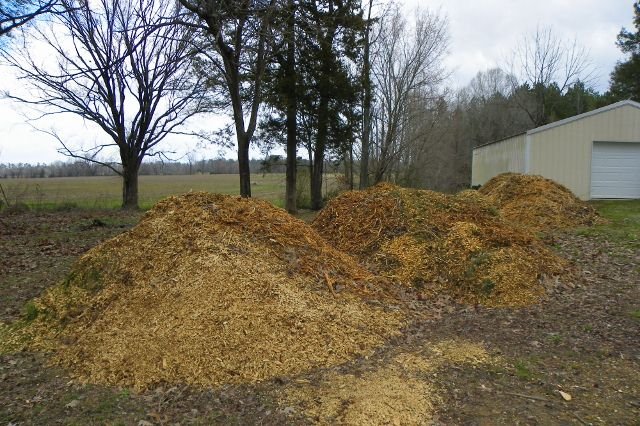
  • Added value: There are some additional values associated with sawmilling. Items you can sell or barter are: the slabs and excess pieces for firewood and the accumulated sawdust for mulch.

Here is a link to a Wood-Mizer video showing the operation of a band-saw mill.

I will try and keep you updated on our new venture. Just to get you thinking, have you ever considered that the following could be extra money makers:

  • House sitting for people going on vacations
  • taking care of pets
  • breeding dogs, cats or other animals
  • teaching various folk-art crafts such as knitting, metal working or hand forging, and pottery making
  • teaching firearms training and safety
  • free-lance writing or photo journalism
  • taking care of the elderly
  • teach people a musical instrument skill you may have
  • gather and sell firewood
  • training people how to care for and ride horses.

You can see this list could be expanded to whatever your imagination may conjure up. If you are having trouble thinking of something, look in the classified section of your paper under services needed, Also, Craigslist is a good place to look.

Filed Under: Finances

35 Prepper Projects To Tackle This Year

March 22, 2024 by Seasoned Citizen Prepper

Make this the year you get better prepared.  Here are 35 projects to launch you into action.  Each is low budget; some require nothing more than your time.  Most require no more than a weekend to complete.

  1. Get organized! Begin a 3-ring binder to organize notes; this will be your Emergency Binder. Use it to consolidate your preparations, notes and lists in one place.
  2. Research on Google Earth the area around your house. Get to know your danger areas. Where are the “choke points” for escape via automobile? Where are the natural water supplies? Where are the risks? Make notes for your Emergency Binder.
  3. Using Google Earth, find three different routes from work to home, from home to your safe place and other places you may need to travel. (Pick up children from school, etc.) Identify possible problem areas. Update your Binder
  4. Buy a detailed laminated paper map of your city and county. Store in your binder.
  5. Begin to accumulate $200 in 1-dollar bills. Store in your waterproof, fireproof, secret compartment place in your home. When able, increase to $500.
  6. Scan your personal documents and copy to a thumb drive. Store the thumb drive in a safe place. Include social security cards, passports, birth, driver’s license, marriage, divorce decrees, insurance and title documents, deeds and contracts, bank account numbers and charge cards, (including lost or stolen notification numbers), stocks and bonds, wills, medical information, prescriptions, etc. If you have some survival books or guides on your computer, you can also include a few of these on that thumb drive as well.
  7. Scan head-and-shoulder photos of each family member. Save to your thumb drive. Print a copy for your Emergency Binder. If family becomes separated, a recent photo may help.
  8. Video or scan still photos of your home contents. When disaster strikes, having a home inventory will help with insurance claims. Copy to your thumb drive.
  9. Start saving plastic 2-liter pop bottles (not milk jugs, they decompose). Sanitize and fill 1 with ¾ with water. Use it to fill any empty space in your freezer. If your electric fails, this ice jug will help keep food preserved in the freezer as well as being a source of drinking water. If space permits, have a least 1 2-liter bottle in the freezer per person.
  10. Ask friends and family members to save soda bottles for you. Lie about your intentions, (tell them it’s a school project for little Johnny). Sanitize the bottle, lid and threads. Fill with tap water. Your goal is to accumulate 30 bottles per family member and large pet. You can also use soda bottles for fishing.
  11. Prepare a “Car” 72-hour emergency bag.  Think Shelter, Water, Fire, & Food.  Pack into a backpack.  Store it in your car.  Revise it with the change in seasons.
  12. Store survival bars in your emergency bags.
  13. Catch up on immunizations, dental and medical procedures.  Invest in your family’s health.
  14. Learn to shut off your home’s water, electric, and natural gas.  Teach your spouse and children.
  15. Replace those exterior door hinge screws with 3” screws, reinforce the door jamb and add deadbolts with at least a 1” throw.  Add pins to casement windows.
  16. Update exterior lighting around your home, garage and out buildings.  These should be solar, motion-detected security lights. Mount high up so that vandals can’t reach.  Stock extra light bulbs.
  17. Check the status of your fire extinguisher, fire alarms and Carbon Monoxide Alarm (battery powered) with each spring time change.  Stockpile 1 extra battery for each alarm
  18. Buy and mount an axe in your attic.  In the flood plains, if you retreat to your attic, you need a way to cut through your roof as a means to escape.
  19. Get on the other side of the law by joining your local Sheriff’s auxiliary, search and rescue, joining your local CERT (Civilian Emergency Response Team), or getting licensed for Armed Private Security in your state. None of these are guaranteed to give you a pass when you’re dealing with an Orwellian law enforcement official, but they will improve your odds considerably
  20. Make some dryer lint fire starters.
  21. Build a heater out of a candle and some terra cotta pots.
  22. Make a candle from a tub of Crisco.
  23. Earthquake proof your home and food storage shelving.  See the post at Prepared LDS Family for some great ideas and be sure to scroll down into the comment section as well.
  24. Get in your food storage room and do an inventory or some organizing
  25. Protect your electronics with your own homemade metal trash can faraday cage.
  26. In a multi-car family, one vehicle will probably sit during a crisis.  Consider long-term storage (longer than 6 months) and determine your auto’s needs.
  27. Committing to reading one homesteading or self-sufficiency type book each month for the next year.  Search for free books on Amazon.com for Kindle“Camp out” in your backyard with your family.
  28. Find out what you don’t know about living off the grid for 1 weekend. No matter what the weather, deal with it. Pitch the tent, sleep in sleeping bags, eat from can foods.
  29. Harden the garage door with reinforced tracks.  Supplement glass with Lexan, Plexiglas or security film mounted inside. Decide where is best to park the un-needed vehicle – in the garage?  Used as a barrier on the property?  Hidden and camouflaged?
  30. Check oil and coolant. Drain or add anti freeze to windshield wash reservoir. Remove anything that will mold, rot or mildew.  Anything that will attract rodents to nest. Jack it up or sit it on concrete blocks to keep tires from developing flat spots.
  31. Disconnect the fuel pump and run the car until it quits to drain fuels from the engine lines. Insert steel wool in the tailpipe to prevent rodents from nesting in the exhaust system. Place several rodent traps in the engine compartment.
  32. Do not engage parking brake as the pads may become fused. Remove battery and cover
  33. Plant prickly bushes under windows to deter vandalism.  Consider other ways to use landscaping to your security advantage.
  34. Power tools don’t operate without electricity, pre-cut ¾” plywood to cover all first floor windows.  Especially in hurricane/tornado areas.  Pre-drill holes so that you can install plywood easily.  I was more worried about looters so I chose to make chain-link panels for my windows.  They store flat, and can be handled/installed by one person.  I can see out the window and it protects my window from a Molotov cocktail.  Sure, there are better options, but this is cheap and you can accomplish it immediately while you research other options
  35. Find 10 survival-type recipes that your family likes – 10 breakfasts, lunches and dinners.  Ingredients must be all shelf-stable foods. Stockpile enough ingredients to make each recipe 3 times and you have 30 days of food storage.

Filed Under: Getting Started

  • « Go to Previous Page
  • Page 1
  • Interim pages omitted …
  • Page 19
  • Page 20
  • Page 21
  • Page 22
  • Page 23
  • Interim pages omitted …
  • Page 53
  • Go to Next Page »

Copyright © 2026 · Genesis Sample on Genesis Framework · WordPress · Log in

  • Privacy Policy