• Skip to primary navigation
  • Skip to main content

SCP Survival

Best Survival Gear and Supplies

  • Download Survival Guides
  • Survival Food List
  • Download 906 Survival Guides to Your Device
Home / Alternative Energy

How To Get Started in Alternative Energy

Alternative Energy Sources

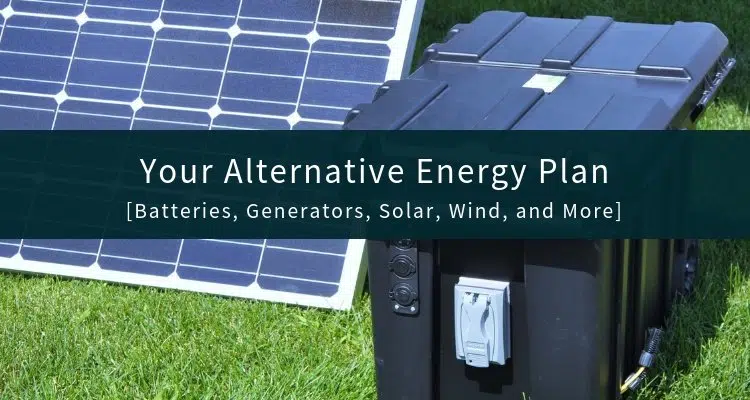
In today's world, part of being prepared for emergencies is having some sources for alternative energy that can power your critical devices and home systems. The good news is, there are lots of solutions!

First, Understand Your Energy Requirement

In the grid tied world that most of us live in, we have such an abundance of energy, that many of us have never given it a second thought. We grow up not knowing much about how it works, because we never really have to.

In an emergency however, all of that changes in an instant. And for those of us that choose to live off grid, it's even more important to understand the fundamentals of energy.

One of the first things to understand is that any kind of heating and cooling devices require the most power. So refrigerators, air conditioners, heating units, electric stoves, blow dryers--these use a ton of electricity. Because of this, we normally try to meet these needs with other means. Refrigerators and stoves can be powered with propane, heating can be accomplished with wood stoves, and dryer your hair can be accomplished...... with the air! :-)

LED Low Wattage Fixtures

Next, Reduce Your Home's Energy Requirement Where Possible

After trying to find other energy sources for as many of these types of needs as possible, the next piece of the equation to think about is reducing the actual electrical requirement of your fixtures and appliances. There are several "low-energy" appliances that you can find online and in big box stores. They are usually more expensive and smaller sized, but can be run on far less energy.

With your overall electrical requirement significantly reduced, you can focus on emergency and alternative power sources, knowing that your energy can now be stretched much further.

Off Grid Battery Banks

One of the quickest and easiest ways to give yourself some emergency power is to acquire a couple of battery banks. They can store energy independent of the grid, and help you get through short periods of time when you don't hvae power from the grid.

There are different sized battery banks for different applications:

Portable Battery Banks

Portable Battery Banks - Perfect For Handheld Devices

A portable battery bank is a great way to store a small amount of energy for small devices like our cell phones. Most often, these portable battery banks are small and handheld, like a pack of cards.

In addition to charging our cell phones, they can be used to charge cameras, GPS units, or anything else with a USB input.

Mid-Sized Emergency Power Supplies

The next larger battery to consider is a mid-sized emergency power supply. Think of the black boxes that look like a computer tower for a desktop computer, and sit on the floor.

These usually double a surge protectors, and are great as a backup power source for critical electronics--particularly medical devices like pumps, oxygen machines, CPAPs and more.

Because of their built in protection for sensitive electronics, they are also great for your phones, computers, internet routers, and more. If you are thinking about getting one of these for your home, check out AMC and UPS battery backups. Both are reputable companies that have been manufacturing backups for a long time.

Whole Home Battery Banks

Whole Home Battery Backup (or battery bank)

Like the name implies, a whole home battery backup is intended to power your home's critical electrical systems and appliances. Usually these batteries are able to be connected with your home's electrical panel (or they are already hard-wired in), to use all the existing wiring. This way, you can use your circuit breakers to decide which appliances receive energy.

The most important circuits to power in an emergency will likely be your lights, your fridge, freezer, water pumps, and communication devices.

Whole home battery backups come in a number of different technologies and flavors. Some are connected with solar or wind energy generating systems. Others store power collected directly from the grid, to be used later when there are emergencies.

You can find battery setups based on lead-acid or lithium ion. There are giant batteries that stand alone in their own enclosure, and there are other systems that involve a bunch of individual batteries that are hooked together.

Power Inverter for Your Car

Power Inverters That Work With Your Car

A power inverter for your car can be used to access a small amount of power in an emergency. Yep, I'm talking about those things with wall plugs that you plug into your cigarette lighter. These devices are changing the direct current from your car's system into alternating current, like you would normally use when you plug things into a wall outlet in your house.

So basically, if you want to use a car inverter during an emergency, you would plug it into the cigarette lighter, and then run an extension cord into your home to power the devices that you need.

Essentially, this is like your own mini generator. Although these are not able to deliver as much power, you can get an inverter that will work with your car for a fraction of the cost.

Generators Emergency Power

Generators

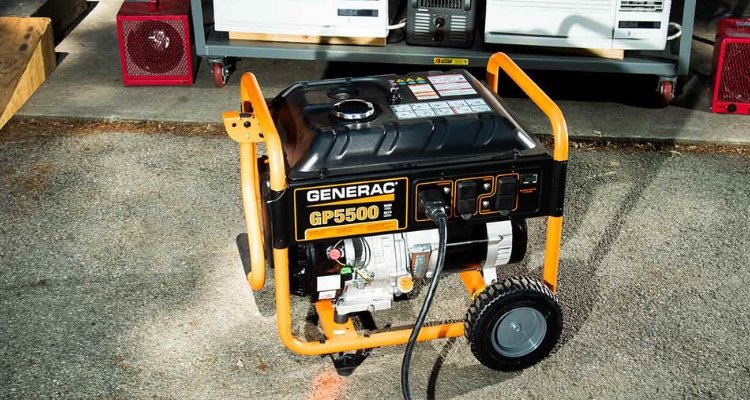
A generator is another solution for creating off grid energy. Generators are small motors that basically turn fuel into electricity. They give you the ability to keep things running during power outages. During Hurricane Katrina, there were some folks powering their houses for several weeks with generators and gasoline they had stored.

Generators can be portable (think about the red Honda generators that you see on construction job sites), or permanently installed in one place (like the Generac whole house units that are attached to a home's foundation).

They can run on a variety of different fuels. Gasoline, diesel, natural gas, or a combination of multiple fuel types. You'll also hear people talk about "solar generators", that really are just large batteries that are made to work with solar panels and store electricity.

Like an off grid solar system, generators need to be sized appropriately for the amount of wattage you need. This is determined by adding up the wattage requirements of the different appliances and systems in your home.

Off Grid Solar Panels

Off Grid Solar Energy

While there is such a thing as a grid-tied solar system, they don't serve preparedness purposes, because they are don't have a means of storing any power, and don't work during power outages or other emergencies.

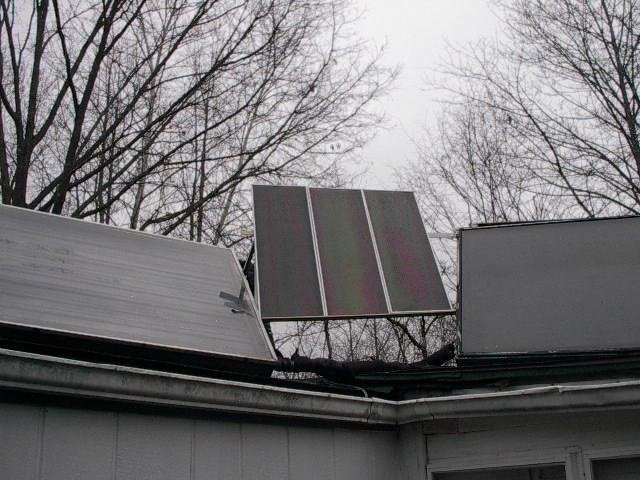
On the other hand, off grid solar systems are connected to batteries that can store electricity. This means that they can be used in emergencies when nobody else has power.

For your solar setup to work independent of the grid, you essentially need 4 components:

Solar panels - The black panels that sit on your roof or near your home and collect the sun's rays

Batteries - Where the electrical current is stored.

A Charge Controller - Monitoring how full your batteries are, and protecting them from being overcharged

An Inverter - Changes the electricity stored in your batteries from "direct current" to "alternating current", so it can be used to power things in your home.

Residential Wind Turbine

Residential Wind Turbine Generators

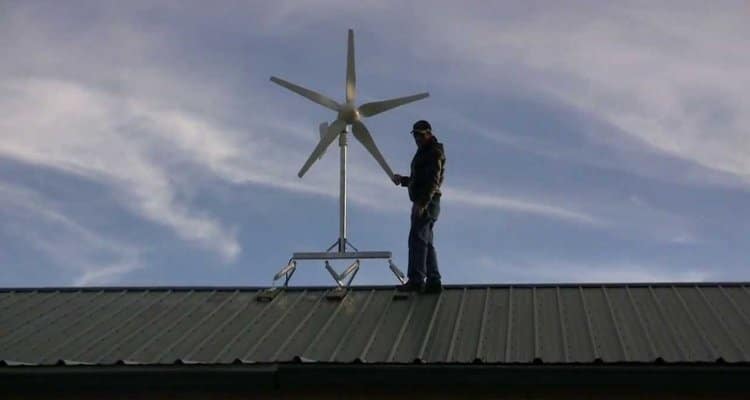
Creating power with a wind energy system involves the same components as an off grid solar system, with one obvious difference. Instead of collecting energy from the sun's rays, you're collecting energy from wind, with a turbine.

Wind energy is considered "greener" than solar energy, although it comes with some marked disadvantages. The biggest one is that the use cases for actually generating meaningful energy from wind turbines are so much more limited. Your home site needs to be in a really specific location in order to be able to harvest enough wind to make it worth it the cost.

Another vulnerability of wind systems is that the actual wind turbine is more fragile and susceptible to damage. If you think about it, the process for collecting solar energy is totally passive (solar panels sit there and soak up the sun's rays), while the process for harvesting wind power is kinetic, and involves a spinning turbine. This alone makes it more likely to wear out or malfunction.

The last thing to think about before you decide to invest in wind power for your home, is that the installation itself is far more complicated for wind than it is solar. Installing a wind turbine involves setting up a tall tower, and getting the angles perfect.

Apart from all of this, prior to setting up a wind generator system, you should really have a wind study done for your site, which takes a full year to do correctly.

When you combine all of these factors, you will find that most home sites around the world are better suited to solar power than wind energy. However, for homes where this isn't the case, wind power is completely viable, and with extremely careful planning can be a solid option.

Micro Hydro Generators

Micro Hydro Systems

Like wind, a micro hydro generator is powered by the spinning of a rotor. The difference obviously, is that a micro hydro system is propelled by water, whereas a windmill is powered by wind.

In the right situations, micro hydro has some powerful, compelling upside. The biggest is that the flow of power can be continuous. The water doesn't "set" every night like the sun does, or come in "gusts" like the wind. It runs all day and all night.

It is so consistent, that some homeowners with micro hydro systems installed on their property don't even have batteries to store electricity. There is enough power constantly flowing from the water, that they don't need to store any (Unless however, your stream is affected by seasonal flows, in which case, you might not have power come the end of the season).

Micro hydro setups can also be installed with relatively little impact to the stream, fish or other wildlife. It takes some know how, but it doesn't have to be complicated.

The biggest downside to micro hydro power is that it is uber site-specific. When compared with the amount of people that have access to wind or the sun's rays, folks that have access to enough running water on their property to make micro hydro a viable energy solution are extremely few.

There are also some states that have regulations about micro hydro systems, falling under the water rights set of legislation. If you are thinking about pursuing it, make sure you're not running afoul of these. History is replete with nasty entanglements over water (especially in the American West!).

5 Ways To Be Green and Sustainable at the Individual Level

March 25, 2024 by Seasoned Citizen Prepper

A lot is being done at the local, state and federal level to conserve the planet’s resources and to help lead a more sustainable lifestyle. Thankfully, many utility companies have started to implement renewable and alternative energy into the power that it sends to houses and businesses. Cities have started composting programs, have (controversially) banned plastic bags, and implemented “pay as you throw” trash programs.

With so much being done at higher levels to increase conservation and sustainability, it’s understandable that people have started to slack off at the personal level. If this sounds familiar, here are some things that you can do to get back on track. Each of these is a simple, reasonable change you can make in your daily life.

1. Shop around to make sure you’re getting the best deals on your utilities.

If you live in a state like Connecticut, Ohio or Texas, where the energy industry has been deregulated you’ve got more wiggle room here. Spend some time researching different Texas electric companies (or Ohio or Connecticut, or wherever you live). Look for programs with sustainable or renewable power sources that you can opt into. Consider switching to natural gas, which is better for the environment and your pocketbook all at the same time.

2. Make some eco-friendly changes to your house.

Tankless water heaters will give you permanent hot water, less water use and a tax credit. Solar panel installation can also save you money on your taxes while helping you reduce your electric bill and energy usage all at the same time. Energy efficient appliances save money and use less power as well. You get the idea.

3. Set up a compost pile in your yard.

This reduces the amount of trash that you toss into landfills (in plastic bags so it can never biodegrade). It also provides you with an eco-friendly alternative to fertilizer for your yard. If you live in an apartment or do not have a yard, set up a compost bin. Your town probably has a community composting program that will take your drop offs.

3. Build a rainwater collection tank if you have the space for it.

Rainwater can be used for things like watering the lawn, washing the car, etc. It reduces your water consumption which, in addition to being environmentally friendly, saves you money on your water bill.

4. Use cloth bags at the grocery store.

This is better for the environment than using plastic bags. If you live in a city with a plastic bag ban (like Portland or San Diego) it can save you from having to cart paper bags around. It might even save you money since many of the cities with the bans also charge for paper bag usage.

5. Use reusable coffee cups, cold beverage containers, and water bottles.

These save you from having to use paper or plastic cups, which even though these are recyclable now, isn’t as good for the environment as a washable beverage container. It’s also worth noting that many coffee shops will give you a discount off of your coffee if you bring in your own cup, so that’s a money saver on top of being an environment saver.

There are lots of little but important things you can do to help save the world. How many more can you think up?

Filed Under: Alternative Energy

Car Inverters Are Perfect for Emergency Power

March 22, 2024 by Seasoned Citizen Prepper

Generators are expensive, and for most routine “short” emergencies they are actually not necessary. Utility companies have power restored in 2 to 3 days in most cases.

But, how do we keep the babies fed and safe in the meantime? Use your automobile. Or more specifically, use your automobile’s battery.

Here’s how to do it:

All you need is a car inverter.  There are two ways to hook it up and depending on which way you hook it up will depend on which inverter you want to buy.

1) Plug it into your cigarette lighter. Check your car to see if the 12-volt power outlet (cigarette lighter) is ON, even without the key being on.  Just plug something in and see if it comes on.   If your outlet is ON even when the key is off, then you can plug an inverter into yourpower outlet.

I like the Bestek 150 inverter because it has two USB outputs in addition to the AC outlet. One USB is 2.1 amps for charging iPads and smart phones.

Plug the inverter into the car’s cigarette lighter outlet.  Plug an extension cord into the inverter and run the extension cord inside the house.  Then you can plug a few lights or small appliances into the extension cord. WARNING – do not attempt to plug in an air conditioner, or microwave or fridge or freezer.  I said SMALL appliances.

The limit to your available power is the maximum output of your cigarette lighter.  Don’t risk blowing circuit breakers or damaging your car’s electrical system.

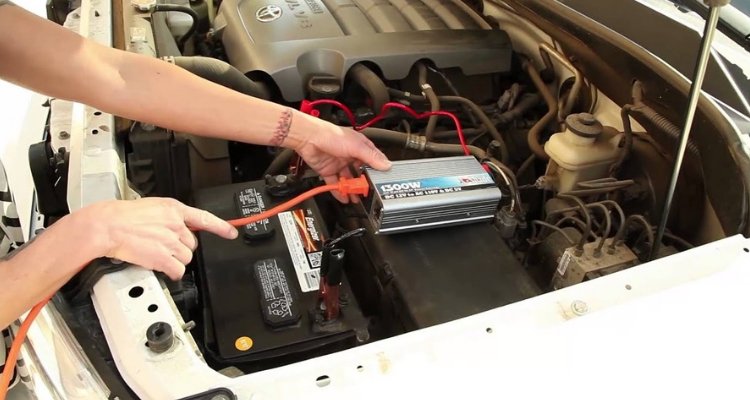
2)  Plug directly into your car’s battery.  If your car’s 12-volt outlet is not always ON, then you will need a battery clip in addition to an inverter.  You can also use this type of hook up if you wish to use a larger inverter than your cigarette lighter can handle.

Open the hood and attach the clip directly onto the car battery. Red on red; black on black. I have a Roadpro Battery Clip.  Plug the inverter into the cigarette lighter outlet on the clip. Run an extension cord inside the house.

There is an added benefit of using the battery clip and that is that you can use a more powerful inverter like the Duracell 800-watt.  This runs at 150 watts through the cigarette lighter or 800 watts when clamped on the battery.

About your extension cord.  Use a good heavy-duty shop or garage cord, not those little flimsy things we use to extend a table lamp.  Look for one with a power strip built in.

Look for an inverter with a usage-display.  Monitor your usage, DON’T run your battery down. You may have to idle the car from time to time to recharge the battery.  DON’T idle the car in an enclosed garage. Be smart.

OK, so now you have power inside your house, what can you do with it?

Most people first want light.  Let’s start there.  Preserve your battery power by using a low watt LED light bulb.  The 2-watt provides nice overall room illumination, but the 7-watt is better for working, cooking or reading.  So get a few different bulbs.  I got a large pack at SAM’S Club at a reasonable price.

Make the low watt bulb brighter by installing it into a shop light with a metal reflector.

Of course, you can run a battery charger for your flashlight batteries and numerous other SMALL appliances.

I keep all of my emergency power parts in a plastic bin in the garage, near the front of the car, so everything is together when I need it.  If the power is out, I don’t need to be tripping thru the house looking for parts and pieces.

Last winter when we lost power I used my car battery to run one 7-watt light bulb, an electric hot plate to make hot meals, the coffee pot, to charge my iPad and to keep my flashlights charged up.  It was just enough to get us by for a short spell. We weren’t uncomfortable or too inconvenienced.

This Christmas, my husband bought me a portable ice making machine. Using the 800-watt inverter, I can make 28 lbs of ice a day then put it in my freezer or cooler.  It will be a luxury to have cold beverages if the power goes out this summer, but it can also be used for first aid treatment or to keep medicines cold.  Next, I hope to find an efficient bread machine.

A power usage monitor like the P3 Kill A Watt allows you to know how much power an appliance is using.   You plug the appliance into the monitor and plug the monitor into the house outlet and read the power usage.  Search YouTube, to find several videos that feature the Kill A Watt family.

Start paying attention to the power usage of your favorite appliances and if they are power hogs, consider updating them with newer, more efficient models.

In summary, for less than $60 (a battery clip, 800-watt inverter and a low watt LED bulb) you can have emergency power – right now, without the expense of a generator.  Then as resources allow, keep adding additional low watt small appliances that add safety and value to your family.

Filed Under: Alternative Energy

Solar Power for Dummies

March 21, 2024 by Seasoned Citizen Prepper

I’ve been wanting to learn about solar power because it can be extremely handy in a situation where you might need emergency power, or if you go off grid. I’ve watched a number of YouTube videos and read about solar power, but still just didn’t get it. John from Iowa upgraded his solar system and sent me some small panels and an inverter and other stuff to play around with. Now mind you, I’m not mechanically inclined at all and a bit leery of electricity as it is magic to me. But with a bit of email advice from John,  I now have light!
So here is what a dummy like me THINKS she has learned about solar power so far…
  • The solar panel itself is worthless without a battery to charge.
  • The solar panels are pretty fragile for the most part and break easily if tipped over – that is why the mounting hardware is so important.
  • You have to keep them clear of snow and debris or the light is blocked.
  • The larger the panel, the faster and more/bigger batteries it will charge and keep charged – note that older panels may be big, but may not charge as much as newer panels.
  • Amorphous panels do a better job of collecting light in low light or cloudy conditions, but aren’t as efficient as the crystalline panels.
  • Once you get above 100 watts, you can usually find panels for around $1 a watt.
  • You need to connect the panel to the battery – usually with battery cables.
  • You need a charge controller of some kind to not overcharge the battery if you are just going to set it up and walk away from it.
NOTE FROM JOHN FROM IOWA: “Charge Controller. You must remember that electricity runs both ways. That’s why you can put it back into the grid. The little solar panels I sent you have built in Diodes to prevent this from happening. A Charge Controller does also, but it also controls the rate the electricity goes to the battery when charging. Too much cooks the battery, and ruins it.” Ten watts or less is usually considered a battery maintainer, but will not be able to recharge the battery if drained. You SHOULD have a deep cycle marine battery to hook to the solar panel as these batteries are meant to be recharged many, many times. Now understand that I don’t really get this as a regular car battery is constantly being recharged by the alternator when you drive it. Plus the small solar panels used to maintain batteries are often used on car batteries when the car is in storage, etc. But remember that I don’t know much about this subject, but I may be ahead of you… Those deep cycle marine batteries start at $75 if you have an old one to turn in and the more they can put out the pricier they get. I bought a used one at an RV dealership for $25 that I am playing with to learn about solar. NOTE FROM JOHN FROM IOWA: “Deep cycle and car batteries are different in the respect that car batteries are never meant to go below about a 50% charge for any length of time. That low of a discharge for a length of time, will destroy the car battery. Repeated deep discharges will kill a car battery fairly quick, as Sulphur usually forms on the plates as well as deterioration of the plates themselves. This is due to the fact that the lead plates actually change tier chemistry as the battery is discharged. The car battery has much thinner plates as you’ve likely noticed by the overall weight difference. A deep cycle battery, on the other hand, is made to go deeply discharged and recharged back up with little to no ill effects, repeated times. It has heavier plates and construction that allows this to be okay.” There are lots and lots of 12 volt (battery powered) appliances out there. Think of truck stops and camping centers – coffee makers, little freezers and refrigerators, phone and laptop chargers. Amazon is a good place to start looking for 12 volt appliances. BUT you don’t have to go with 12 volt appliances, you can buy an inverter sized correctly for the 110 appliances you want to connect. Here is a basic rundown that will give you an idea of what appliances take how many watts – these are all approximate numbers:
  • Large Household Appliances (refrigerator, washing machine, etc.)  2,500 Watts
  • Well Water Pump  2,400 Watts
  • Electric Circular Saw  1,600 Watts
  • Microwave Oven  1,400 Watts
  • Hair Dryer  1,300 Watts
  • 1/3 HP Submersible Pump  1,000 Watts
  • 1.7 Cu. Ft. Small Refrigerator 600 Watts
  • Flood Light  500 Watts
  • 20 inch TV/DVD Combo  300 Watts
  • Xbox  200 Watts
  • Desktop Home Computer  150 Watts
  • DVD Player  60 Watts
  • Laptop Computer  50 Watts
  • Battery Charger for a Cell Phone  25 Watts
Under KISS (Keep It Simple Stupid) that means that to run a SINGLE large appliance you will need at least $2,500 in panels alone – not counting mounting hardware, wiring, batteries ($100 to $150 apiece and Lord knows how many you would need!), installation, etc., etc. So this is why people who are off grid and using solar panels to generate electricity have propane appliances and use their electricity judiciously. Practically no one can afford an American lifestyle from just solar energy and battery power at this point in time, and solar panels have come down a lot in the last 8 years. So, I have been talking with an electrician about a startup solar array on my barn – 300 Watts expandable. Installed, about $1,500 – remember that I don’t understand electricity (it is magic to me) so I have to have someone install it. He is doing grid tied electric. At this point in time my local electric company will install for FREE a new meter that will run backwards – I just paid my electric bill and they said my meter can be programmed to run with solar, so no money upfront. You might want to check this out with your electric company. However, I want to do both grid tied AND off grid if needed – versatility makes sense to me as a preparedness person. The electrician hasn’t figured out how to do that yet… He is new to solar, but the only one in town even experimenting with it. Plus I would like to experiment with wind power and hydro power as I have a creek here.

Filed Under: Alternative Energy

Simple Off Grid Solar Setup in Southern Virginia

March 20, 2024 by Seasoned Citizen Prepper

Simple Off Grid Solar in Southern Virginia

Hello all. I’m Keebler from central Southern Virginia, 30 years now in the boonies and I’m on the end of the power line. I’m in a small prepper start up group in Concord, Virginia, near me where I showed some of my portable solar projects [these are the permanent installations].

I bought this place when returning from Beirut, Lebanon in June 1984, I also bought a used 17 ft. travel trailer in bad shape too. It took almost 4 years, living in my camper, to get power. I had a small 5 watt PV panel that kept the camper battery charged. The camper van has two batteries.

In ’89 I finally could afford a bigger trailer. Wanted more solar and I found a used two panel hot water solar panel unit – finally it’s on the roof too. Retired in ’92, barely surviving, had a stroke in ’95 that set me back a few more years.

Solar does wonders to heat water – the well water is around 56 degrees. With just two pumps, one for antifreeze and one for fresh water circulating, the well water gets hotter through a heat exchanger. Heats a 30 gallon water heater, prior to the electric tank – saves me big bucks on the power bill.

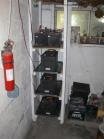
keeb battery bank In November of 2008 I invested in my alternative energy setup and bought a 45 watt solar kit from Harbor Freight – I think it was $189.99.

I had a better battery by now. Once I got it up on the roof. WOW!!! 3.2 amps – really great, kit had (3) 13 watt CFL’s in it & a controller, I still have one hooked up on it in the basement where the Battery Group is,(See picture)Battery’s are (Group 4D) very heavy about 160 filled, I bought them from Tractor Supply @ $149.99 each.

I have three all controlled separately via rotary selector switches. I have since added 2 more solar panels @ 90 watts each to the battery group, the H.F. unit still charges just fine. But on Group 27 battery, or my lawnmower start batteries and basement lights.

My next project was 12-24 DC volt well pump when the power is off. Bought a pump for $680, like the one Northern Tool sells – 100 ft. 1/2″ black pipe, pump max in the water says 50 ft. – so that’s what I did. 70 ft. pipe to a spigot & another 12 volt 4D battery & switch, I have 95 PSI water. Still needs a pressure switch – coming soon – but it’s an emergency system. Soon a solar panel will maintain that battery. got the panels and the bladder tank – just too much to do right now.

Next project after this one will be 24 volt solar panels to a 28 gallon water heater, I tested it and it will work.

My farm truck has solar panel to maintain the battery, so does the camper van.

I have 14 LED lights in the house all off the battery bank. All batteries are either in a safety box or on a safety tray in case of any possible leak – baking soda near too. All output circuits are fused, I only use DC LED volt meters so I know what the load is.

I recently found a DC 12 volt ceiling fan. I took one of the original CFL lamps I modified in a House Bridge lamp, alligator clamps, and I can hook it up to my (Jump Start) battery unit if necessary.

Filed Under: Alternative Energy

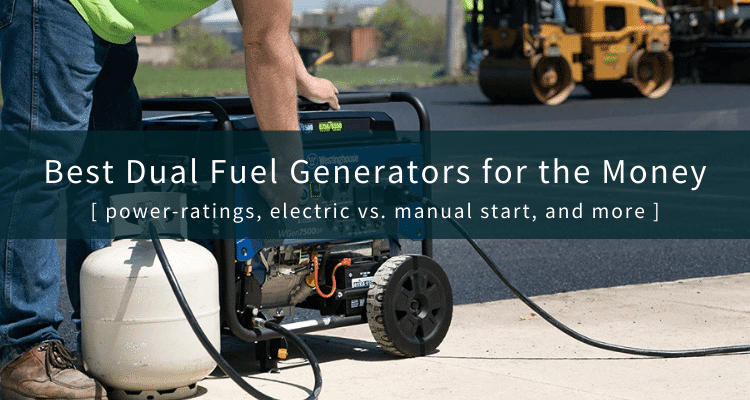
5 Best Dual Fuel Generators for The Money

March 14, 2024 by SCPadmin

Best dual fuel generators for off-grid living and emergency power backup

A dual fuel generator runs on either gasoline or liquid propane with the flip of a switch — no rewiring, no separate unit, just a selector and a different fuel line. For homesteaders, off-grid households, and preppers, that flexibility matters more than it might seem at first.

Gasoline is the most available fuel in normal times, but it degrades in storage, requires fuel stabilizer for anything sitting longer than a few months, and becomes scarce fast after a disaster. Propane stores indefinitely without degrading, can be kept in large residential tanks holding hundreds of gallons, and is available even when gasoline supply chains are disrupted. A dual fuel generator lets you use whichever is available and cheapest right now, and fall back on the other when you need to.

Whether you need supplemental daily power at a remote homestead, backup power during grid outages, or portable power for a cabin or hunting camp, here are the five worth seriously considering.

Download 906 survival guides bundle including off-grid power guides

The Short Answer

1. Westinghouse WGen7500DF Dual Fuel Portable Generator

  • 7,500 running watts / 9,500 peak watts (gas); 6,750 / 8,550 (propane)
  • L14-30R 120/240V 30A twist-lock outlet — transfer switch ready
  • Remote start key fob (100-yard range)
  • On-the-fly fuel switching
  • Westinghouse lifetime technical support
Westinghouse WGen7500DF dual fuel portable generator

The Westinghouse WGen7500DF is our top pick, and the reasons are practical: every unit is tested for functionality before leaving the factory, and Westinghouse backs it with lifetime technical support — unusual in this category. The 420cc 4-stroke OHV engine has a cast iron sleeve and low-oil auto-shutdown, both of which extend engine life considerably over the long haul.

On gasoline it puts out 7,500 running watts with 9,500 peak watts — enough to run refrigerators, freezers, air conditioning, lights, tools, and most home loads simultaneously. On propane the output steps down slightly to 6,750 running / 8,550 peak, which is still more than adequate for whole-home backup. The 6.6-gallon tank runs up to 16 hours at half load on gas.

One of the WGen7500DF’s best features is on-the-fly fuel switching: gas up the tank, connect a propane source, and when the gas tank empties, flip the switch and continue running on propane without any interruption. For an emergency situation where you’re burning through gasoline reserves and want to transition to your propane tank, this is exactly the workflow you need.

It’s also Westinghouse Smart Switch ready, meaning it can automatically detect a utility power outage and start the generator without you doing anything — a genuine seamless home backup system. Start it from inside the house via the remote key fob, which reaches over 100 yards. Push-button electric start and pull start are both on the unit itself as backups.

Power output is through a main 30A L14-30R 120/240V twist-lock outlet and two 20A duplex GFCI 5-20R 120V household outlets. The digital hour meter tracks runtime so you always know your maintenance schedule. Never-flat wheels and a built-in handle make repositioning manageable despite the weight.

2026 update worth knowing: Westinghouse has released the WGen7500DFc — the same generator with an added carbon monoxide sensor and automatic CO shutdown. If you’re using the generator near any enclosed or semi-enclosed space, the CO sensor is a meaningful safety upgrade. Check current availability of both models; pricing is typically similar.

Other Great Dual Fuel Generators

2. DuroMax XP8500EH

  • 7,000 running watts / 8,500 peak watts
  • MX2 technology: use 120V and 240V simultaneously
  • All-metal construction including control panel
  • Digital multimeter, USB outlets, 12V DC outlet
  • EPA and CARB approved — all 50 states
DuroMax XP8500EH dual fuel generator gas or propane

The DuroMax XP8500EH is a powerful, durably built unit with a 16HP 420cc OHV engine and all-copper windings on the magneto — a construction detail that matters for longevity and heat tolerance under sustained load. The all-metal construction extends to the control panel, which holds up better than plastic panels in outdoor and worksite conditions.

At 7,000 running watts and 8,500 surge watts, this unit is strong enough to run most home loads including refrigerators, freezers, air conditioning, lights, and power tools simultaneously. The front panel gives you 4 x 120V 20A outlets, a 120V/240V 30A twist-lock, two 5V 3A USB outlets, and a 12V DC automobile outlet — good coverage for varied load types.

The DuroMax MX2 technology is the standout feature: it lets you choose between running the generator at 120V only (full power to 120V circuits) or splitting output across both 120V and 240V simultaneously. For homesteaders running both household appliances and 240V equipment like well pumps, the dual-voltage simultaneous operation is a genuine operational advantage.

At 220 pounds empty, this is one of the heavier units on the list. The never-flat tires and handle make repositioning possible but not quick. You won’t move this one often — plan your placement before you need it.

3. Durostar DS10000EH Portable Generator

  • 8,000 running watts / 10,000 peak watts
  • 8.3-gallon fuel tank — largest capacity on this list
  • 120V/240V 50A heavy-duty outlet
  • MX2 technology, idle control switch, DC charging posts
  • EPA approved for National Parks
Durostar DS10000EH dual fuel portable generator 10000 watts

The Durostar DS10000EH is the heavy-duty option on this list — 8,000 running watts, 10,000 peak watts from a 440cc 18HP engine. The outlet configuration reflects that high-output design: 2 x 120V household outlets, a 120V 30A twist-lock, a 120V/240V 30A twist-lock, and a 120V/240V 50A heavy-duty outlet. That 50A outlet is what sets this apart — it handles larger loads that the other generators on this list can’t match, including some RV service connections and larger shop equipment.

The MX2 switch gives you the same dual-voltage flexibility as the DuroMax above. The idle control switch reduces fuel consumption when no loads are connected — useful for situations where you’re running the generator on standby between high-demand tasks. DC charging posts let you charge a separate battery bank while the generator is running, which matters for off-grid setups where you’re charging lithium or lead-acid storage between solar gaps. Analog voltmeter for at-a-glance power monitoring, separate main breaker for safety.

The 8.3-gallon fuel tank is the largest on this list — more runtime between refueling, which matters if you’re running the generator overnight or across long outage periods. EPA approved for use in US National Parks, and the noise level is modest enough for most neighborhoods.

4. Champion Power Equipment 76533

  • 3,800 running watts / 4,750 surge watts (gas)
  • RV-ready: TT-30R 120V 30A outlet included
  • Cold Start Technology for cold-weather starts
  • 9 hours on gas / 10.5 hours on propane at half load
  • Intelligauge digital display: voltage, hertz, runtime
Champion Power Equipment 76533 dual fuel generator RV ready

The Champion 76533 is the right generator for someone with a lighter load requirement and a priority on portability and RV compatibility. At 3,800 running watts and 4,750 surge watts on gasoline (3,420 / 4,275 on propane), it’s enough to run the essentials — refrigerator, lights, some small appliances — without the weight, cost, or fuel appetite of a 7,000+ watt unit.

The RV outlet (TT-30R) directly on the panel is increasingly rare in this class of generator, and for RV owners it eliminates the need for an adapter entirely. Cold Start Technology makes it genuinely reliable in cold weather — relevant for anyone in a four-season climate who might need to start it in January. The Intelligauge tracks voltage, hertz, and runtime at a glance so you know exactly how the generator is performing and when maintenance is due.

For a small cabin or medium RV with modest power needs, this unit is the right size — adequate power without wasted fuel or unnecessary complexity. Running 9 hours on a 3.4-gallon gas tank at half load, or up to 10.5 hours on a 20lb propane tank, runtime per fill is solid for its class.

5. WEN DF475T Dual Fuel 120V/240V Portable Generator

  • 3,800 running watts / 4,750 surge watts (gas)
  • 120V/240V voltage selector switch
  • Nearly 11 hours on a 4-gallon tank at half load
  • Electric key start, 12V DC cigarette lighter outlet
  • GFCI outlet protection
WEN DF475T dual fuel 120V 240V portable generator

The WEN DF475T matches the Champion on running watts (3,800 gas / 3,500 propane) but adds 240V output capability via a simple voltage selector switch — something that’s genuinely useful if you have any 240V equipment to run. The outlet lineup covers 2 x 120V 5-20R GFCI outlets, a 120V/240V L14-30R 30A twist-lock, and a 12V DC cigarette lighter plug — no adapters needed for most setups.

Runtime is impressive for the class: nearly 11 hours on a full 4-gallon tank at half load. Fuel source switching is instant via dial. Electric key start handles most starts; pull start is there as backup. At this price and power level, the WEN is one of the better value options if you need 240V flexibility without stepping up to a larger, heavier unit.

What To Look For In a Dual Fuel Generator

Power Ratings: Calculate Before You Shop

Power rating is the primary consideration, and it’s worth calculating your actual need before looking at specs rather than after. Most people overbuy or underbuy by guessing.

The process: identify every appliance you’ll run concurrently, find its wattage (on the nameplate, usually a small metal badge), add them up for your total running load, then add the highest starting load from that group (motors — fridges, freezers, compressors, well pumps — typically need 2–3x their running wattage to start). Add 20% to that total for fluctuation and surge margin. That’s your minimum generator output.

A worked example: a small cabin with refrigerator/freezer (700W running, 2,500W start), TV (200W), coffee maker (800W), and lights (300W) has a running load of about 2,000W and a surge load of 2,500W from the fridge compressor — combined about 4,500W, plus 20% is 5,400W minimum. Add a computer, router, and phone chargers and you’re above 6,000W. That rules out the 3,800W units and points to the Westinghouse or DuroMax. For a simpler load — lights, a small fridge, and phone charging — the Champion or WEN handles it comfortably with room to spare.

Pull Start vs. Electric Start vs. Remote Start

All the generators on this list have electric start as the primary method, with pull start as a backup. That’s the right configuration — electric start is faster and requires less physical effort, but pull start is the failsafe that works even if the battery is dead.

  • Pull start is the most reliable in a pure mechanical sense — no battery required — but it can be difficult for anyone with grip or shoulder issues, and the cord will eventually wear out and need replacing. Keep a spare recoil starter cord on hand.
  • Electric start is convenient and quick, but requires a battery that needs to be kept charged. For generators used infrequently, the battery can lose charge between uses — run the generator monthly or use a battery maintainer to avoid a dead battery during an emergency.
  • Remote start (Westinghouse WGen7500DF only, among these five) adds genuine convenience — start the generator from inside the house without going out in a storm. More components means slightly more potential failure points, but the convenience is real for home backup scenarios.

Outlet Configuration

Match your outlet needs to the generator panel before buying rather than after. Key things to check:

  • L14-30R twist-lock (120/240V 30A) — the standard transfer switch connection for whole-home backup. Present on all five generators here.
  • TT-30R (120V 30A RV outlet) — directly on the Champion 76533 panel; requires an adapter on the others.
  • 50A outlet — only on the Durostar DS10000EH; needed for larger RVs and some shop equipment.
  • USB and 12V DC — present on the DuroMax and WEN; useful for charging devices without an inverter.

Smart Switch / Automatic Transfer

The Westinghouse Smart Switch is a separate accessory that plugs into your home’s utility power and monitors it continuously. When utility power drops, the switch automatically starts the WGen7500DF (or WGen7500DFc) and transfers the connected loads to generator power — no manual intervention required. For home backup during a storm or overnight outage, this is the feature that makes the Westinghouse the right choice. It is currently only available for Westinghouse generators.

For broader off-grid power planning — combining a generator with solar panels, battery storage, and low-draw off-grid appliances — the generator works best as a backup to your primary storage system rather than a primary power source. Running a generator continuously is expensive in fuel and maintenance; a generator that kicks in when your battery bank gets low is far more efficient.

FAQs

What is the difference between starting watts and running watts?

Running watts is the continuous power output the generator sustains during normal operation. Starting watts (also called surge or peak watts) is the momentary higher output available for a second or two when an electric motor starts — compressors, well pumps, refrigerator compressors, and air conditioners all need significantly more power to start than they do to run. A refrigerator that runs on 700W may need 2,000–2,500W for the half-second the compressor kicks on. Your generator needs enough starting wattage to handle the highest-draw motor in your setup, not just the total running load.

Can I parallel two generators together?

Running in parallel — linking two identical generators to double the output — is available on a smaller class of machines called inverter generators, and is extremely uncommon on larger conventional generators like these five. If parallel operation matters to your setup, look specifically for inverter generators designed for it. For the generators on this list, the right approach to needing more power is stepping up to a larger single unit.

Does propane or gasoline give more output?

Gasoline gives slightly higher output on all dual fuel generators — typically around 10% more running and surge watts than propane on the same engine. This is because propane has a lower energy density per unit volume than gasoline. In practice the difference is modest and unlikely to matter for most loads. The Westinghouse WGen7500DF, for example, gives 7,500W on gas vs. 6,750W on propane — both more than adequate for home backup use.

How much propane does a dual fuel generator use?

Propane consumption depends on load and generator size. At half load, a 7,500W generator typically burns around 1.5–2 gallons of propane per hour. A standard 20lb barbecue tank holds about 4.7 gallons — so roughly 2.5–3 hours of runtime at half load per tank. A 100-gallon residential propane tank gives you 50+ hours at half load. For serious extended-outage backup, a 250–500 gallon residential propane tank is worth the investment.

The Bottom Line

The right generator depends on your load, your space, and how you plan to use it. Here’s the quick reference:

  • Home backup for a whole house: Westinghouse WGen7500DF (or WGen7500DFc for the CO sensor upgrade). Transfer switch ready, remote start, Westinghouse lifetime support.
  • High-output homestead or worksite: Durostar DS10000EH — the 50A outlet and 10,000W peak handle loads the others don’t.
  • Mid-range homestead with 240V needs: DuroMax XP8500EH — MX2 dual-voltage simultaneous output, all-metal durability.
  • Small cabin or medium RV: Champion 76533 — RV outlet on the panel, Cold Start Technology, right-sized power without fuel waste.
  • Budget option with 240V capability: WEN DF475T — 11-hour runtime, voltage selector, solid value at the 3,800W level.

No matter the scenario — grid outages, remote living, or off-grid homesteading — having a dual fuel generator means you’re not locked into a single fuel source when one becomes scarce or expensive. That flexibility is the whole point, and it’s why a dual fuel unit is worth the modest premium over a single-fuel equivalent.

Filed Under: Alternative Energy

How To Safely Store and Handle Propane

March 8, 2024 by Seasoned Citizen Prepper

How To Store Propane

Many of us use 20 pound propane tanks in Barbeque Pits/Grills, space heaters, campers, etc. If you are like me, I have a couple of spare tanks because of hurricane season and other emergencies.

After seeing that massive fire of 20 pound propane tanks on July 30, 2013 at the “Blue Rhino” propane refilling plant in Florida, it got me thinking about how little I knew about the safe handling and storage of these highly flammable and explosive tanks.

So I started to do some research and found out a lot I did not know.

I thought I would share some of what I learned:

If you ever smell any type of gas immediately put out all smoking materials and other open flames such as the pilot lights on cooking stoves, heaters and water heaters.

If you are able to, safely turn off the cylinder valve. To close the valve turn it to the right (clockwise).

Immediately leave the area and call 911 or your local fire department.

Before you use any propane appliance, have a qualified service technician inspect your cylinder and appliance.

Some people may have difficulty smelling propane due to their age (older people may have a less sensitive sense of smell); a medical condition; or the effects of medication, alcohol, tobacco or drugs. Consider purchasing a propane gas detector as an additional measure of security if you use propane inside your camper or home.

Odor fade is an unintentional reduction in the concentration of the odor of propane, making it more difficult to smell. Although rare, this can be caused by the presence of air, water, or rust in the cylinder. New and reconditioned small empty cylinders that sit too long before being filled are prone to internal rust when moisture and air get inside.

NEVER store or place a propane cylinder indoors or in an enclosed area such as a basement, garage, shed, or tent.

NEVER store or place a propane cylinder in an area of excessive heat (120 degrees or higher) or near a stove, fireplace, or other heat source. The heat builds up pressure inside the cylinder, which may cause the pressure relief valve to release propane. Flash fires or explosions can result from exposing cylinders to heat.

NEVER store or place a spare cylinder under or near a barbecue grill.

DO NOT smoke or have any ignition sources such as flames or spark-producing electrical tools in the area while handling or transporting cylinders.

ALWAYS transport and store a cylinder in a secure and upright position so it will not fall, shift, or roll.

I have found a really easy and cheap way to securely store and transport a 20 pound propane tank. A 20 pound propane tank fits inside a plastic milk crate perfectly. Place the 20 pound propane tank inside a milk crate. Take a second milk crate and place it on top of the first milk crate. This makes a 20 pound Propane tank difficult to turn over and nothing can hit the value assembly.  When you are ready to use the cylinder, just remove the top milk crate, make the connection and it is ready to use.

NEVER keep a filled cylinder inside a hot vehicle.

ALWAYS place the cylinder in a well-ventilated area of the vehicle when being transported.

ALWAYS proceed directly to your destination and immediately remove the cylinder from your vehicle.

The law places limits on the number of cylinders and the amount of propane that can be transported in closed-bodied vehicles such as passenger cars and vans. Ask your propane retailer for more information on state and local codes that apply to you.

DO NOT, UNDER ANY CIRCUMSTANCES, TRY TO MODIFY OR REPAIR VALVES, REGULATORS, OR OTHER CYLINDER OR APPLIANCE PARTS. Propane cylinders have special components such as valves, connectors, and other parts to keep them safe for use with grills and other propane appliances. Damage to any component can cause a gas leak. DON’T RISK IT! Call your propane retailer or a qualified service technician for assistance.

It is important to inspect your cylinder and outdoor gas appliances for leaks. Do this before using them for the first time each season, as well as on a regular basis. This can be accomplished in a well-ventilated area with a simple “bubble” test:

Apply leak detector solution or thick soapy water to the connection(s) between the cylinder valve and the regulator outlet.

Slowly open the cylinder valve and watch for bubbles.

If bubbles appear, close the cylinder valve, tighten the connection, and repeat the process. If bubbles still appear, call your propane retailer immediately.

I found that an easy way to do this test is to make a soapy solution out of dish washing liquid and water. I then place the mixture in an empty, clean spray bottle.

When you want to check for a leak, you simply squirt some of the soapy solution onto the area you want to check and watch for any bubble that may form. By using the stream setting instead of the mist setting, you can direct the stream directly on the area you want to check without creating a mess.

MAKE SURE YOUR CYLINDER IS EQUIPPED WITH AN OVERFILL PREVENTION DEVICE (OPD). An OPD is a safety feature that helps prevent small propane cylinders from being overfilled. An overfilled cylinder doesn’t have enough space left if the liquid expands when exposed to warmer temperatures. This can cause an increase in cylinder pressure and create potentially hazardous conditions.

Most cylinders with OPDs have special triangular hand wheels with the letters “OPD” on them. In many states, cylinders without OPDs cannot be refilled. If you are uncertain as to whether your cylinder has an OPD valve on it, ask your propane retailer.

ALWAYS close the cylinder valve and seal with a plug, even if the cylinder is empty. Ask your propane retailer if a plug is required. A plug or cap prevents insects from building their nest inside to threaded portion of the valve assembly. A plug or cap also keeps out the dust and dirt.

NEVER use a damaged cylinder or a cylinder that has been in a fire. All cylinders must be inspected before they are refilled. The law requires periodic inspection of cylinders, and it is against the law to refill out-of-date cylinders. The last inspection date is stamped on the cylinder.

NEVER dispose of your propane cylinder by throwing it in the trash. Check to see if there are municipal programs for collection in your area, or contact your propane retailer for guidance on disposal of the cylinder.

A propane leak has a strong, unpleasant smell, like rotten eggs, a skunk’s spray, or a dead animal. Propane manufacturers add the smell deliberately to help alert customers to propane leaks, which can create a safety hazard. You can ask your propane retailer for a demonstration to help everyone in your home or building, identify leaks.

Filed Under: Alternative Energy

Copyright © 2026 · Genesis Sample on Genesis Framework · WordPress · Log in

  • Privacy Policy