• Skip to primary navigation
  • Skip to main content

SCP Survival

Best Survival Gear and Supplies

  • Download Survival Guides
  • Survival Food List
  • Download 906 Survival Guides to Your Device
Home / Survival Food / Gardening

Gardening

Why You Need to Get Heirloom, Open-Pollinated, and Non-GMO Seeds NOW!

March 29, 2024 by Seasoned Citizen Prepper

Growing food does not require an acre of garden. In fact, most veggies and fruits grow perfectly well in containers, but you have to have the containers and the soil mix. It’s amazing how much food can be grown on an apartment patio, or even indoors. With a little careful thought, you can create a garden plan that can fit a lot of food in a modest footprint.

Veggie plants can clean the air in your house just like any other plant.

Get your heirloom, open-pollinated, non-GMO seeds and everything you need to grow them NOW, no matter what else you have to forgo to do it. Seriously. Skip Disney World (you didn’t want to support them, anyway!); take a local staycation instead.  Make sure you can grow food and feed your family; you’re going to need the seeds, tools, soil, and knowledge. Count on it.

I was watching a couple of youtube posts  from Marjorie Wildcraft (herbalists and naturalists know this name) recently, in which she interviewed both a man and a woman who survived the Cuban “Special Time” (translation: they nearly starved to death). One of the things mentioned by both that contributed greatly to the near-starvation was that NO ONE HAD PREPARED FOR TOTAL LACK OF FOOD SUPPLY with a well thought out survival food list.

The Cuban government had promised to “take care of the people”, but, hey! guess what?! they couldn’t. They didn’t. Children were given balls of brown sugar (sugar and molasses both DO grow in Cuba) as “snacks” to take to school.  It was all they had.

The government provided ample culture, arts, and entertainment (all home grown, of course), but could not supply food, or seeds, or garden supplies…or, anything else. They could not and did not live up to the promise to “feed their people”. Our government can not and will not either.

Get your seeds and supplies, your garden books for knowledge, or whatever you think you’ll need…and store them properly, so they remain “viable”. If you can afford it, also pick up a book on “permaculture” When you look it over, you’ll know why. Aquaponics would be good, too, but, at least gardening and permaculture (growing food without tilling the land!). Soon, these books will become difficult, if not impossible, to even find.  Buy them now. Heirloom seeds will not always be available, either. Get them now.

You CAN NOT save seed and grow future food supply from hybrid seeds or hybrid plants. DON’T just go to the stuff mart and buy cheap packets of seeds, or plant and grow hybrids, thinking you can save the seed and get future crops. You MIGHT actually be able to grow SOMETHING from hybrid plants or seeds, but it may not be what you had in mind.

Not only that, but Monsanto and DuPont now chemically treat their seeds so they WILL NOT grow future crops, beyond the first growth (and you have to buy those seeds, enriching, guess who?!).

Buy only seeds that will produce food you know you like and will eat; long-term food supply is not the time or the place for “experimentation”. Experiment now. Save to eat later.

So, let’s make this easy:  try —
Seed Savers Exchange

Baker Creek Heirloom Seeds

Heirloom Seed Company

Ohio Heirloom Seed Company

Filed Under: Gardening

Simple Pallet Garden Ideas (Plus Growing in Buckets)

March 29, 2024 by Seasoned Citizen Prepper

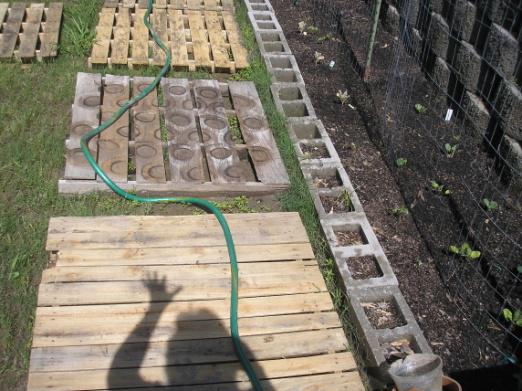
That’s my shadow waving at you! Shadow is such a showoff!
We’ve had so much rain in the Deep South. Our back yard is “stepped”; the upper level does fine, as it drains well –right into the lower level! The bottom part of the back yard, the lower level, has stayed wet since January, and, it is still wet. Yep. You guessed it. More rain coming. Woo. Hoo.
I was sinking in two inches of muck every time I walked across the lower level of the back yard. It was very difficult, and very frustrating, to try to work my gardens. Guess what? The solution was FREE! Yep. Free. Sturdy wooden crates from the garden center and some given to me by the guys replacing roofs from that awful hail storm last month.  But, hey! It works. And it was free. It doesn’t get any better than that!

How To Build a DIY Pallet Compost Bin

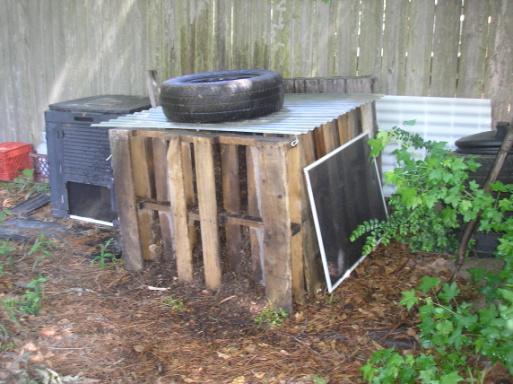
Here’s my compost bin, made from FREE oak pallets. They’ve been in use for three (3) years now, and still going strong. Simply lashed them together, 4 to make a “box”. We always have a good assortment of “critters”, including big, juicy earth worms. We keep it moist, but not wet; we feed it with kitchen scraps (all but raw eggs, any meat, or dairy foods) and yard cuttings (chemical free), plus leaves every Fall. Yes, some of the compost material “escapes”; I just pitchfork it back in every now and then. The screens help hold it in place, and the cover on top is held in place by an old tire because the raccoons were able to lift the 3’ long 2×6 board we were using to hold the cover in place! Tires were “free” in the sense that we took them off a car when we had new ones put on. Fiberglas cover was leftover from a greenhouse build project in another part of the yard. The black plastic box above is our first compost bin; it did not hold up well ($50), especially as it filled up; we have plugged the openings from the inside with more of our window screens picked up in a yard sale for seventy cents each, and we keep twigs and starter wood in it now. EVERYTHING can be repurposed. There is rarely any reason to put anything in the land fill, y’all. But our wood pallet system? It works well; it holds tons of compost, and it was free! So then I used the contents to mulch my newly-planted raised gardens; it makes beautiful mulch. The gray grid-like things (back – hard to see) are refrigerator parts I “rescued” from the dump; my cucumbers like to grow across the tops. The DS brought home something from work the other day that will work great for our melons to climb up and then rest across the top as the melons ripen; and it was FREE! (My favorite 4-letter word!). It’s in place in the garden, though you can’t see it here – a two-story, very sturdy powder-coated metal “cage” display thing that, otherwise, would be in the landfill now.

Planting and Growing Potatoes in Buckets

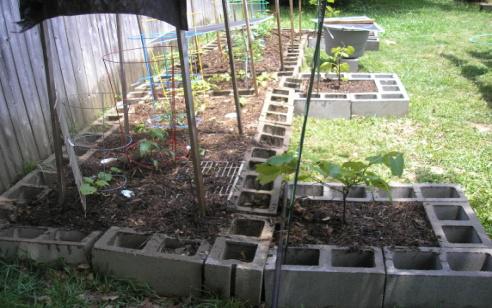
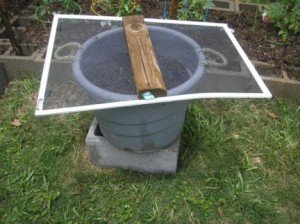
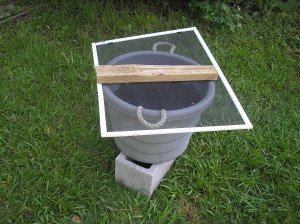
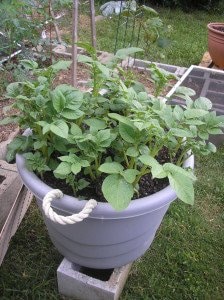
Potato Bucket with Screen And then there’s my potato bucket. I bought this container at Lowe’s last year for $5.00; DH drilled holes in the bottom; I put in a layer of stones for drainage, and I can’t keep a fresh layer of growing soil on these ‘taters fast enough! They are popping up like crazy. I bought SMALL red seed potatoes, because I did not have time to cut and cure the seed potatoes for two weeks, so I planted them whole. Man, are they growing! And, another one of my seventy cent yard sale screens at work here. So, this is my garden, such as it is. Cucumbers, squash, tomatoes (4 varieties!), and concord grapes (out front). The lower level contains brassicas and beans, but, not showing them off just yet. I will be filling in all those “holes” in cinder blocks and growing companion plants; I have done this before and it worked out very well; so, these small raised gardens CAN produce a tremendous amount, if we utilize every available space for growing in them. I am so very happy when gardening! After a few days of sun, I’m finally able to walk in my lower yard without walking across the sturdy oak pallets, my “free wooden walkway”. The sun warmed us to over 90 deg. F yesterday, and the skies were blue, but with it comes the heavy humidity that is the bane of the Deep South. Container plants and young seedlings are in need of watering twice a day, very carefully, of course. I have dozens of “volunteer” tomato plants that popped up after using my compost for mulch; normally, I wouldn’t try to grow from compost volunteers, but, I know a family much in need of food supply who likes tomatoes, so, we will be growing them. I originally had about 50 green bean babies; the slugs and snails devoured all but about 20, some of them down to nothing but stalks. By setting the beer traps AND covering them at dusk with glass or plastic jars, they’ve grown new leaves and they are going to make it! I also added a tiny bit of veggie fertilizer, which helped them recover, I do believe. I save every glass jar and plastic jar I can; I love to recycle things and keep things out of the landfill; I’m grateful that I had plenty of glass/plastic jars from peanuts, fruits, pickles, etc. I have plenty of canning jars I could use, but, I save those for canning – they’re precious to me. But I just cover my green bean babies in the evening with a jar, gently twisting it into the soil a bit to hold it in place, and remove them early the next morning; as hot as it is getting now, leaving these on for long would result in a cooked green bean baby, so, do keep that in mind. The potatoes in a container are beautiful! This is the first time I’ve tried this method, and I could not be happier. Here are two pics of my potato bin on day 1 and another pic on day 25: Starting Potatoes in a Bucket Potatoes Growing in Buckets

Filed Under: Gardening

Raised Bed Garden Hoops

March 29, 2024 by Seasoned Citizen Prepper

raised bed fourxfour crossovers

Last year I raided a dumpster when I saw a bunch of stiff waterline thrown into it. I used them to create hoops in my raised beds to help extend the season by covering them with plastic last year. I didn’t scavenge enough to complete the project, so I purchased some 1 inch PVC to complete the project. raised bed long

I drilled through them and used cable ties to connect them.

These work like mini-greenhouses when plastic is put over them in spring and fall. In the summer, a light fiberglass screen can be used to shade the plants and keep off bugs. I also use bird netting over them to protect the strawberry beds.

raised bed ties In the long beds I often use a piece of cattle or hog panel in the middle to provide climbing area for peas and other plants that can go up. Those long ones aren’t nearly as sturdy as the hoops in the 4 x 4 beds!

Note: I used vinyl deck planking for my raised beds. I put screws in every foot and left the heads up so that I could tie string off them to create a square foot grid pattern for planting.

Filed Under: Gardening

How To Deal With Snails and Slugs in The Garden (Hint: Beer)

March 29, 2024 by Seasoned Citizen Prepper

Friends, I have some simple gardening news to share.

I have never found a more effective way to get rid of snails and slugs than beer traps! I have never found a natural solution that’s more effective. And (here’s good news!) the cheapest beer works just fine!

I’m sure this will work, no matter what you are trying to grow: flowers, veggies, whatever.

I set traps last evening; I use the plastic tubs from my favorite greek yogurt, and bury them almost level with the garden’s earth; I do like to mound it just a bit around the edges, being careful not to get a lot of garden soil in the container – mounding makes it easy for the snails/slugs to slither over the edges of the container. Otherwise, they may be too sharp and may discourage “crawling in”. I like the beer about 7/8 full in the container.

Well, this morning, I checked my beer traps, and they were FULL of snails and slugs! Snails and slugs love the yeast smell, and will crawl right in and drown themselves! All of the critters in my traps this morning explain why my green bean babies aren’t making it, and why the bras are full of holes, in spite of the insecticidal soap, or natural dust. While I usually change the beer in the traps every other day, looks like I’ll be changing them daily for a while.

I actually used beer that has been sitting around since last year, but it worked perfectly well to trap the snails and slugs! So, even if it’s “old”, don’t throw that beer out; it’s still useful for snail/slug traps.

If you haven’t tried beer traps for slugs and snails, they simply work! Just want to share that with you.

Filed Under: Gardening

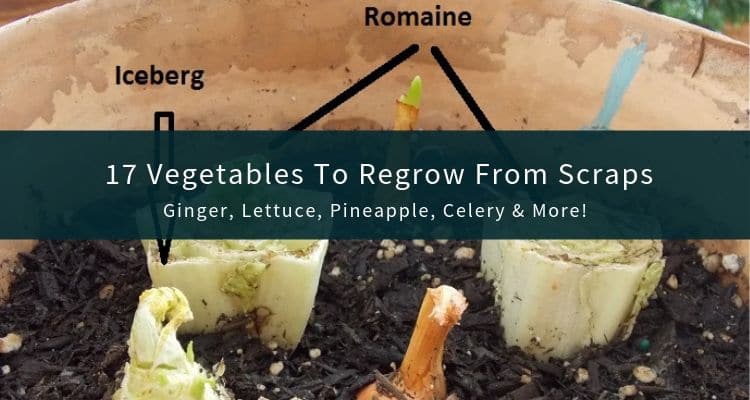
17 Vegetables You Can Regrow From Scraps

March 26, 2024 by Seasoned Citizen Prepper

Vegetables to Regrow From Scraps

With as much as people talk about gardening, it can seem overwhelming at times. Sometimes though, it’s just a matter of not throwing away your old food scraps.

Here are 17 vegetables to regrow from scraps:

17 Vegetables to Regrow From Scraps

1. Potatoes

If you’ve ever wanted to know how to grow potatoes indoors, it’s pretty easy. Cut chunks of potatoes out that have one or two eyes and leave to dry for 1-3 days then plant in rich soil about 4 inches deep with 4 inches above to keep covering it as it grows. You can transplant into the garden when weather permits.

2. Ginger

Be sure it has some nubs on it. Press into the soil similar to planting an iris. Keep moist but not damp. When you need it in the kitchen again, just cut off a chunk leaving nubs to regrow. Pretty much all there is to growing ginger from scraps.

3. Garlic

How do you grow garlic from scraps? Simple. Take leftover cloves and press root side down into the soil and keep moist. I personally haven’t done this and the instructions vary from letting the top sprout and grow to nipping off the top so that all the energy goes into the root to regrow the bulb.

4. Sweet Potatoes

Sweet potatoes are awesome to grow from scraps. They are vines are often grown as an ornamental in northern climates, but will also produce new sweet potatoes. Cut the potato end so that you have eyes. Stick toothpicks in and start it in glass of water. When roots develop and eyes are leafing out, plant in rich soil and keep watered.

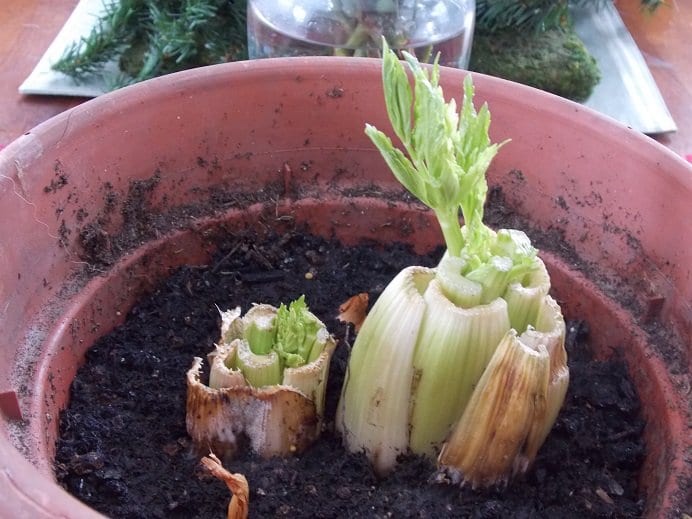
Regrowing Celery & Small Onions
Celery & Small Onions

5. Onions

Ever buy a bag of onions and have small ones in it? Well, if you want to regrow onions, just stick in soil and keep moist and they will grow larger. When you cut off the root ends of onions, just press into the soil leaving the cut end up and uncovered and keep moist as they too will regrow.

6. Lemongrass

Growing lemongrass indoors is a cinch. Put in a glass of water and watch it grow! You can repot into moist soil. Harvest as needed.

7. Pineapples

When you’re all done with the pineapple, here’s how to plant a pineapple top: Cut off the top leaving no fruit on the plant. Look for the roundish root buds. Cut leaves to within an inch of the top. Stick in a pot with rich soil and lots of moisture. Once the roots begin to develop and the top begins to grow reduce watering to once a week – this may take 2-3 months. Harvest a fresh pineapple in 2-3 years – yes, YEARS. Because of the time requirement needed to grow pineapple, it’s probably a good idea to slot them into your garden layout someplace on the periphery, or elsewhere out of the way.

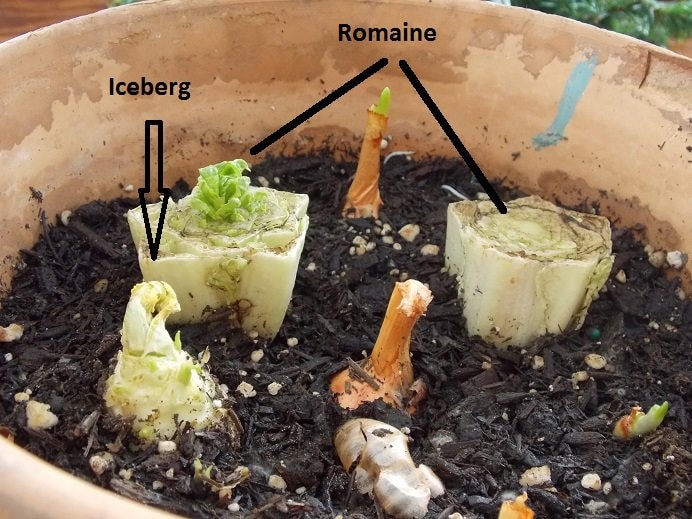
Regrowing vegetables from their scraps
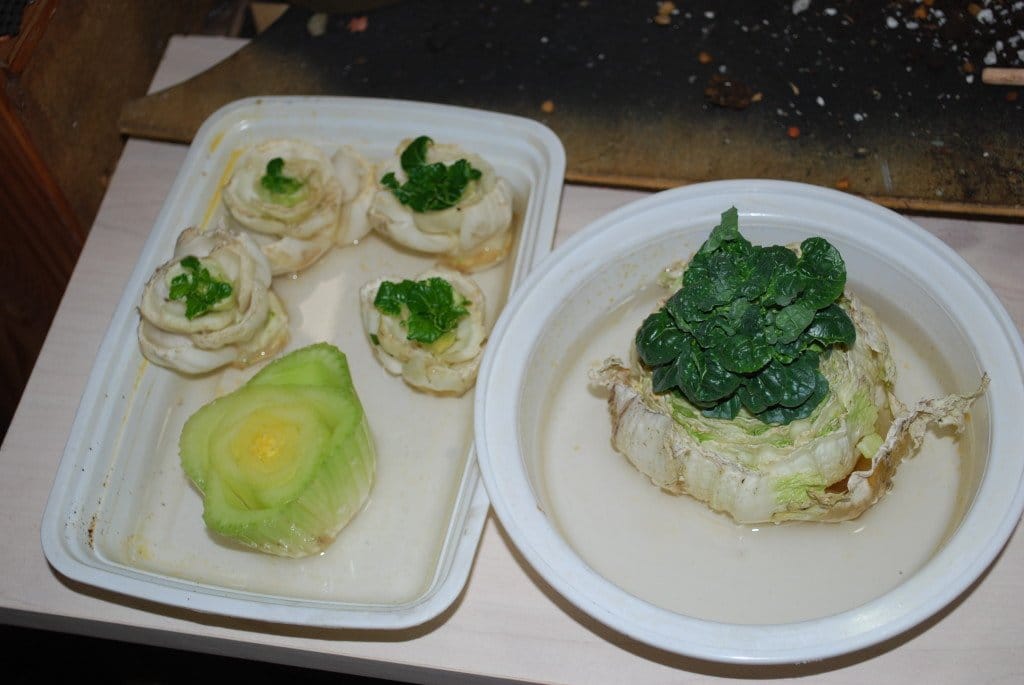
I’m playing with the core of the iceberg lettuce, so we’ll see what happens – it has sprouted.

8. Mushrooms

Mushrooms are tricky. Cut the stem off and place it in pot of compost rich, moist soil. They tend to like warm filtered light during the day and cool nights and you will know in just a few days if it takes and will regrow a new head or rots in the pot. Just set it on the floor at night in a cool room. And boom, that’s how to regrow mushrooms!

9. Carrots

This one comes with a slight caveat…. there’s not really a great way to grow carrots from carrot tops. Yes you can regrow them, but the root will never truly grow back. Great for greenery or if you have rabbits or chickens.

10. Leeks

11. Spring Onions

12. Scallions

13. Fennel

Growing Napa Cabbage and Bok Choy

14. Romaine lettuce

15. Celery

16. Bok Choy

17. Cabbage

For the green group: Press root ends into moist soil and let them grow.

For the blue group: There are several ways to do these. Cut and set them in a cup of water on a windowsill and watch them grow, harvesting as needed. Or start them in water and when roots appear transplant to moist soil. Or press into moist soil, keep the soil moist and watch them grow (this is my personal favorite, as I forget about things). Spritz with water weekly.

Ok so pineapple isn’t really a vegetable, but you get the point. It’s so easy to grow these, that throwing them away should be a sin! Remember, with anything started in water you must replenish water as needed and change on a weekly basis.

Here is a fun little video to get you thinking:

Filed Under: Gardening

Top 5 Vegetables to Plant this Spring

March 25, 2024 by Seasoned Citizen Prepper

Here are the Top 5 Vegetables to Plant this Spring.

1. Lettuce

I love Black Seeded Simpson. Years ago I figured lettuce would be hard to grow but have since found it is very easy. Lettuce will grow in a large garden, a raised bed, or even a flower pot.

2. Cucumber

These things crawl all over the place but produce pounds and pounds of tasty treats. Boston Pickling and National Pickling are my favorites.

3. Zucchini

I have found zucchini to be one of the easiest vegetables to grow. Over the past 9 years no matter how the rest of my garden is doing – I have plenty of zukes!

4. Summer Squash (crookneck)

Another plentiful vegetable – Summer Squash can produce pounds and pounds of nutritious sustenance. The more you pick – the more you get.

5. Okra

I planted my first crop of these last year literally had okra TREE’s providing so much okra we were begging people to take ’em. Pick when small and the plants will continue to produce and produce.

p.s. I live in the Southeast – Zone 7b.

gar
Rourke’s garden a couple years ago.

Filed Under: Gardening

  • Page 1
  • Page 2
  • Page 3
  • Interim pages omitted …
  • Page 6
  • Go to Next Page »

Copyright © 2026 · Genesis Sample on Genesis Framework · WordPress · Log in

  • Privacy Policy