What follows is a FREE downloadable PDF on midwifery, which is very related to preparedness. More preparedness files are available on our survival PDFs download (currently over 906).
Document Name: A Book for Midwives – Care for pregnancy, birth, and women’s health
Topic: Midwifery Books (Health and Medical)
Summary:
This latest edition includes new information on helping women stay healthy during pregnancy; helping mothers have safer labors and births; preventing, managing, and treating obstetric emergencies; breastfeeding; the health needs of new babies; and involving the community in improving the health of mothers and pregnant women.
It also includes new information about treatment and medications for HIV and other STIs; vaccinations, medicines, and drug interactions; infection prevention; improved methods for dealing with complicated deliveries; and on family planning.
Click here to download the file.
The man you see in the picture is Ted Hicks, son of Ray Hicks, who was considered the last of the old time story tellers. The other picture is the view from his back porch. I had the pleasure of meeting Ted when we lived in the “High Country” near Boone, NC, and I worked for the public transportation system for Watauga County, NC.
On my frequent trips to pick up Ted and carry him to the doctor’s, he fascinated me with the old stories his dad taught him over the years before he died; stories of the mountain people who lived in this region and the old time “Jack Tales”. He told me how his dad and his mother taught him how to look for certain herbs and plants, and how to use them, how to hunt, how to survive the harsh winters, how to plant gardens on those steep slopes, what would grow, and what would not. He spoke with that old mountain brogue which took me some time to understand, but when I finally mastered the language, I was even more fascinated with the stories.
At the time these pictures were taken, Ted lived with his mother in the house you see, which is high up on Beach Mountain. This is also where he was born. They heated and cooked with wood, and only got indoor plumbing a few years prior to this photo. Life on these mountains is tough, and the winters are even harder.
Ted told the following story which you would think was right out of a survival book. One winter day when he was just a young boy, he and his two sisters and brother were in the old one room school house, when the winter snow which had begun early that morning, turned into a blizzard. The snow was accumulating at a frightening pace, the temperature was dropping, and the winds were howling. Since most of the children lived several miles from the school house, and all walked to and from school, the teacher let the children out early and told them to go straight home.
Their dad had always told them, “If you get caught out in one of them “howlers”, stay on the road as best as you can and look for the tops of the fence post to guide you. Don’t take any shortcuts, even though it might be a shorter distance.”
Ted said, “Well, I thought I knew these mountains pretty good, and the snow was almost to the top of some of the posts, so I told my brothers and sisters to follow me, I knew a better way.” He said they told me, “You know what Paw told us, follow the fence post, we aint going with you.”
Ted said, “I bet I’ll beat you home,” and off he went by himself. After an hour, Ted said everything looked the same, the snow was 4-5 feet in places, he didn’t recognize any landmarks, it was really cold, the wind had increased, and he was lost. Ted told me, about this time he was thinking, “I sure wish I had done what Paw told me to do.”
Well, the story did have a happy ending, as he was very close to his Grandparents’ cabin, and he smelled the smoke from the chimney, he said he struggled to get there, and arrived on their doorsteps half frozen. Ted said “God was a looking out for me that night.”
He spent the night with them, and most of the next day. His Granddad took him home the next evening after the storm had quit. He said, “I expected my Paw to get his switch and give me a good spanking, but he guessed they was so glad to see me alive, my adventure was lesson enough.” Ted said there have been many storms since then, and, “I always look for them fence posts.”
As I got to know Ted and his family, I fell in love with them and their simplistic life style, and most of all the tenderness of their hearts. They would do almost anything to help you if they could. I realize now that they were “preppers” by many of our definitions, but they would not have called it that. I think they would say that they had to have food stored in the root cellar if they wanted to eat during the long winters.
They would have to have the firewood cut and stored, and stove wood cut all the time. The kids listened to the stories their parents, grandparents, aunts, and uncles told around the fireplace in the evenings and learned how to live and survive in those hard mountains. Ted told me those were some of his favorite times growing up, and in many cases, where he learned so much.
The point is, we all have a natural resource available to us as “preppers”, that being the knowledge of our elders, and maybe just a friend who has a skill that is needed.
Unfortunately, most people in today’s culture do not want to take the time to sit and listen to those with this wealth of knowledge. They would rather watch something on YouTube, or Google a subject on the internet. These can be excellent resources, but you really need to do your research to trust some of the information you get. Please don’t misunderstand what I am saying, much of the modern technology is great, and makes our lives much easier.
However with that said, what happens when we don’t have our smart phone or iPad due to a natural disaster such as the recent hurricane that hit the East Coast and North Eastern section of our country?
Many of you reading this article have the type of knowledge I am talking about. I believe one of our greatest challenges as “Seasoned Preppers” is to find out how to give this knowledge to the younger generations. We are so close to losing so much knowledge about our heritage and our history that it is scary. Have you looked at some of the new history books our children are being taught these days?
On a personal note, I found out rather quickly that if I wanted to talk, I should say communicate, to our children, and especially our grandchildren, I had to learn to text message. That was, and still is a challenge for me. But at least we had some good family talk time as most of our children and grandchildren were home for the holidays.
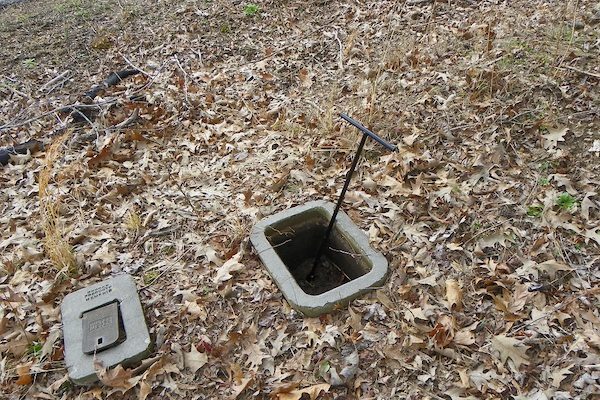
Do you know where your water main box is located? If not, you just might want to locate it before Murphy is in the neighborhood.
I want to relate an incident that happened to my wife and me several months ago. As a former Boy Scout and prepper, I have always tried to adhere to the Boy Scout’s motto: “Be Prepared”. But, as I discovered, it is easy to say you are prepared, but quite another to actually be prepared.
We have our beans, Band-Aids, and bullets. We try to go by the rule of one is none, two is one, and three is better. In other words have a plan B and C. We have tried to prepare our home for emergencies that may arise, have the necessary tools on hand to fix minor repairs, the list could go on, but I think you get the idea. I’m sure most of you who are reading this article have made similar preparations, and may be thinking: so what’s the big deal. At this point, I need to mention another rule that all preppers’ need to be aware of, but often forget. It’s called “Murphy’s Law–Anything that can go wrong will go wrong”.
Have you ever noticed that plumbing leaks always happen at night? Or on the week-end? When the hardware store has closed, and you can’t find, or don’t have the right tool? Or maybe all of the above?!
Now I realize that it is almost impossible for most of us to be totally prepared for everything, but in my case, I thought I had all the bases covered. Let me give the reader a little history. We live in an old house, built in the early 50’s, and we live in the country. A trip to the store of any kind is a minimum of 30-45 minutes, one way.
When we first moved here we added a new bedroom and bath, and did a lot of renovations and repairs. At that time I installed new stainless steel supply lines to all the sinks in the bathrooms, and to the washing machine; all with cut-off valves. I also had spare supply lines in my plumbing supplies, and all the tools I thought I would need. Can you guess which one I forgot to replace? Yep! You guessed it, the water heater.
I am not the handy man that I would like to be, but plumbing has always been one of the things that I have been able to do most of the time, so when my wife said one evening about 9:00 p.m., “Where is all this water coming from in our bathroom?” My first thought was I’ll just cut the water off under the sink with the cut-off valves I had installed, and finish fixing the problem in the morning.
Here is where “Murphy’s Law” kicked in. When I walked into the bathroom, she was standing in water, it was spreading fast, and to my surprise, the leak was not coming from under the sink as I had thought, but was coming from a closet where the water heater was located.
I opened the closet door, and was immediately sprayed with warm water bouncing off everything in the closet. The leak was coming from the supply line that connected the water heater to the house plumbing system. To my dismay, no cut-off valve, not a problem, I would go out to the garage, get my water key, and go to the water meter box located in the front yard and cut the water off to the house.
By this time she was pleading “Please hurry; I’m running out of dry towels.” I ran out to the garage and looked at where the water key was supposed to be hanging; you guessed right again, no water key. I had forgotten that I had loaned my water key to my brother-in-law for a plumbing problem he had. Not to worry, I ran next door to my wife’s parents and asked to borrow their water key. Fortunately, they were still up, and to my surprise they knew exactly where it was. By the time I got back to the house and turned off the water, she had run out of towels and all she could think to say was: “What took you so long?”
After we cleaned up all the mess, we took stock of everything. There was no real water damage, we both thanked God for that. We could just picture what would have happened if we had gone to bed and found the leak the next morning. We did have drinking water stored, so we could have coffee the next morning, and I could go to the hardware store to get the necessary supplies. This time I would replace both the inlet and outlet lines with new stainless steel supply lines with cutoff valves.
The next morning, after finally getting everything replaced and checked for leaks, we were back in the hot water business. I would like to say it was an easy repair, and things went like clock- work; but remember Murphy’s Law? The big issue was the one pipe wrench I thought I had in my tool box, wasn’t there. I had to get a new one.
Some lessons learned, and some advice for all preppers.
Check all water supply lines in your house. If they are suspect, replace them with stainless flexible lines.
Have cut-off valves installed on all supply lines.
Inventory your tools to make sure you have what you will need.
You don’t have to have a water key to turn off the water at your water main, but they are cheap, and it is so much easier than using a wrench or vise grips, especially when it is raining, which I forgot to mention, and the water main box is full of water, which it was, and it was night time.
So many of us walk around day to day with toxic buildup limiting how we feel and what we can do. Here are some ways that we can begin to eliminate these poisons, and return to full capacity.
The Importance of Water
There are some very simple things one can do to reduce or even eliminate “inflammation” – the most important being, what you drink and what you eat. Drink lots of water every day – not citified (municipal) tap water with all the chemical neurotoxins, including fluoride (which is added and you pay for, by the way) and other peoples’ drugs, E. coli, etc., but clean, clear water – filter it yourself or buy bottled spring water (which can also contain many contaminants, so, be careful!). But drink more CLEAN water – flush out those vital organs, every day. Stay properly hydrated – every day.
Many health issues today are the result of dehydration, believe it, or not!
If nothing else, keep a “Life Straw” on you, so you always drink clean water, wherever you may be. Don’t worry about looking silly, worry about being sick (or, avoiding it, in this case). To avoid passing illnesses, have one LifeStraw for each member of your “party”, if possible. Or, a Sawyer Squeeze Filter might be a good choice for transport.
Get a good large-volume filter system; it doesn’t have to be expensive; a ceramic filter works well, but it’s very slow. If you build it yourself, it’s relatively cheap. Don’t think you’ll filter by the minute with one of these. Those cheap things that attach to your faucet or have a pitcher? Don’t waste your money or your time. Sawyer also makes “big” filters, that are well thought of, in general.
Eliminate all sodas
Maybe later you can have one on a rare occasion as a special treat, but it should be very rarely. (Side note: I actually had a stomach ulcer heal up when I stopped consuming my favorite drink, “Coca-Cola”!). The same Coca-Cola I use to soak and degrease and de-rust my cast iron when it needs it!
One of the most potent foods you can consume to get healthy and stay healthy for many reasons, not the least of which is that it builds the autoimmune system AND is an excellent detox agent;
Ginger is another good anti-inflammatory; if you’ve never tried FRESH ginger (slice and eat from the tuber), you’ve never had GOOD ginger, IMHO! It’s like “candy”, only healthy!
This powerhouse can’t be overstated for many benefits, including anti-inflammatory and healing properties. You might want to do some reading on this natural herb; its abilities may surprise you!
These lubricate the vital organs, including the intestines, and help “clear” things out with minimal stress to the system; Omega 3 oils also reduce inflammation in the kidneys; when the kidneys become inflamed, the body cannot detox itself properly. Krill Oil is considered the best, but it’s very expensive. Not all “fish oil” is good; much of it is rancid before you ever buy it. Do a little research and read your labels carefully.
This is a natural substance (it is really just finely powdered volcanic ash!). BCP is a phyllosilicate which has adsorbent (yes, that’s spelled correctly) strength second only to powdered charcoal.
You can buy it as a powder or as a liquid. BCP attracts, binds and removes pathogens, heavy metals and toxins- from the intestines. BCP gets absorbed into the blood stream and picks up “hitchhikers”, moving them out of the system, out of the vital organs, out of the body. If you can’t handle the liquid, make your own “pills” (this is the form I prefer) using the powder form and gel caps.
Buy this at any health food or whole foods store; pumpkin seed is proven as an effective agent against worms in both humans and animals. Ewwww….gross! I know.
But humans and animals can and do get worms from the world around us, as well as each other…detoxification by taking Pumpkin Seed Oil caps according to directions every six (6) months to even once a year should give peace of mind and prevent any unwanted “living hitchhikers” in the body. You can also use them for your pets; if you have cats, for example, they are famous for passing on pinworms. Did you know that?
Use Good Sweeteners
Reduce or eliminate refined sugar from the diet, a common cause of inflammation in the body, especially the joints. Learn to eat and drink without “sugar” in order to break the addiction (sugar IS addictive!), but if you must have sweetener, use RAW locally-produced honey (you need the antibodies for your area!) or Stevia in the Raw.
Some people like Xylitol, but I suggest you do some reading first, as there is new evidence Xylitol has its problems, too, such as causing diarrhea, and being processed with ethanol – the same reason I say do not use TruVia or PurVia, which are a form of Stevia. Also, avoid Agave Nectar, even though you’ll find it in health food stores. You can do your research to find out why.
My personal favorite sweetener is locally-produced RAW honey, which helps build immunities (pollens from your locale), and never goes bad. If it crystallizes, just heat it up, stir, and use it. It’s also an excellent medicinal, but; I’ll leave you to research this on your own. Again, RAW (unfiltered) honey–its dark amber; not “golden”. That’s how you know. Look for an apiarist (beekeeper)in your area who sells it; an internet search (www.duckduckgo.com) should do it.
Get ALL of the artificial sweeteners (brain cell killers!) and Monosodium Glutamate (MSG)
Good luck with those two (read labels). I have found artificial sweeteners in a can of green beans (which is why I now can my own). It may take a while to get them all out of your body, as they do have a cumulative effect, and you may experience “withdrawal” symptoms, just so you know.
These are neurotoxins (they both kill brain cells); people who persist in consuming them may find themselves diagnosed with Alzheimers or Epilepsy, when they don’t have either one; I learned that from my Neurosurgeon after I blacked out at the wheel in rush hour traffic over 20 years ago. It took eight (8) months to get it all out of my system. I haven’t touched these toxins since.
Cook Simple “Fast Foods”
This means eliminating “ready to eat” foods, for the most part, particularly “off the shelf”. Watch foods out of the freezers, too; better still, don’t buy them and don’t eat them. Cook simple meals for yourself at home, even if you can only cook once or twice a week to eat from all week. Or eat raw fruits and veggies, if you can’t take the time to cook (once in a while).
Freeze your own meals – make not one casserole, but two; eat one for dinner; freeze the other. Mark and date it; “fast food” for a future meal.
Learn to can your own foods and know what goes in them – “fast food” you can live with! Pop a jar, heat it up, yum! I make large batches of soups, stews, beans, meats, veggies, etc., and can them up so I always have home-cooked “fast food” at the ready.
Wash All Fresh Fruits and Vegetables
Start washing all fresh fruits and veggies before eating, including “organic” and getting the chemicals off; I like to soak mine in a mild solution of cold water with about a teaspoon of white vinegar per gallon of water. Buy only organic citrus, if possible, because you can’t remove the toxins from these skins.
Better still, grow your own; citrus will grow just about anywhere if it gets enough light and warmth, especially in a greenhouse or climate-controlled home (for colder climates); they make beautiful “house plants””.
Eat foods as close to “natural” as possible. The less cooking, the less processing, and the less time out of the garden, the healthier for you.
If you make these simple changes to your diet, you’ll soon feel better, and probably feel like “moving” more! Now you’re ready. Go get some exercise – take a nice walk, even a short one; tomorrow, it will be longer, and the next day…and so on.
When my parents retired and moved to New Hampshire back in 1970, my Mom became an avid, if education-averse, gardener, all of the short summer, trying, mostly in vain, to grow vegetables in terrible, rocky NH soil.
My Dad, on the other hand, spent most of the summer at the extended family’s fishing cottage, about 30 miles away. On trips to the tiny town dump, he discovered that the area he was instructed to dump his buckets of catfish guts was the same place that the town’s 2 diners had to drop off their raw kitchen waste. The large mound of “unintentional compost” was literally overgrown with tomato, potato, pepper, zucchini and onion plants, free for the picking.
Most of the time, he made himself some very good, free veggie side dishes during the week, and never mentioned it, just to keep the peace :)
Fill Empty and Unused Space with Food
If you are at all into gardening, you have probably heard something about the “Guerilla Gardening” movement. It is primarily an urban/suburban phenomenon, where folks transform ugly, abandoned patches of ground into vegetable or wildflower mini-gardens, using only some terra cotta clay from a hobby store, an old cheese grater, some dried compost or earthworm castings, or other organic fertilizer.
Generally, they use a little water and some native wildflower seeds to make “seedballs/seedbombs/seed grenades”, and pitching them over fences and such into unused pieces of land, based on the pioneering agricultural work of the Japanese farmer/philosopher, Masanobu Fukuoka.
The grenades start to fall apart after the first rainstorm, and “plant themselves”.
There are better descriptions of building your own seedballs than I could write at Seedball.
Why stop with wildflowers? Consider some open-pollinated vegetable and herb seeds in the same usage. Why stop with your own land? Take a walk or a drive around “the neighborhood” and find some non-obvious open spots, to plant yourself some self-seeding backup crops? Toss some “grenades” and make yourself a map, in case you want or need to go harvest your backup crop. It’s a heck of a lot of fun to go back and look at your handiwork, as well :)
This could be especially-valuable if you are stuck in a suburban area. A well-tended ‘monoculture row’ backyard garden might become a target for raiding by hungry neighbors, but some ‘random’ plants in an undeveloped area are not likely to attract much attention. Not that I have a low opinion of most people’s knowledge, but your average urban/suburban individual wouldn’t know a radish or bell pepper plant from poison oak, and probably wouldn’t even think to look, because it wasn’t on something close to a grocery store shelf.
How To Make Organic Seed Bombs of Herbs and Vegetables
I’m by no means an expert, but I suggest a mix of some of the following seeds:
Perennial White Clover (tossed with the appropriate bacterial inoculant) Will make your plot look more “untended” and will fix nitrogen from the air into the soil for years – plant your own fertilizer.
Radishes – the first vegetable that comes up in the Spring, and if you let it go to seed, it generates an unbelievable bulk of green compostable material.
A few different leaf lettuces – tasty, nutritious, and since it’s not a head of iceberg, easily ignored by other hungry humans– could be some random weed.
Onions – you can eat the sprouts, let them go to seed and bulb, and they will overwinter well. Chives are not a bad idea, either.
Your favorite herbs – basil, thyme, oregano, parsley, etc. – the thyme and oregano will spread and maybe become “invasive” – if you’re eating it, not really a problem.
(Some) squash seed – not many, be careful. They’ll shade out other plants, and a 50 lb. Zucchini in September may not be the tastiest thing you ever ate, but it sure beats eating nothing.
(Very few) tomatoes and bell peppers. Pick “ugly” heirloom varieties. Perfect-looking bright red fruit could attract unwanted attention.
Get open-pollinated, non-hybrid, non-GMO seed. You want “plant once, harvest forever” plants. I recommend Nichols Garden Nursery – http://www.nicholsgardennursery.com – I have no stake in this company, just have been a happy customer for over 30 years. A VERY strict no-GMO policy, and all hybrids are clearly marked.
For more information about Fukuoka-san, and his farming methods, start here.
I know that his book “The One Straw Revolution” had a great effect on my views on the natural/spiritual aspects of growing my own food, even if no longer that applicable to growing my own in a suburban townhouse.
Yep. It’s that time of year again. Various flu viruses are going around. Well, actually, they don’t just “go around”, they get “shared around” – we all know that. But, what can each of us do, individually, to attempt to ward off the evil demons of flu?
What In The Actual Flu?
First, a little science: The flu is a contagious respiratory disease caused by an influenza virus. In the U.S., flu outbreaks typically occur in winter months. Symptoms include fever, chills, sore muscles, and cough. Thousands of people in the U.S. die each year from the flu or its complications. Most of those who die are the elderly, young children, or people with compromised immune systems.
The viruses that typically cause the flu are primarily categorized as influenza type A or type B. Influenza type B does not change much over time, but type A can mutate rapidly. Therefore, a new form of the flu vaccine must be developed each year to protect people against the exact strains that are expected to be most prevalent.
Should I Get a Flu Shot?
We could get a flu shot. Some people believe that’s a good idea. I am not one of them. But if you think it would help, then, by all means – get a flu shot! Chances are good, however, that it won’t make much, if any, difference. Unless you happen to be exposed to that PARTICULAR strain of flu, AND your body hasn’t built up a resistance to the drugs used to fight it in the past (superbugs!).
Time and space don’t permit going into all the arguments for or against flu vaccines here, but I for one, have settled the question long ago. I am in that “high risk” group, and I have not had a flu (or any other) vaccine in years –more than ten. I’ve had flu one time in that ten or so years, even though I have very little left of an “immune” system.
Admittedly, that one time sent me to the ER – I’m not opposed to modern medicine when it is truly necessary, but it had better be “truly necessary”, as far as I am concerned.
That said, short of taking unnecessary or unwelcome risks in getting a flu shot – what can any of us do?
So What Are Some Natural Remedies for the Flu?
Use natural foods and herbals to build your immune system while you are still healthy, and it’s a pretty good bet you’ll stay healthy! Some simple, natural approaches:
1. Raw Honey
RAW honey, LOCALLY produced is one of the best immune builders you’ll find anywhere, and, at least at this writing, is generally not that hard to find.
It needs to be RAW (unfiltered) to get all the “good stuff” those busy little bees worked so hard to collect for you – pollens from local sources so that your system can work with those things you are naturally exposed to; if you live in Illinois, pollens from Texas bluebonnets aren’t worth much to you, for example!
Raw honey is dark, such as amber or golden brown, whereas filtered honey is see-through gold (you can buy that off any grocery store shelf, and, other than being a natural sweetener, will have no real medicinal value – too much heat applied).
Raw, local honey is sometimes available at your nearest Whole Foods or Natural Foods grocery. Otherwise, look online for an apiarist (beekeeper) in your area. Eat it by the spoonful, put it in your herbal teas, baked goods – however you can get lots of it in you – preferably before you starting feeling under attack, but even after is useful.
2. Elderberry Syrup
Elderberry (Sambucus Nigra) syrup: helps build your immune system (more power packed with antioxidants than even blueberries), also good for controlling cough; an excellent natural “mucilage”.
Black Elderberry is the kind you want; red elderberry grows only in the Northern U.S. and Canada, and isn’t likely to be found in most places; however, while red elderberry has some of the medicinal value of Black Elderberry, it is not nearly as potent.
The syrup is naturally sweet – very sweet; take a teaspoon of this three times a day just to build your immune system, BEFORE you get sick (consider it dessert, if you like!). Be careful not to get it on your favorite clothes – I don’t believe it will ever wash out.
Herbal teas such as Echinacea (purple coneflower), a real power house! Enjoy this preferably hot, sweetened with local, raw honey, and it will do wonders.
I suggest blending your own; you can buy the dried herbs at any Natural or Whole Foods Store, or buy them online. Don’t have a tea infuser? Just wrap some herbs in a couple of layers of cheesecloth, tie with a rubber band or recycled twist tie, brew away! You can reuse the cheesecloth, but washing in between uses is recommended.
5. Cinnamon
We prefer Ceylon Cinnamon. Ceylon is “true” Cinnamon, grown only in the former “Ceylon”, now Sri Lanka. All other cinnamon is “Vietnamese” or “Saigon” Cinnamon. Once you taste Ceylon, you’ll know the difference!
Take a teaspoon of raw, local honey and this cinnamon (3) times a day; have a glass of water or hot (just warm for a child) herbal tea handy to help “wash it down” (especially for a young child; while it’s perfectly safe for all ages, the thickness may be an issue for a young child).
Take cinnamon capsules to help heal, and also to prevent illness, in the first place. You can make your own – just buy the ground cinnamon and the gel caps and take a capsule a day, especially during cold/flu season.
Well, for starters, I do not work outside the home any longer, though I did for many, many years, which, no doubt, helps greatly. I also haven’t had children in school for years, which significantly cuts down on everyone’s illness frequency in the family.
But what other simple steps can we take to reduce our exposure, or even get the best of the little nasties (viruses) before they get the best of us?
Clean or disinfect all shared objects, door knobs, etc., with white vinegar water or bleach water. Vinegar is more natural and won’t ruin your clothes, and is actually more effective at killing germs than bleach. Some people can’t handle the smell of vinegar, unfortunately.
NEVER, EVER EAT OR DRINK AFTER ANYONE ELSE. I don’t care how much you like them. Unless you are stuck in the Mojave Desert with others and only one canteen of water among you, don’t do this! Don’t “sample” food from another’s plate, either. I have a family member who loves to do this. One good stab with a fork has proven quite helpful in retraining, in case you need to know that! Just sayin’….
Stay hydrated – always. Drink lots and lots of pure, clean water. Not citified, municipal water full of toxins, but clean water. Filter that water with a GOOD filter, or drink bottled SPRING water from a trusted source. Many illnesses today are the result of insufficient amounts of good, clean water in the body – “dehydration”. Avoid caffeine and carbonated sodas, which will further dehydrate you.
Avoid breathing air people are coughing into. I know – easier said than done. Droplets travel a maximum distance of about three (3) feet upon being expelled by someone in a cough or sneeze. These droplets are “loaded” with infectious particles. They involve “fomites” – diseases that spread by droplet transmission, fecal–oral transmission, or contact transmission.
Keep a disposable tissue always at the ready and, if necessary, cover your mouth and nose with it as soon as someone sneezes or coughs around you. Hold it there long enough for “droplets” to settle. If you need to sneeze or cough, use a tissue and dispose, OR cough into your closest shoulder or the inside of your arm, or a coat or sweater, if you must. Just don’t be careless about where you place the coat or sweater upon sneezing or coughing into it!
Make yourself some homemade chicken soup. Science has proven what every Mother has always known – homemade chicken soup has medicinal qualities! Don’t use that stuff in the can, please– way too much sodium and MSG! It isn’t hard to make a batch of chicken soup; and don’t omit the veggies: onion, celery, garlic, carrots, parsley – they ALL have strong medicinal value.
Add noodles, if you like, but precook them in plain water and then add them to the soup, so they don’t absorb that important broth, one of the most healing elements of the soup. The carbs in noodles can help keep tummies calm. Without the noodles, it’s good to home can chicken soup and have it always at the ready. Cook noodles separately and add later.
One of my favorite things to do is send over a jar of homemade chicken soup with other “care” items when someone is ill; I call them “get well kits”. I usually include a couple of boxes of tissues (not the ones with lotion – some people are allergic!); the soup, a box or two of herbal tea, some local raw honey, and ALWAYS a few packs of “Emergen C”; I’ll let you do your homework on this, but it tastes good and helps keep people hydrated, while boosting their vitamin and mineral levels (A nice hand-written “Get Well” note is always a little “happy”, too).
Wash your hands. No, not just any old way, and not just when you’re “in the mood”. Wash your hands after going to the bathroom, most certainly, and any time you’ve been shaking hands or handling items with other people. But do it according to infection control principles:
Turn on water; get water to proper temp; water is going to run down the sink and may appear “wasted”, and this is one time when I’m o.k. with apparent “waste”. If you knew me, you’d understand that. Don’t worry – it gets recycled through the water system – it WILL be back!
Wet hands thoroughly and lather up! Both of them! No cheating!
Water should still be running; rinse hands thoroughly. DON’T TOUCH THOSE FAUCET HANDLES!
Use disposable paper towels ONLY to dry hands; using those same paper towels, turn off water – don’t touch the dirty handles with your clean hands! NO PAPER TOWELS? Don’t you hate that?! Grab toilet paper – as much as needed – and dry with it, turn off spigot.
But wait – you aren’t finished with those paper towels or tpaper; use them to open the door. Don’t touch that dirty door handle! Did you know that not everyone who goes to the bathroom washes hands before grabbing that handle? Uh-huh. Gross. But true. Use that paper, open the door; stand in front of the door and hold it open with your behind (this is where I put my brains to use! : ) and slam-dunk that well-used paper toweling into the waste receptacle.
Your hands are now clean and as disinfected as possible – every time. This technique takes a little practice, but, once you get the hang of it, it becomes second nature.
But what about when you can’t wash your hands? Carry some disinfectant cloths, even just a small packet, for just that purpose. Keep a container in your vehicle and you’ll always have them for back-up. DO NOT use those sticky, gel-type “sanitizers”. Tests have proven these are actually worse than not washing hands! They are so sticky, everything you touch “clings” to you after you use them, making you a magnet for germs and bacteria!
I hope you find all of this helpful. Here’s to a flu-free season! For the latest CDC flu outbreak map – check this out.