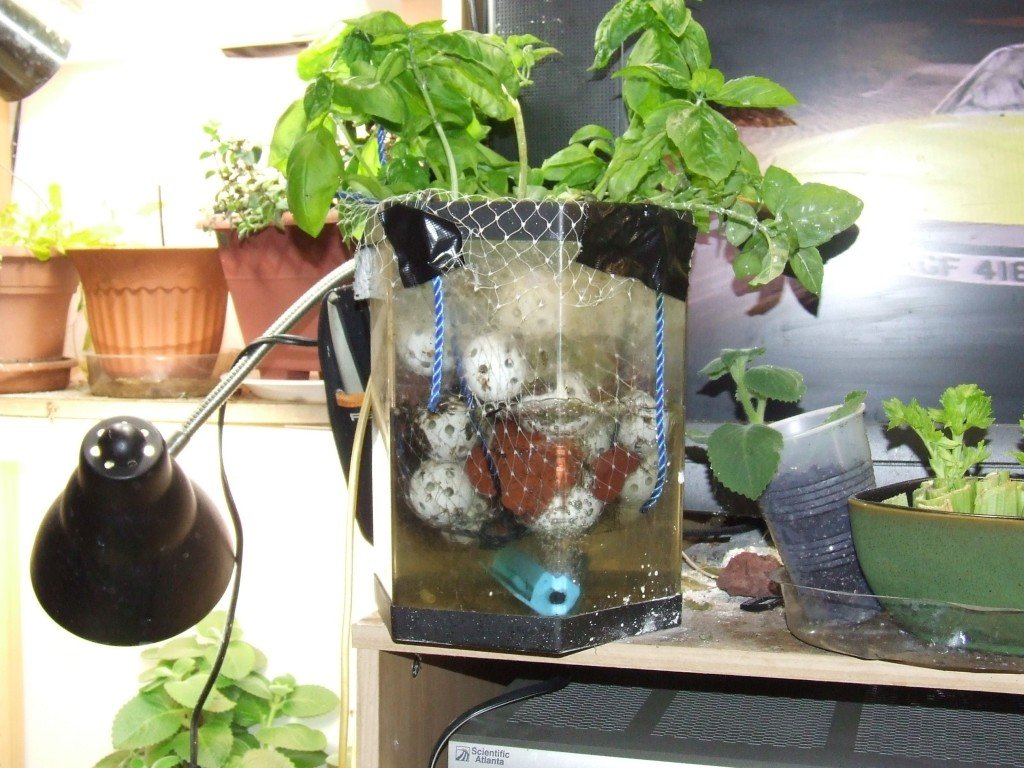
WOW! Have a pop or a beer and heat too?!
Yes, you CAN have it all! LOL :-D
And More!
And More!!!
And YES MORE!!!
Inspired? I am too!
Coming soon, Bev’s version of a passive solar Pepsi can heater…
Best Survival Gear and Supplies
WOW! Have a pop or a beer and heat too?!
Yes, you CAN have it all! LOL :-D
And More!
And More!!!
And YES MORE!!!
Inspired? I am too!
Coming soon, Bev’s version of a passive solar Pepsi can heater…
Life changing personal disasters come in all sizes and forms – it doesn’t have to be the collapse of our country’s economy, a war, or a solar flare that knocks out the power grid. The Great Depression was a huge shift event that affected nearly the entire world. 2007 to 2012, and for a lot of us is still going on, has been referred to as the Great Recession.
But look at the shift events in our personal lives – job loss, divorce, death of a loved one, a major illness. A week long power outage, the water coming out of your faucet is unusable, a tornado rips apart your town, these are all shift events. Your ability to create a personal disaster recovery plan and your attitude during these events often determines how you get through them or even if you get through them.
Just recently we had a local man commit suicide. He had been through divorce, but the children chose to stay with him and they were very close. A farmer, he lost most of his land in the divorce. He started a trucking business just as the Great Recession started, but that failed too. He was well respected in the community having been a First Responder and Volunteer Fireman, and was from a very large, close knit family and had many friends.
Lord only knows what all was happening in his life the fateful morning he called a close friend and told him what he was going to do and to please find him before the kids did and hung up. The friend raced over to stop him, but it was too late. The man apparently felt the only option of leaving something for his children was to commit suicide, so that they would have an inheritance. The children, barely of legal age would have preferred to have their father than the money. And this is not an unusual story in the Midwest farm families where the farm has been in the family for generations.
So, attitude during a personal disaster is, to my mind, paramount. If you are in a personal disaster, what can you do? I would like you to think about the kind of person you would like to have beside you going through… A night without electricity? Three days without heat in the winter? A week with no electricity or other services and no way to leave – think of a tornado that has devastated your town? A month without income? A 3 month totally debilitating car accident? Six months of one thing after the other going wrong – engine blows on the car, break a leg, lose your job, etc. all one on top of the other? A year of unemployment and prospect of never getting a truly good paying job again? Total disability and you are now on a fixed income for the rest of your life that is barely subsistence level? The loss of a child?
Pretty gut wrenching scenarios, aren’t they? We may not go through all of these in our lives, but I personally know individuals who has gone through circumstances like this. But the question was: “Think about the kind of person you would like to have beside you going through…?”
Everyone’s answer is going to be different here, so I will just give you my answers. I would like a partner who has a positive attitude, can keep a sense of humor during tough times, be caring, compassionate, work as a team to get through things, and be there to the end.
I know, big lofty ideals, but how does that look in practice?
Attitude in a crisis situation is often the defining factor between those who survive and thrive and those who don’t. Our attitudes is something we all have control over.
In my humble opinion, this is what it’s all about – dealing with shift situations. So, whatever it is, job loss, illness, retirement, natural disaster, it means cutting back. And my hope is that YOU will help me fill this out a bit in the comments. So, let’s take job loss as we’ve all been through that situation at one time or another, and it can go from bad to catastrophic very quickly.
You will find another job and this is a temporary cut back situation. Make the best of it and use this time to re-evaluate your skills, aptitudes and desires. Live in FAITH not FEAR – Pray for knowledge of God’s will for you and the power to carry that out. Now it is time for you to be good to yourself and your family and friends.
Let everyone know you are actively seeking employment in an upbeat way. Doom, gloom and fear will actually keep you from getting a job offer. Spend at least three hours a day, every day, looking for work, preferably before you ever lose your job.
Perhaps it is going back to school, but for most older folks that is not a viable option if we are thinking about 2-4 years of schooling, debt, and only working in that field less than 10 years before retirement. However there are a number of short schooling options, often as little as 9 weeks, that could set you on a new career path. Examples would include nurses’ aid training and home health care, or even a tax course for seasonal work. These are also wonderful options for additional income after retirement.
Yes, you can volunteer in hope of getting a job, but there are money making opportunities out there that are classed as volunteer activities and will not be reflected as income. Around here we have a state agency that reimburses people to drive other people to doctor’s appointments. It reimburses anywhere from 55 cents a mile to a dollar a mile. I know one gentleman who makes almost $1,500 a month doing this and he expenses the mileage on his car, car repair bills, etc. for this volunteer work. And we have people who slap a $15 magnetic sign on their car and charge $1 a mile to haul the Amish and others around. And I think Meals on Wheels reimburses mileage for delivery.
For cash you can
What are the needs in your community and remember that if you are working for cash you can work for half the money you would if you have to report it. Just beware of the dreaded 1099 form where someone is keeping track of the cash they are paying you and using it as a deduction.
Besides looking for work, this may be just the time to start thinking about creating yourself a job. After 50 it becomes harder to get a decent job with benefits. Yes, there are various programs out there to help, but employers often misuse them and you are out of a job in six months after you were hired.
What skills do you have? If you are good with computers, you can actually set yourself up a little business fixing other peoples’ computers from your home or remotely. Do you know how to program those darn smart TVs? That is a skill that people will pay for – I would if I could find someone! What about in-home pet boarding? Or contact your local vet and offer convalescent care for pets that don’t need vet care anymore, but do need all day watchfulness. Or how about shopping? If you go to the grocery store once or twice a month you could take someone elses list, add 20% or 30% and do their shopping for them.
All you need are some business cards that you can print off your computer or purchase inexpensively, under $20, from Vista Print. Perhaps you do J&J Enterprises and just list a whole bunch of stuff you are willing to and capable of doing, and start networking with anyone and everyone! Church, friends, give the convenient store clerk a card, and the person who is checking you out at the grocery store – word will get around.
These may well be viable options for you if you have the health and ability to travel. And with AmeriCorps, you may not even have to travel. There are opportunities from working on a communal farm with people who are disabled, for any number of reasons, to reading to children in your local school, and there is even a FEMA division of AmeriCorps helping with national disasters. These programs are becoming increasingly popular with seniors as they provide a stipend to live on, travel opportunities, and a way that you can put all of that life experience to use. Just another option to check out.
Whether you are between jobs, disabled or retired there are potential grants out there for a wealth of programs. You may be able to write yourself a grant in conjunction with a non-profit for a job that you would love to work for! My job for 5 years as a Sustainable Farmers coordinator was grant funded. Write the grant to get and maintain your job. Right now I am writing a grant to fund an art project I would like to try my hand it. Will I get it? I don’t know but I have the time to write it and have lost nothing if I don’t get it and can always reapply the next round.
Around here the first thing that always gets cut is the groceries, then any unnecessary trips in the car, then any unnecessary electricity use, then the TV cable, then the thermostat goes down and down and down, sometimes all the way to 40 degrees which is its lowest setting. And any “unnecessary” bills don’t get paid – can’t get blood from a turnip is the old saying. But how far can you cut expenses?
To a large degree this is dependent on your family. Just before Bob and I got divorced there was absolutely no way he could live without ESPN, meat at every meal, and the heater cranked up to 85 degrees in the bathroom for his shower. We split up and on his own he didn’t even bother to get cable TV, ate a lot of meatless spaghetti and goulash, and kept his house trailer thermostat at 60 degrees and didn’t have a space heater for the bathroom – hmmm… When HE had to pay for everything he chose not to. He is now back in the lap of luxury, but it taught me a valuable lessen. He doesn’t make the decisions about what gets cut, I do.
Groceries are the first thing cut and I have an adequate pantry to tide us by. If he wants meat, then he brings it home. And when the kids were young and there was no man around, I had no problem harvesting and cutting up that freshly killed deer outside my door by the road. Flavorful and attractive meatless meals and soups are your friends along with inexpensive and abundant eggs. You may even want to experiment with becoming a vegetarian or vegan, or vegan,. It’s all about attitude.
TV goes. Hopefully you can still get your local channels. If not there are DVDs and YouTube. I raised my children to the age of 14 without TV. After a couple of weeks of getting accustomed to being without it, you may never want to go back to 220 channels with nothing to watch. Quiet evenings playing games, doing puzzles, writing, sewing, and doing art, or playing cards with friends can be so much more enjoyable than another night of mass programmed TV.
Telephone in this day and age can be very controlled just by purchasing a $10 trac phone and paying by the minute for necessary calls. Maybe you really do need that fancy internet phone or it is the only access you have to internet, but look around for different plans as they are quickly coming down in cost.
Internet is now available FREE at most libraries and if you have a laptop computer you can often pick it up near cafes and schools. Another option, if you live in a town or suburban area, is to check for local networks. If you can figure out who has a WIFI network you can tap into, offer to pay half their internet bill for access or trade them for access to their WIFI.
Electricity has a lot of phantom use. When the TV is off it is still using almost 40% of its power usage to stay on the ready setting. Unplug everything you can even if you don’t think it is using power. That spare TV that you only use once a day or for the toaster, and other kitchen appliances, consider investing in a power strip that you can simply flip the switch and turn off – $5 this month could save you $60 over the next year.
Need to cut more? Consider going down to the breaker box and turning off entire rooms. Do NOT use your drier, air dry your clothes. Cut your washing down to once or twice a month by hand washing underwear and stockings in the sink. Bring in solar yard lights that recharge during the day for ambient lighting at night. Use candles and oil lamps. The refrigerator is one of your biggest energy users and you probably aren’t using it all. Get a dorm fridge and pull the plug on the big beast until times are better. If your freezer isn’t full, can what is in it and unplug it. Need to cut more? Leave only the breaker to your furnace and bathrooms on.
Need to cut even more? Try out your survival skills and preps and throw the whole house breaker off. Much easier to do during the summer. Spend a month or three like this and invest in some used solar panels, a marine battery or two, and an inverter. Look around for used or inexpensive 12v ovens, refrigerator/freezers (or propane units), coolers, fans, and heaters. Check out camping supplies and truck stops for these items and you will be prepared for almost anything, use 1/3 the electricity you did before and appreciate it immensely.
I knew a family with teens who’s father lost his job and rather than lose the house he shut off the electric and everything that went with it for six months. They hauled their laundry to town and water back home. They bathed at the local state park showers and did hand baths in between. Dug a pit and built an outhouse. Mom cooked on the grill and food was kept in coolers. They kept the house and when dad got a job, EVERYONE appreciated the electricity coming back on again. But they survived and grew closer as a family because they knew what they were sacrificing for. And yes, I have lived without electricity, no TV, no running water, no central heat, and only had a grill to cook on – so it can be done.
And if worse comes to worse with the bills, bankruptcy no longer wipes the slate clean with bills, but you can often DIY bankruptcy, keep your home and an older car and get solvent again.
Spare Bedroom – That spare bedroom or upstairs or basement can be rented out for a week or a month or longer to a friend, a relative, or an acquaintance without the hassle of applying for rental property.
Spare Garage – The garage or a spare garage can often be rented out for classic car storage or motorcycle storage.
Space to Park Campers – Do you have enough space in the backyard or driveway to rent out storage area for campers or RVs?
Foster Parents – If you like kids, or at least can tolerate them, be good to them, and pass a background check, being a foster parent can be rewarding and provide extra income and company.
Utilizing and Evaluating your Preps – Hard times are when you really need your preps and can evaluate how well you have prepared. How is your preparedness pantry actually holding up compared to how you think it would do? Need more spices? Not enough canned fruit? Have enough bean recipes so that you’d throw up if you see another pinto bean? How about TP, shampoo, deodorant and toothpaste? Are you aware that common household items like baking soda can be used as deodorant and toothpaste if you run out? Or you may even prefer them. If you need to, refer to our complete survival food list for helps and ideas here.
Can you keep yourself healthy without going to the doctor or the dentist? Have enough reference material on natural remedies, gardening, and wild edibles? Are you gardening and canning? No space? Consider a community garden space, these are available in almost all towns and cities now.
Are you using the knowledge you have gained from reading and researching about preparedness? Are you using your inexpensive emergency blankets on the windows to block heat and keep your house cooler? Or turn them around shiny side inside and reflect the heat back inside?
If it is summer have you made a solar cooker and used it? Have you made a brick rocket stove and used it to cook instead of turning on the burner to your stove? Are you using your alternative heat source and how is it working? Are you bringing the solar yard lights in at night? Have you washed and rinsed your clothes in five gallon buckets with a plunger? Are you eating survival soups? Are you walking or riding your bicycle more places? Are you recharging your batteries with a small solar array – many solar lights use AA batteries and can recharge them.
Those guns you had to have can be sold for cash pretty easily as well as the ammo. They actually make a tremendous investment bought right. Which leads me too…
Sell STUFF – We all have “stuff” we don’t need. Garage sales and Craigslist are virtually free options to get rid of stuff you aren’t using or don’t absolutely need and bring in some much needed dollars. I’ve known people who have made a living going to garage sales and auctions and reselling what they have found. Teach yourself how to sell on eBay and charge others a commission for selling their stuff on eBay.
Swallowing Your Pride – Those tax dollars the government has been taking all of these years, well, it may be time to get some of that back in the way of food assistance (the food stamp card and food shelves), heating assistance and whatever else you can find to help you through these rough times. It seems like plenty of people use them that don’t necessarily need them, might as well belly up to the trough when you need the help – you’ve already paid for it!
Worst Case Scenarios – Oh Lordy, it can happen. You can find yourself homeless. It doesn’t take too many missed mortgage payments to be foreclosed on and now what do you do? AmeriCorps and the Peace Corps now look like good options.
But if you know that this is a possibility, for the cost of a few mortgage payments or less, you can purchase a camping trailer and own a home on wheels. Yes, people can live in RVs and camping trailers even in Minnesota in the winter. Often a relative or friend will allow you to park it in their backyard and hook onto their electric in exchange for help around their place mowing grass, shoveling snow or whatever.
And if you have really done your prepping and outfitted yourself with a 12v solar system you don’t even need their electricity, just a place to park your camper. Yes, you may have to go elsewhere to shower in the winter and do your laundry, you may have to haul water and haul out waste, but it is better than being homeless.
Question was from the Coastal South,
“…How we live up here and drive in this stuff without chains!”
Here are a few suggestions and comments, please no one take offense. I’m sending them back to read all of them! And add a few themselves…
Kathy – I’ve been using a Mr. Heater Big Buddy in the living room for the last couple of years and it works pretty good.
Ecomum – Although I have central heating, run on mains gas, it’s very expensive here in the UK and I only run it for an hour in the morning, another in the afternoon, and then light my wood stove in the evening. During the day, I mostly keep warm by moving about doing chores. If I sit for long, doing craft work or sitting at the computer, I fill a hot water bottle to rest my feet on, wrap up in plenty of clothes, and, what I find makes a big difference, is to wear fingerless gloves. With warm hands and feet, I don’t notice the cold so much.
SingleMom – No article needed. No slurs intended, but it takes experience, and you learn slowly over time. The best thing for Southerners with bad roads is to just stay off them and leave the roads for emergency vehicles. If you have to go out, drive slow, steer into a skid, and don’t over-compensate. Pack an emergency bag and assume that you WILL wind up in a ditch at some point
GrammaMary – Thoughts and prayers to southern friends and the ice headed your way.
WE2 – Agreed…stay home if you don’t have to get out! But…the road crews of a city/county play a huge part. If a state is used to this type of weather, they have the machinery and the salt/sand mix to make things alot easier a lot quicker. Some of these southern state’s have NO road crews..been there in one once and watched the whole town “freeze”. Even the maids in the hotel where we were at stayed at work.
Wyzyrd – I must agree – I was totally shocked after moving to VA from Upstate NY – there was just not enough experience driving on snow to even start ‘getting good at it’. Charlottesville VA used to totally shut down on days when it snowed about as much as it did on days when it didn’t really snow in Ithaca, NY.
The Washington DC suburbs are the worst – absolutely deadly. Because of the huge Federal gov’t and diplomatic presence, every winter, there is a whole brand new batch of folks who have never even SEEN snow before, much less driven in it. Stay home and stay warm, friends.
Grammyprepper – I grew up in northern OH, in the “Snowbelt”. We learned to drive in the snow from the get go. I echo the wisdom to just hunker down and stay home if you have no experience driving in such conditions. Heck, I don’t go out if I don’t have to! As far as this particular ‘storm’, there was plenty of notice, so there is no excuse for not stocking up ahead of time!
GrammaMary – I agree with the advice to stay off the roads south. If you have to go out, other than driving slowly keep great distance from all other cars. The more the better. I just smile and say hey I am old and wise. BUT if you live next door to a very big totally empty parking lot. I mean totally empty you could do what we do to teach the teens to see how the car behave in slippery conditions. Its called doing doughnuts. Drive a bit in the middle of the lot and then go hard on the breaks. You will do doughnuts. Anyone else learn that way?
Here’s a recipe I’ve kept for over 40 years, clipped from a newspaper article on unusual recipes.
When times were hard, there were still ways to feed the family. What is the old saying? “Hunger is the best seasoning” something like that.
I remember my mother telling about the Great Depression. Grandmother sent the oldest son out with his BB gun and a hundred BB’s. She told him to bring home 50 sparrows because that was to be their supper. Now a sparrow only has one bite (small bite) worth of meat on it but the lesson was….there is food to eat.
Soup Night: Recipes for Creating Community Around a Pot of Soup, by Maggie Stuckey (Storey Publishing, 2013) isn’t a gardening book—though its author has two garden books to her credit and gardeners will love the ways these recipes incorporate garden produce. It isn’t exclusively a cookbook either—though it has some very tasty recipes. Soup Night is a cookbook with a purpose—to build community understanding and coherence by encourage neighbors to gather for meals.
The book began when the author heard about a monthly “soup night” held on a street in Portland, OR.
Once a month, the neighbors gather for soup and conversation. Hosting duties are divided up (usually at a once-a-year block party) and the host makes two big pots of soup — one with meat, one without.
Beyond that, the rules are simple and flexible. Guests come whenever they want between 6 and 8 p.m.; they can contribute wine, bread, a dessert or salad, or not if they aren’t able to; and everyone brings their own bowls and flatware, so the host does not have to do a vat of dishes. Not everyone makes it every month, and that is fine.
This simple low-key event has done much to cement relationships in the neighborhood, making it friendlier and safer.
From that first gathering, Stuckey discovered soup nights all over the country, from Houston to Milwaukee, New York to San Francisco. The book celebrates those neighborly gatherings and encourages others to start their own soup nights. She does this with stories about the soup nights she’s visited and recipes that lead soup makers (and gardeners) through the seasons.
For cold winter nights like the ones we’ve had recently, Stuckey offers recipes for a beef stew topped with coleslaw, red lentil soup (delicious!), potato-wild rice soup and a beautiful butternut squash soup.
In spring, the soups are lighter: asparagus and pea, sherried mushroom. As a gardener, the late summer and fall soups look especially appealing: strawberry gazpacho with berries, tomatoes and cucumbers and a corn chowder with potatoes, leeks and cream. The soup recipes are supplemented by recipes for breads, salads and desserts, all from the folks who host soup nights around the country.
For more timeless survival wisdom and ideas, check out these survival guides and PDF downloads.

I live in southeast Louisiana in a town approximately 12 miles from New Orleans, La. Lake Pontchatrain borders New Orleans to the north. It is a lake that is 24 miles across at its widest point. I have been boating, camping, fishing and hunting southeast Louisiana for the past 50 years.
This is a true story.
It all began on the warm, sunny Veterans Day of 2003, when my wife and I decided to go for a boat ride in my 14 foot, aluminum, V-hull, outboard.
We launched my boat from the Williams Blvd. Boat Launch, in Kenner, Louisiana into Lake Pontchatrain. We put on our life jackets, got in the boat and departed the dock. After exiting the harbor, we turned west, intending to explore the canal which divides Jefferson Parish and St. Charles Parish. My wife was seated in the bow and I was at the helm in the rear.
We both were enjoying the boat ride. The skies were clear, the day was warm and there was a gentle breeze from the north with no waves to speak of. We were traveling at approx. 15 knots heading almost due west. The only problem was my wife and I had problems talking to each other because of the ambient noise from the outboard motor and the noise of the movement of the boat going through the water.
We were approximately two (2) miles from the boat dock and roughly two (2) miles off shore. A freak wave came out of no where and hit the starboard stern of the boat. The wave launched me right out of where I was seated and into the water. It felt like someone had reached under me, lifted me up and flipped me out of the boat.
I did not even have time to say or do anything. I was seated on a seat cushion flotation device and did not even have time to grab it before being flipped out of the boat. I hit the water with such force that even with my life jacked on, I went totally underwater. When I surfaced, I looked around and observed my boat, with my wife still seated in it, traveling away from me in a straight line. I realized that she did not even know I wasn’t any longer in the boat. I also noticed that the force of me hitting the water had ripped open the Velcro pockets on my life jacket and I had lost ALL of my emergency signaling devices that I keep in them.
I did a quick assessment of my physical condition and realized I was not injured.
Here I was approximately two miles off shore in Lake Pontchatrain with nothing but a life jacket with my boat and wife speeding away from me.
The motor on the boat then turned and the boat started to go in a tight starboard circle. The boat was now approx. 500 yards away from me. I watched, as my wife looked to the stern and observed that I was no longer in the boat. To my surprise, she did not lose her composure.
The centrifugal force of the starboard turning boat was trying to throw her out of the boat because of the boat turning in a very tight circle. My wife got low to the deck and made her way to the stern. She took control of the motor, straightening out the course and slowed down the engine. She then found the engine kill switch and pushed it. The engine died immediately.
My wife then stood up and started looking for me in the water but it appeared to me, and she later confirmed it, that she could not locate where I was. I started to swim, the best I could, with a life jacket on, in her direction. As I attempted to swim to her, she spotted me. She had no prior boating experience, so she got one of the boat paddles and begin paddling the boat in my direction. After a few minutes, I had swum approx. 100 yards and could swim no more; my upper body strength had left me. She kept paddling the boat relentlessly, all of the way back to me and tossed me a seat flotation device to hold onto and a line so that I would not drift away from the boat.
I was physically exhausted from trying to swim to her with a life jacket on and could not get into the boat. Even if I could have, I probably would have swamped the boat attempting to get back in, making matters much worse.
I then advised her of the location where I kept the hand held marine radio. She retrieved it and sent a MAYDAY call to the U.S. Coast Guard. U.S. Coast Guard Group New Orleans answered her and she gave the Coast Guard all of the information that they requested. She was told by the Coast Guard radio operator that they were dispatching a rescue boat and it would be getting underway shortly.
Approximately five (5) minutes later, she told me that there was a boat off in the distance that appeared to be heading our way. She fired off a 12 gauge signal flare to attract their attention. Evidentially the boat observed the flare because its speed increased greatly and headed straight for us.
Shortly after, we could see that it was the Coast Guard rescue boat. Within a few minutes, the Coast Guard arrived and the crew got me out of the water. After relaxing for a several minutes to regain my strength, they assisted me back into my boat. I started the engine and headed back to the Kenner Boat Launch. The Coast Guard followed us all the way back to the launch. One of the Coast Guardsmen took the information that was needed for their report. There was also a local police officer there that also took a short report.
One of the crewmen on the Coast Guard boat told us that the Coast Guard radio operator advised them that we were some where 2 miles of the Kenner Boat Launch and that I was in the water. However, when they observed our signal flare, they were able to pin point our position and come straight to us.
This incident is documented with the U.S. Coat Guard and the Kenner Police Department.
I also failed to follow a cardinal rule of boating according to the Coast Guard. I did not leave a float plan with a trusted friend or relative.
I have since gone to the Coast Guard Auxiliary’s web site and printed out their FREE float plan form. Before going boating, I now fill one out and make sure someone I trust has it.
In hindsight, if I would not have had my life jacket on when I was thrown overboard, I would not have been able to tread water long enough for my wife to get back to me in the boat. Also, if she had panicked or not have been in the boat with me, no telling how long I might have been in the water until I was rescued, if at all.
How many times have you said to yourself that will never happen to me! It always happens to someone else! Or tell your wife, I don’t wear my life jacket because it is: too uncomfortable, too bulky, I am embarrassed too, only nerds wear life jackets. Or, I can always grab my personal floatation device in time if something happens; I have never needed it before. Even though the boating laws say you do not have to wear a personal flotation device, life jacket, wear one! It saved my life! It could save yours too!