Why Budget Long-Term Food Storage Matters
In any emergency scenario—whether it’s a natural disaster, economic disruption, or supply chain breakdown—having food stored at home is one of the most fundamental insurance policies you can maintain. Unlike freeze-dried meals that can cost hundreds of dollars and cater to taste preferences, survival food storage focuses on macronutrients and micronutrients. When hunger sets in, people don’t care about gourmet flavors. A simple bowl of rice with beans becomes a luxury.
This is not something we haven’t covered before, but this will be a quick jump-start for you to build upon.
The key is understanding that survival nutrition isn’t about comfort—it’s about sustenance. While supplementing your storage with premium freeze-dried options like Mountain House provides morale-boosting variety, the backbone of your long-term food security should be built on affordable staples.
Budget Long-Term Food Storage: Complete Supplies List
Before you start buying bulk food, gather these essential supplies:
Containers and Storage Materials:
- Five 5-gallon food-grade buckets with lids: $15-25 (approximately $3-5 per bucket plus $1-2 per lid)
- Five 5-gallon mylar bags: $8-15
- Oxygen absorbers/desiccant packs compatible with 5-gallon containers: $5-10
- Sealing tool (household iron, heat sealer, or mylar crimper): $0 (likely already owned)
Food Items:
- 100 pounds of rice (two 50-pound sacks): $35-50
- 100 pounds of beans (two 50-pound sacks): $30-45
- Additional protein and variety items: $20-30
Total Investment: $110-165
The beauty of this approach is that most items are available at wholesale retailers like Costco or Sam’s Club, and prices fluctuate seasonally. Shopping during sales or buying in off-season can push your total closer to $100-120.
Selecting Your Foundation Foods
Rice: The Caloric Backbone
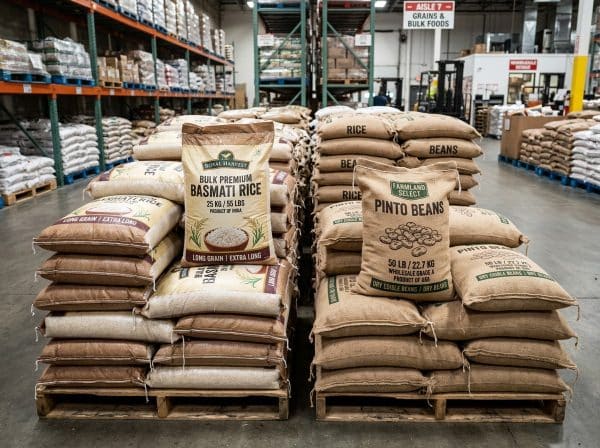
Rice is the foundation of long-term food storage. It’s inexpensive, calorically dense, and has a proven shelf life exceeding 25 years when properly stored. A 50-pound sack of long-grain or basmati rice typically costs $15-25 at wholesale retailers. Rice provides essential carbohydrates and, when combined with legumes, forms a complete protein.
Purchase two 50-pound sacks to ensure adequate variety and redundancy in your storage.
Beans: The Protein Powerhouse
Dried beans—particularly pinto beans, kidney beans, and chickpeas—are nutritional powerhouses. A single 50-pound sack provides months of protein for a family. Here’s why beans deserve their central role in survival food storage:
- Chickpeas: Deliver 25 grams of protein per 100-gram serving. A 5-kilogram bag (about 11 pounds) contains approximately 1,250 grams of protein—enough for one person for a month
- Kidney beans: Nearly complete proteins when combined with rice
- Pinto beans: Affordable, versatile, and nutrient-dense
Two 50-pound sacks of beans cost $30-45 total. When combined with rice, beans and grains create a complete amino acid profile—everything required for human survival.
Secondary Proteins and Flavor Enhancers
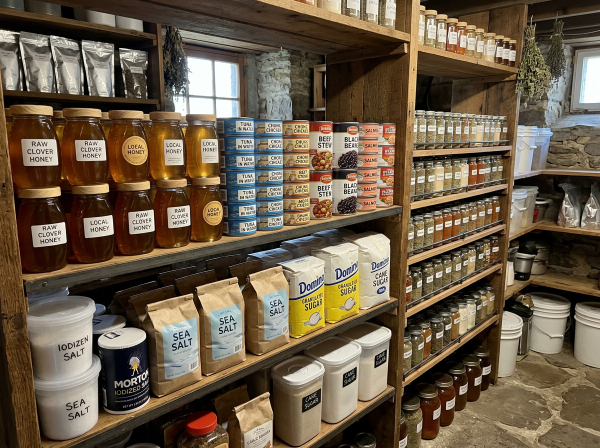
While rice and beans form your caloric foundation, supplementary items add crucial nutrients, minerals, and morale:
Canned proteins: Corned beef, tuna, and salmon provide fat-soluble vitamins and omega-3 fatty acids. Corned beef, in particular, has a 5-year shelf life and transforms basic rice dishes into satisfying meals when mixed with dried onions and soy sauce.
Broth and bouillon: Beef or chicken stock base ($20-30 for a large container) adds flavor and minerals to otherwise bland grain dishes. A little bouillon goes a long way in making survival rations more palatable.
Honey and maple syrup: Pure honey (100% with no additives) never spoils if kept in cool, dry conditions. A 3-kilogram container costs $30-40 but provides calories, can be used medicinally as an antiseptic, and serves as valuable barter material. Maple syrup offers similar benefits and lasts indefinitely in pure form.
Oats: Quick oats or large-flake oats ($5-8 per bag) paired with honey or maple syrup create satisfying breakfast options. This variety prevents “food fatigue” when eating the same meals repeatedly.
Salt and sugar: These two items were the most sought-after commodities in the pre-industrial world for good reason. They preserve food, add calories, and improve palatability. Stockpile liberally—they’re inexpensive now but essential always.
Seasonings: Garlic, pepper, dried onions, and soy sauce ($8-15 total) transform bland survival meals into something approaching palatability. Consider vacuum-sealing small quantities in 1-quart mylar bags for long-term storage.
The Storage Method: Mylar Bags and Buckets
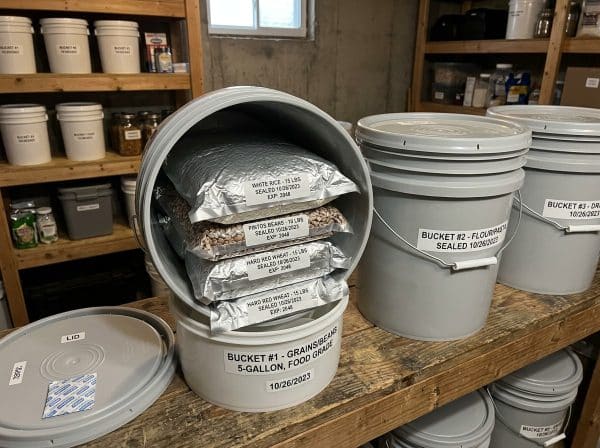
The standard approach used by preppers nationwide combines food-grade buckets with sealed mylar bags, creating a multi-layered defense against spoilage.
Why This Method Works
Mylar is a non-porous, metallized film that oxygen and moisture cannot penetrate. Unlike plastic buckets, which contain microscopic pores and degrade over time, mylar maintains structural integrity for decades. The combination of mylar bags inside buckets provides pest protection (bucket) and oxygen exclusion (mylar).
Oxygen absorbers (also called desiccant packs) chemically remove oxygen from sealed bags, inhibiting mold growth and extending shelf life to 25-30 years. Once sealed, your food exists in an oxygen-free environment—the ideal condition for long-term preservation.
Step-by-Step Packing Process
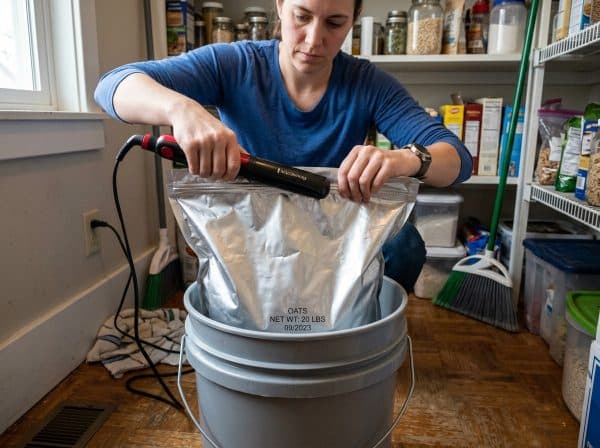
1. Prepare your workspace: Lay out five 5-gallon buckets and mylar bags. Have your oxygen absorbers, sealing tool (iron or heat sealer), and food items ready.
2. Fill the mylar bag: Carefully pour rice, beans, or other bulk foods into the mylar bag. Fill to approximately 2-3 inches from the top—you need space for the oxygen absorber and final sealing.
3. Partial seal: Using a household iron set to medium heat (or a mylar bag sealer), seal the bag approximately 80% of the way across, leaving one end open for the oxygen absorber.
4. Insert oxygen absorber: Place the desiccant pack inside the partially sealed bag. These packs will absorb oxygen over 24-48 hours, creating a vacuum seal.
5. Final seal: Complete the sealing process by running the iron across the remaining bag opening. The goal is a complete, airtight seal.
6. Label: Once cooled, write the contents and date on the bucket lid using permanent marker. Include a note about intended serving size (“2 people/year” or “4 people/6 months”).
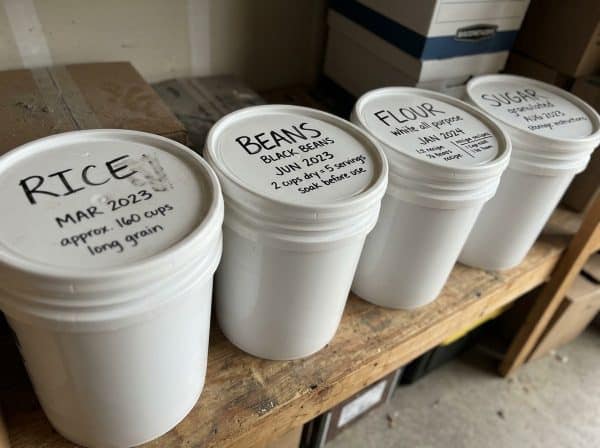
7. Store in bucket: Place the sealed mylar bag inside the food-grade bucket and secure the lid. This protects against rodents and physical damage.
Storage and Rotation
Store buckets in a cool, dry location away from direct sunlight. Basements, closets, and pantries are ideal. Temperature stability matters more than absolute cold—aim for storage between 50-70°F if possible, though properly sealed buckets tolerate moderate temperature fluctuations.
Properly sealed and stored, your food will remain edible for 25-30 years. However, practice rotation: use and replace older stock every 5-7 years to maintain freshness and gain experience preparing these foods before an actual emergency.
Supplementing Your Base Storage
This foundational storage should be supplemented with freeze-dried meals, multivitamins, and foraged foods when possible. A small addition of freeze-dried Mountain House or Backpackers Pantry meals ($3-5 per serving) adds variety and psychological comfort without significantly impacting your budget. These supplements are about morale and taste preference—luxuries, not necessities.
Similarly, consider storing:
- Multivitamins: Essential for filling micronutrient gaps
- Baking soda and vinegar: Preserve flavor and aid digestion
- Cooking oil: Provides essential fats (store in cool conditions)
- Dried fruits and vegetables: Add variety and nutrients
The Mathematics of Food Security
Let’s break down what $150 actually purchases:
- 100 pounds of rice = approximately 13,000 calories
- 100 pounds of beans = approximately 14,000 calories
- Supplementary items = additional 3,000-5,000 calories
- Total: Roughly 30,000-32,000 calories
For a 2,000-calorie daily diet, this represents approximately 15-16 days of food per person. Five buckets stores roughly 75-80 days for a two-person household, or sufficient foundation calories for one person’s primary nutrition for 2.5 months. When supplemented with home garden production, foraged foods, or hunting, this storage becomes a true safety net rather than a complete solution.
Cost-Saving Tips
1. Buy in bulk during off-season: Rice prices fluctuate. Winter often sees sales as retailers clear inventory before spring produce arrives.
2. Use warehouse membership retailers: Costco or Sam’s Club offer the best wholesale prices on bulk staples.
3. Buy generic: Store brands are often identical to name brands at a fraction of the cost.
4. Purchase oxygen absorbers in bulk: Buying a 100-pack is more economical than smaller quantities. I also just collect them whenever I acquire them in other packaging.
5. Shop sales for supplementary items: Canned proteins, maple syrup, and honey often go on sale around holidays.
6. Repurpose containers: Clean buckets from restaurants or bakeries often work as well as new food-grade buckets.
Building Confidence Through Practice
Don’t wait for an emergency to discover whether you actually enjoy eating rice and beans daily. Practice cooking these meals now. Experiment with different seasonings, canned proteins, and preparation methods. This accomplishes two things: it helps you refine your storage strategy based on actual preferences, and it builds confidence in your preparedness.
A month before an emergency is not the time to learn that you can’t stomach plain beans or that your family rebels against repetitive meals. Cook and adjust now.
Recommended Links & Resources
Where to Buy Budget Long-Term Food Storage Supplies:
- Costco (buckets, rice, beans, honey)
- Sam’s Club (bulk staples)
Related Articles to Link Internally: Consider linking to other Seasoned Citizen Prepper articles on:
- Emergency water storage and purification
- Garden food preservation techniques
- Long-term protein storage options
- Off-grid food production
Conclusion: Start Your Budget Long-Term Food Storage Today
For approximately $150, you can build a foundational food storage system capable of sustaining a family for months. Budget long-term food storage isn’t gourmet prepping—it’s practical, affordable, life-saving insurance. The beauty of the rice-and-beans approach is its proven track record: these foods have sustained human civilizations for millennia.
Start today. Visit your local warehouse retailer, purchase buckets, mylar bags, and bulk staples, and begin implementing your budget long-term food storage plan. Your future self—and your family—will thank you. In survival scenarios, the only food that matters is the food you already have stored.